The Region of Murcia has called for the Gil Sáez Pacheco Award, aimed at recognizing good practices in attention to diversity in public centers. This call is an exceptional opportunity for projects that use 3D technologies, virtual and augmented reality to demonstrate their value in creating truly inclusive classrooms. The objective is to encourage innovative methodologies that guarantee equal opportunities for all students, a field where 3D disclosure plays a transformative role.
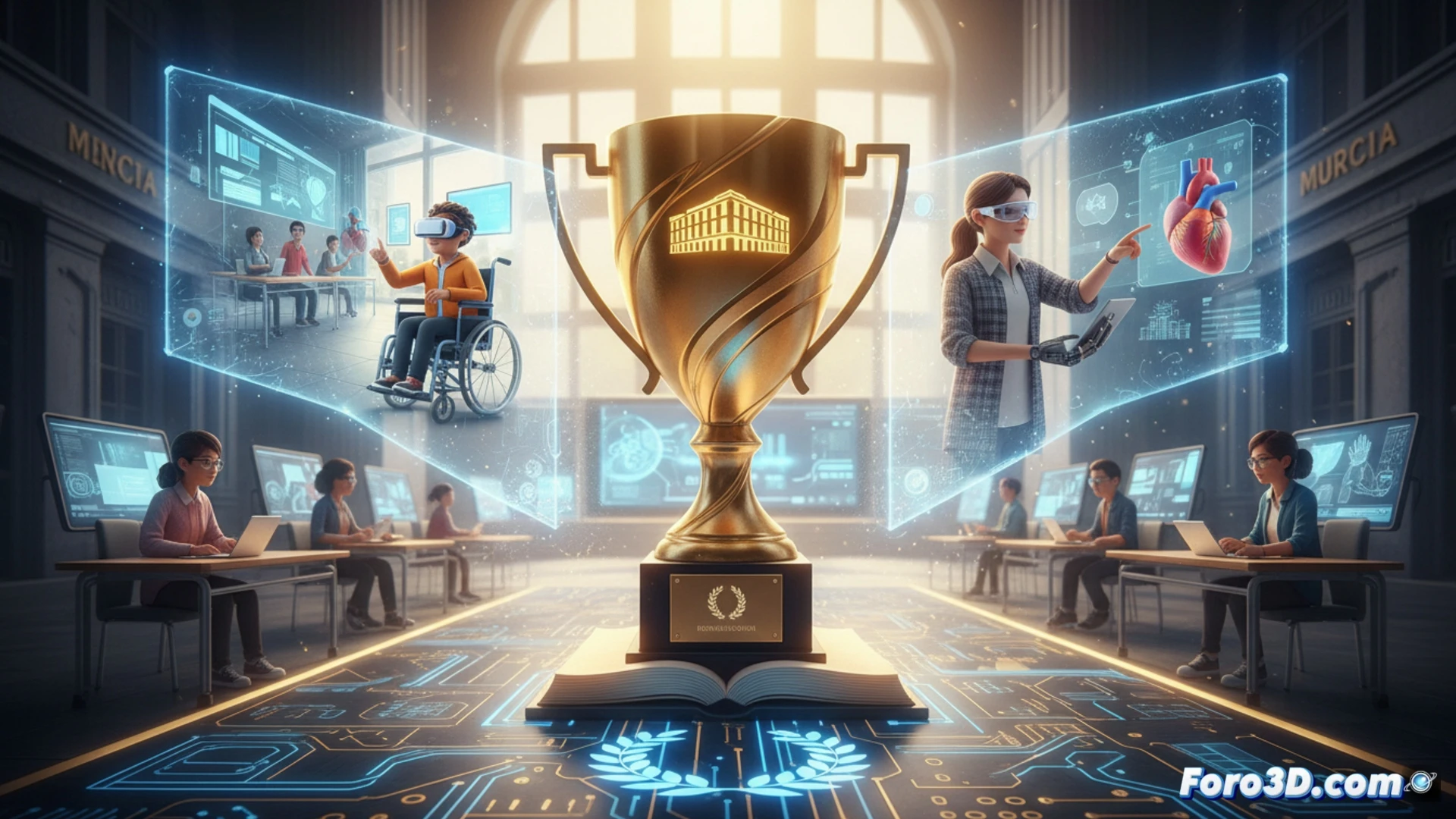
3D Technologies as Tools for Educational Personalization 🛠️
Inclusion requires attending to diverse learning styles, abilities, and needs. Here, 3D technologies offer concrete solutions. An interactive 3D model of a cell or a historical monument can be explored tactilely, adjusted in complexity, or translated into an auditory Braille system. VR environments allow safe and adapted practices for students with reduced mobility or social anxiety. AR can overlay step-by-step instructions or enriched information on physical objects, supporting students with attention or reading comprehension difficulties. These tools enable personalizing the learning experience.
Beyond the Tool: A Paradigm Shift 🔄
The true potential of these award-worthy projects lies not only in the hardware or software, but in the pedagogical design that supports them. An inclusive 3D project must prioritize universal accessibility from its conception, asking how each student will interact with the content. The Murcian award seeks precisely those replicable experiences, where technology is not an add-on, but the core of a methodology that dissolves barriers. It is a call to document and share how 3D disclosure redefines equal opportunities in the classroom.
How can 3D modeling, animation, or virtual environment projects developed by students or teachers become effective tools for addressing diversity in the classroom and qualify for recognitions like the Gil Sáez Pacheco Award?
(PD: Teaching with 3D models is great, until the students ask to move the pieces and the computer crashes.)