Events like the II Educational Fair of Ourense are crucial for guiding students. However, their traditional format, based on stands and brochures, has limitations for conveying the essence of a profession or a training center. This is where 3D technology can make a difference, transforming vocational guidance into an interactive and immersive experience that allows young people to explore their future in a completely new and tangible way.
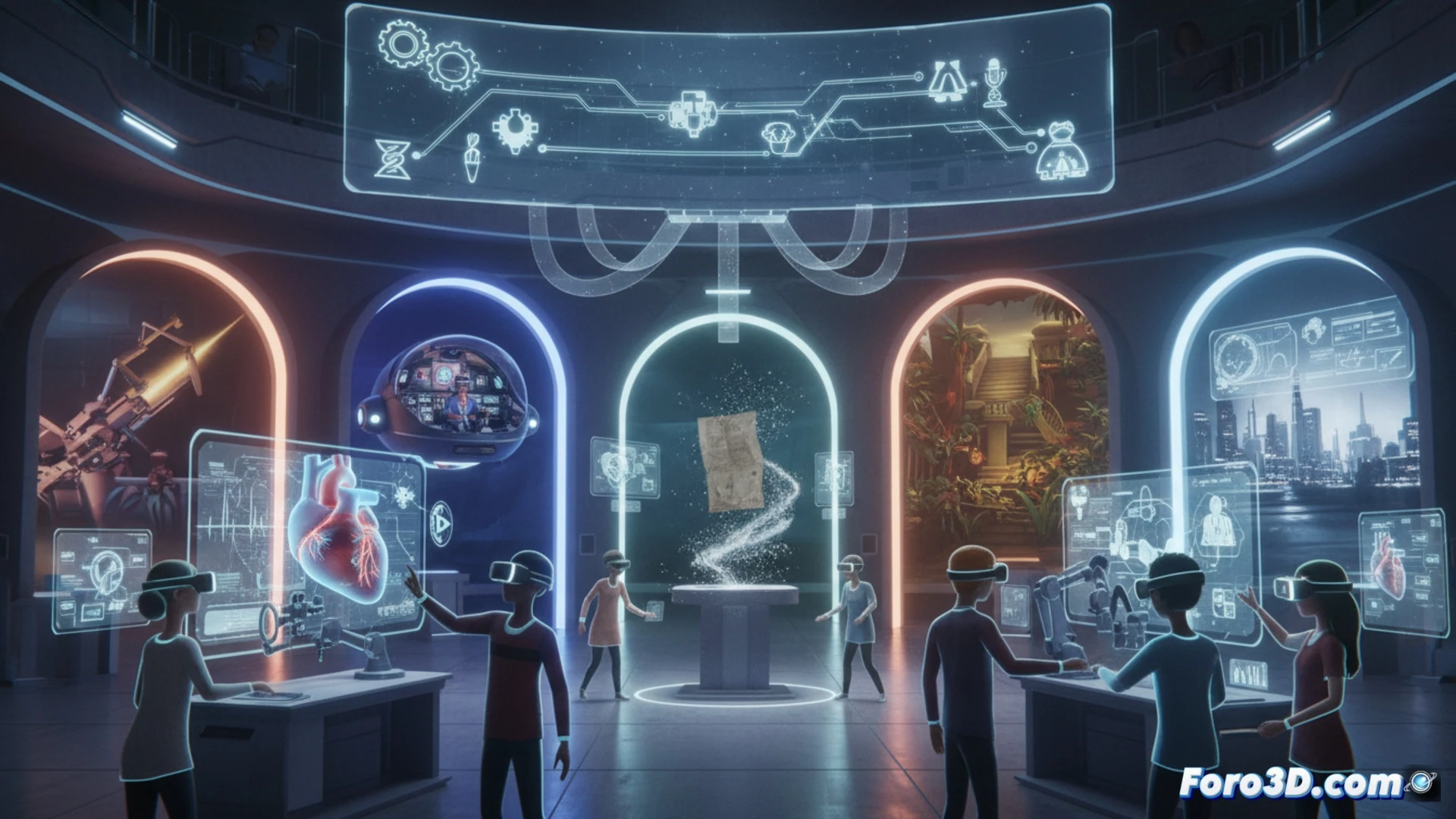
Immersive technologies for practical guidance 🥽
Imagine a student, instead of just reading about civil engineering, being able to walk through a bridge under construction using virtual reality or interact with its digital twin. A future surgeon practicing in a simulated operating room, or an aspiring automotive technician disassembling a virtual engine. 3D tours of campuses and vocational training workshops offer unprecedented accessibility. These tools not only show information, but allow experiencing and testing, facilitating a more informed decision connected to the real work environment.
The future of guidance is experiential 🚀
The integration of these solutions into fairs and educational centers is not science fiction; it is the next logical step in academic outreach. It represents an evolution from passive information to active experience. By offering a layer of practical experience, 3D technology can reduce uncertainty and increase students' confidence in their choice, building a stronger bridge between secondary education and their professional future.
How can immersive 3D experiences transform traditional educational fairs to offer deeper and more personalized academic guidance to students?
(P.S.: Teaching with 3D models is great, until the students ask to move the pieces and the computer crashes.)