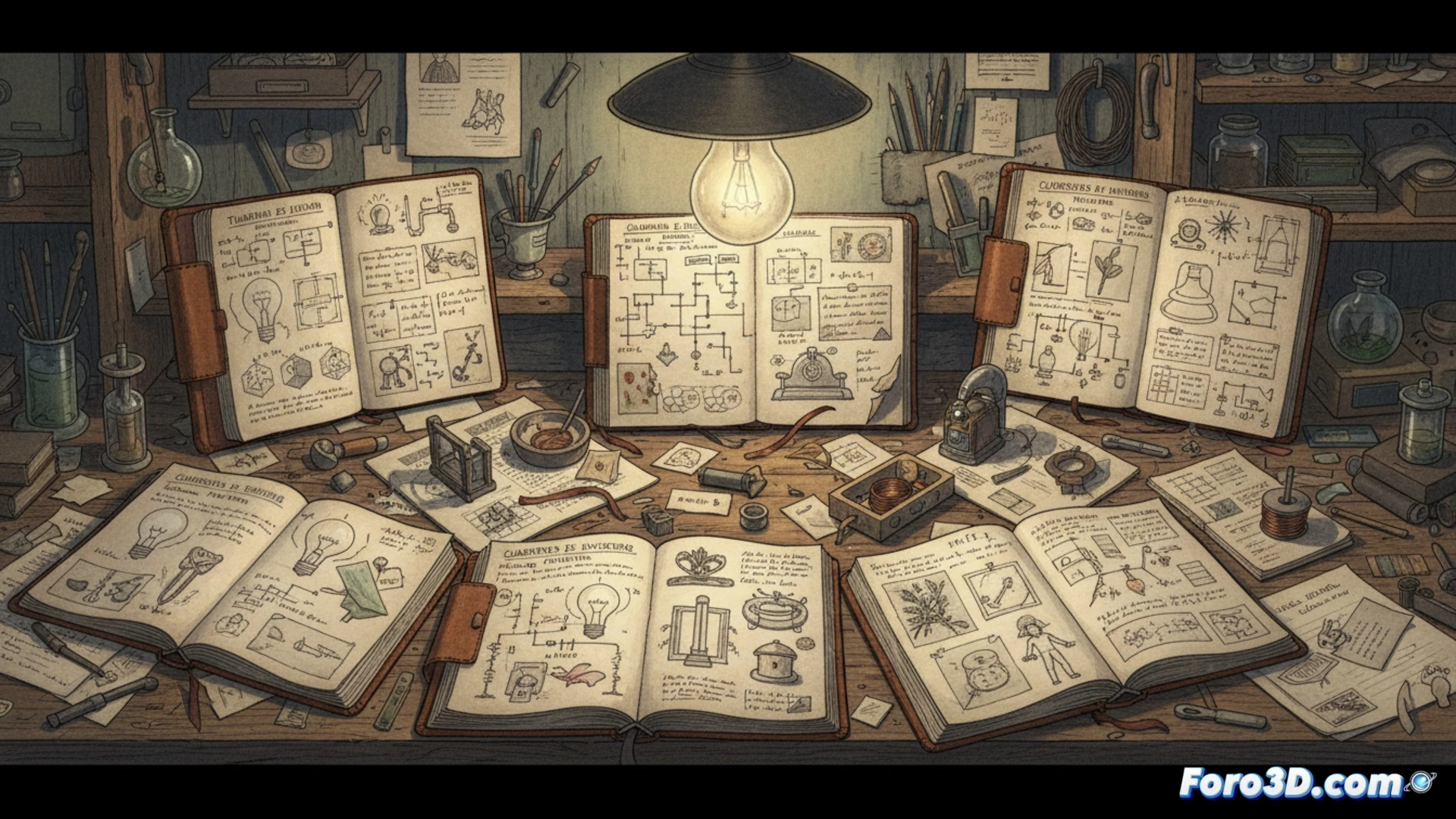
Thomas Edison's invention notebooks are not just historical relics; they are the documentary cornerstone of the modern intellectual property system. In their pages, with diagrams, notes, and test results, Edison captured the complete process of each invention. This meticulous documentation was fundamental for establishing authorship, novelty, and the inventive process before patent offices. Today, this same principle is vital for any digital creator.
From paper to digital: documenting the creative process 💾
Edison's notebooks served the same function as a Git repository or a 3D artist's work folder: they track a project's evolution. For a digital creator, documenting iterations, previous versions, conceptual sketches, and render tests is not just good practice; it is key evidence. In a legal context, these files demonstrate original authorship and the creative effort invested, distinguishing an original work from a copy. Protecting a complex 3D model or an algorithm requires being able to show its development, just as Edison showed his diagrams.
The enduring lesson: document to protect ⚖️
The essence of Edison's legacy for the modern creator is clear: without documentation of the process, the claim to rights is weak. In the digital era, where copying is trivial, a detailed creation history is your best defense. Implementing systematic habits, such as saving versions, dating progress, and recording sources of inspiration, builds a solid case for intellectual property. It is the natural evolution from the notebook to the digital workflow.
Could Edison's laboratory notebooks be considered the first case of source code subject to intellectual protection in the digital era? 📓
(P.S.: judges say human authorship required... but they surely haven't seen my automatic retopologies)