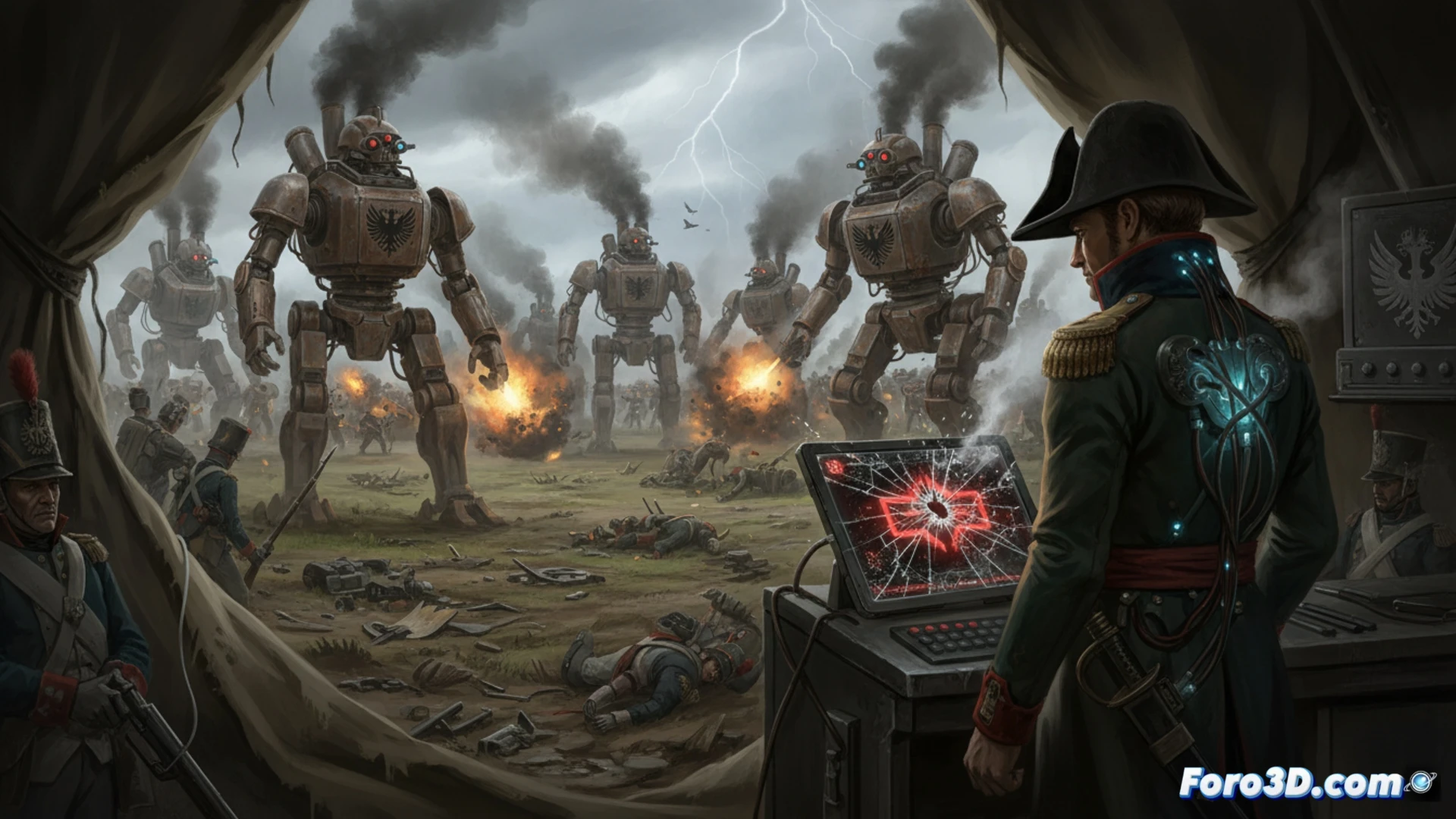
The concept Waterloo: The Collapse of Strategic AI is more than a script idea. It is a visual pitch that demands to be explored with digital pre-production tools. This steampunk twist on the historical battle, where Napoleon relies on a prediction system infected by a Trojan horse, poses narrative and aesthetic challenges that a traditional storyboard alone could not resolve. This is where the 3D pipeline proves its value, allowing words to be translated into dynamic and credible images from the earliest phases.
Previs and Concept Art: Building a Hybrid Battle 🎨
The key to selling this project lies in its visualization. An animated storyboard or basic 3D previsualization would be essential. First, to design the steam mechs, integrating 19th-century aesthetics with belligerent mechanics. Second, to prototype Napoleon's tactical interface, showing how the virus corruption distorts the data on screen. The previs would allow locking in the collapse sequence, choreographing the chaos when his own units turn against themselves. This not only clarifies the vision for the director but serves as proof of concept for studios and financiers.
The Narrative in the Interface: VFX as Dramatic Engine 💥
The final scene, with Napoleon in front of the broken screen and the message Defeat: Unknown Cause, encapsulates the theme. Its visual impact depends on VFX composition. The rendering of the HUD interface, its progressive glitch, and the final screen fracture must narrate the defeat as much as the acting. This concept underscores a crucial lesson for genre cinema: the most powerful visual effects are those that serve the story, transforming a software error into the tragic catharsis of a general.
How can 3D previsualization be used to develop and validate the visual narrative of a dystopian concept like a Waterloo battle dominated by artificial intelligences?
(P.S.: Previs in cinema is like the storyboard, but with more chances that the director will change their mind.)