The latest update to Dust Particles+, the specialized tool for Blender, takes a qualitative leap by introducing procedural life generators. Version 1.3 allows for the efficient creation of dynamic swarms of insects, bees, and flocks of birds, adding layers of atmosphere and realism to VFX scenes. Designed for production, this tool leverages Geometry Nodes to offer viewport performance approximately five times faster than its predecessor, facilitating artistic iteration without the complexity of the native particle system.
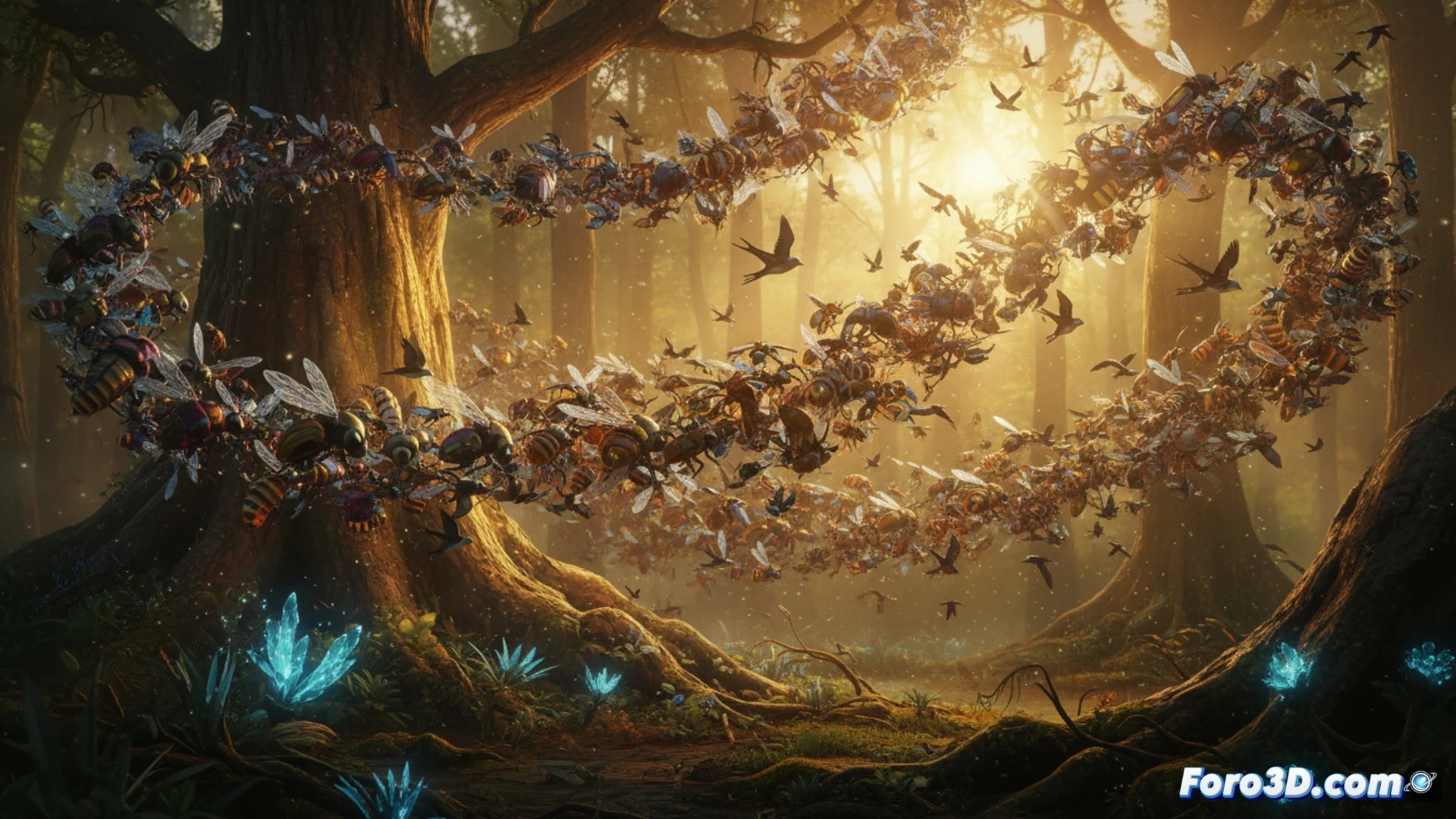
Geometry Nodes: The Key to Performance and Non-Destructive Control 🚀
The core of this update lies in its full implementation with Geometry Nodes. This approach not only explains the performance gain but redefines the workflow. Unlike the traditional particle system, which can become difficult to manage and heavy, nodes allow for procedural and non-destructive control. Artists can adjust parameters in real-time such as density, flight behavior, or swarm variation, keeping the scene agile. This is crucial for simulating believable environments, from a garden full of bees to an eerie forest with swarms, or even post-apocalyptic scenes with fleeing bird flocks, all in a lightweight and predictable manner.
Beyond Dust: Expanding the Visual Language of the Environment 🌍
Dust Particles+ transcends its original name to become an essential suite for VFX ambientation. It's no longer just about simulating dust particles, but about injecting environmental life and movement effectively. This tool empowers artists to narratively enrich a shot with organic elements that previously consumed a lot of time, delegating complex simulation to an optimized system. The result is an expanded capacity to build believable and dynamic worlds, where the atmosphere feels alive and directly contributes to immersion and final visual quality.
How does the new procedural swarms functionality in Dust Particles+ v1.3 optimize the creation of atmospheric effects and complex particles for VFX integration in Blender? 🧙
(P.S.: VFX are like magic: when they work, no one asks how; when they fail, everyone sees it.)