Researchers at Rutgers University have created a pioneering dual digital twins system to strengthen cybersecurity in additive manufacturing. This strategy generates two virtual replicas of a 3D printing process: one based on the original CAD design and another on real-time sensor data. The continuous comparison between both allows detecting malicious deviations, protecting the integrity of critical parts in sectors such as aerospace or medical.
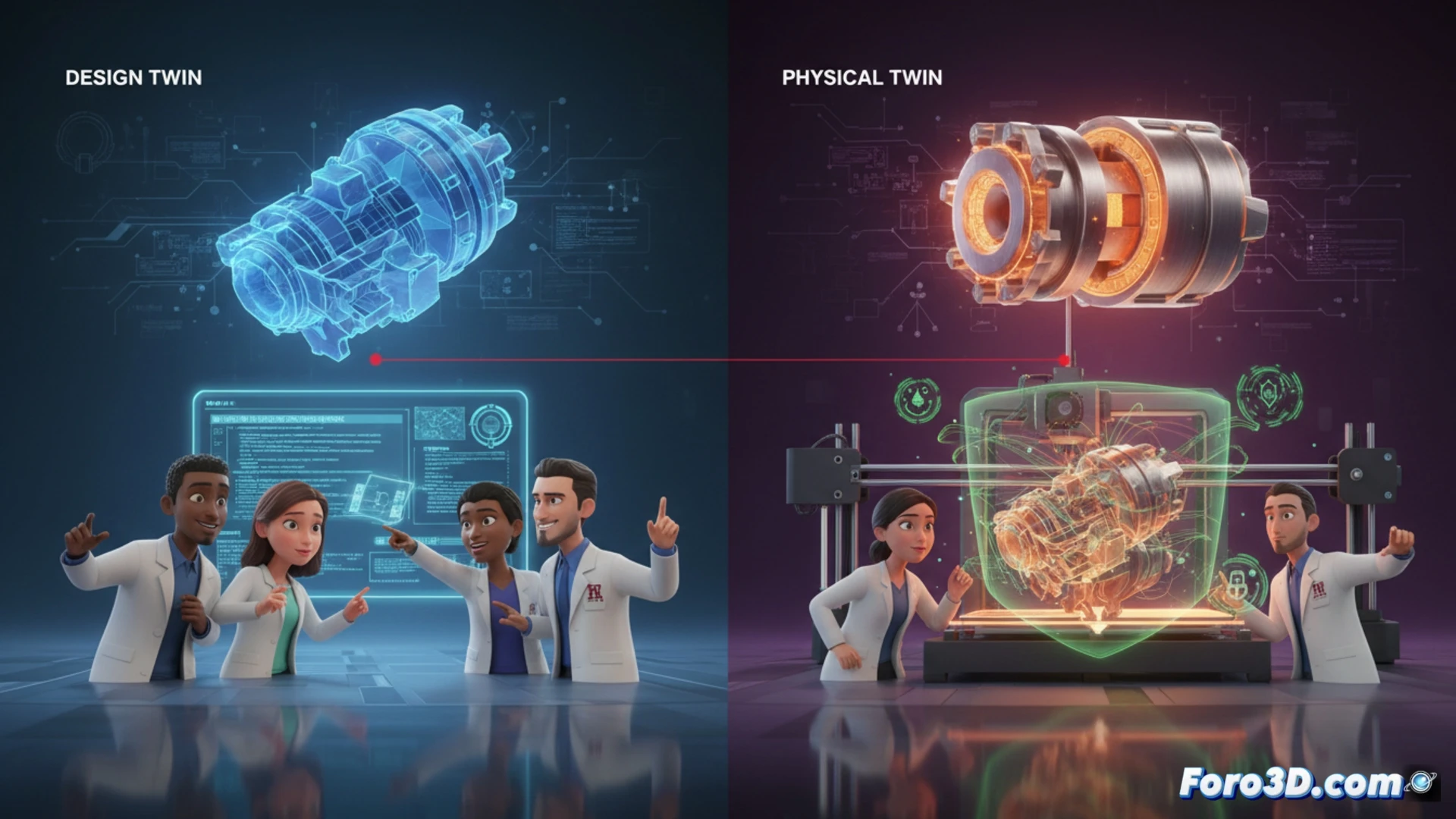
Dual twin architecture: theoretical design versus physical reality 🔍
The core of the innovation lies in the creation and comparison of two twins. The design twin is a pure digital representation of the CAD model, the perfect theoretical blueprint. In parallel, the physical twin is fed by sensors that monitor the real printer, capturing its exact behavior. An analysis system oversees the discrepancy between both in real time. An unexpected divergence can indicate an attack, whether by manipulation of the G-code file, alteration of printing parameters, or physical interference, allowing an immediate response.
Beyond detection: towards intrinsically secure additive manufacturing 🛡️
This approach goes beyond mere alerting. By establishing a standard of continuous verification, it lays the foundations for a reliable digital manufacturing chain. For industries where a failure has serious consequences, this methodology not only defends against external threats but also validates the fidelity of the entire process, from design to the physical object. It is a crucial step to consolidate 3D printing as a critical and secure manufacturing technology.
How can dual digital twins act as a proactive cybersecurity shield in additive manufacturing environments?
(P.S.: don't forget to update the digital twin, or your real twin will complain) 😄