The DS 3 Hybrid emerges as a fascinating case study for engineering and 3D visualization in the automotive industry. Beyond its positioning as a rival to the Lexus LBX or Audi Q2, its value lies in the complex integration of systems that are first modeled and validated digitally. From the architecture of its hybrid propulsion to the arrangement of ADAS sensors and the user interface, every component is the result of exhaustive virtual development. We analyze the technology that defines it from the perspective of design and 3D simulation. 🚗
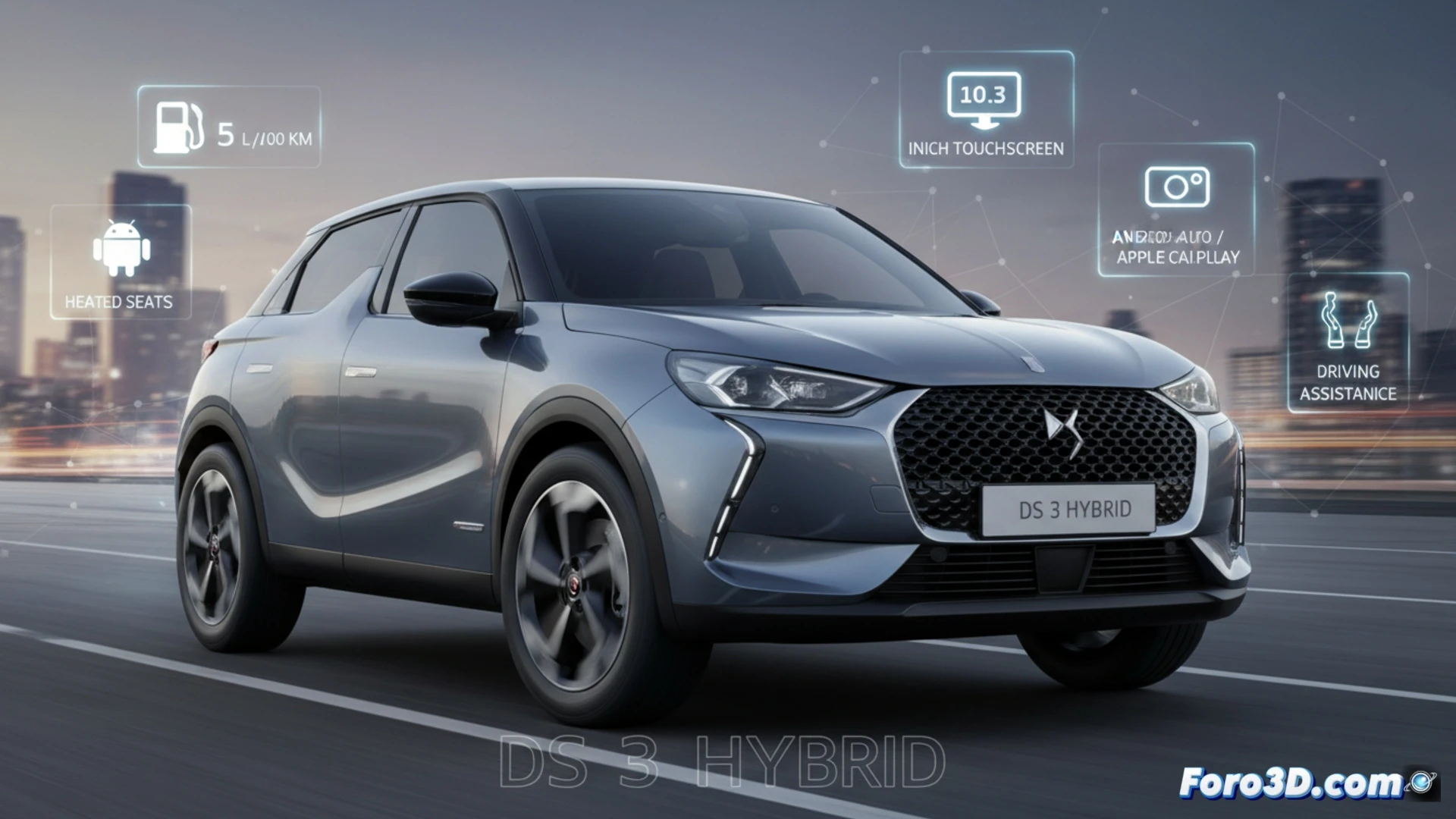
Digital Modeling of Hybridization and ADAS Systems 🔋
The heart of the DS 3 Hybrid, a system that combines thermal and electric engines, requires precise 3D simulation to optimize packaging, thermal management, and vibrations. In digital environments, the interaction of both propulsion systems and the battery location are modeled, ensuring balance and safety. On the other hand, systems like the 360-degree vision camera involve detailed modeling of the position and angles of each sensor, creating a virtual environment model to calibrate image fusion. The 10.3-inch touchscreen and its interface are also prototyped in 3D to study ergonomics and user experience before physical manufacturing.
The Future of Automotive Development is Virtual 💻
Vehicles like the DS 3 Hybrid demonstrate that the boundary between design and engineering is increasingly digital. The ability to simulate the behavior of complex systems, from powertrain dynamics to the interpretation of ADAS sensor data, shortens development cycles and reduces costs. For Foro3D professionals, this expands the field of work toward the simulation of mechatronic systems and virtual driving environments, where the technology we later find on the road is validated.
How has advanced 3D simulation allowed the efficient integration of the hybrid system into the compact and premium architecture of the DS 3, optimizing space, safety, and performance?
(P.S.: at Foro3D our cars have more polygons than horsepower)