The Pentagon has selected the winners of the Gauntlet I program, awarding 30,000 one-way attack drones to Skycutter, Neros, and Nepatree. This contract, with a target cost of $2,000 per unit, underscores the tactical transformation driven by these systems, evidenced in recent conflicts. Beyond the news, 3D conflict analysis allows us to unravel the real impact of this massive acquisition, translating data into comprehensible tactical and strategic visualizations.
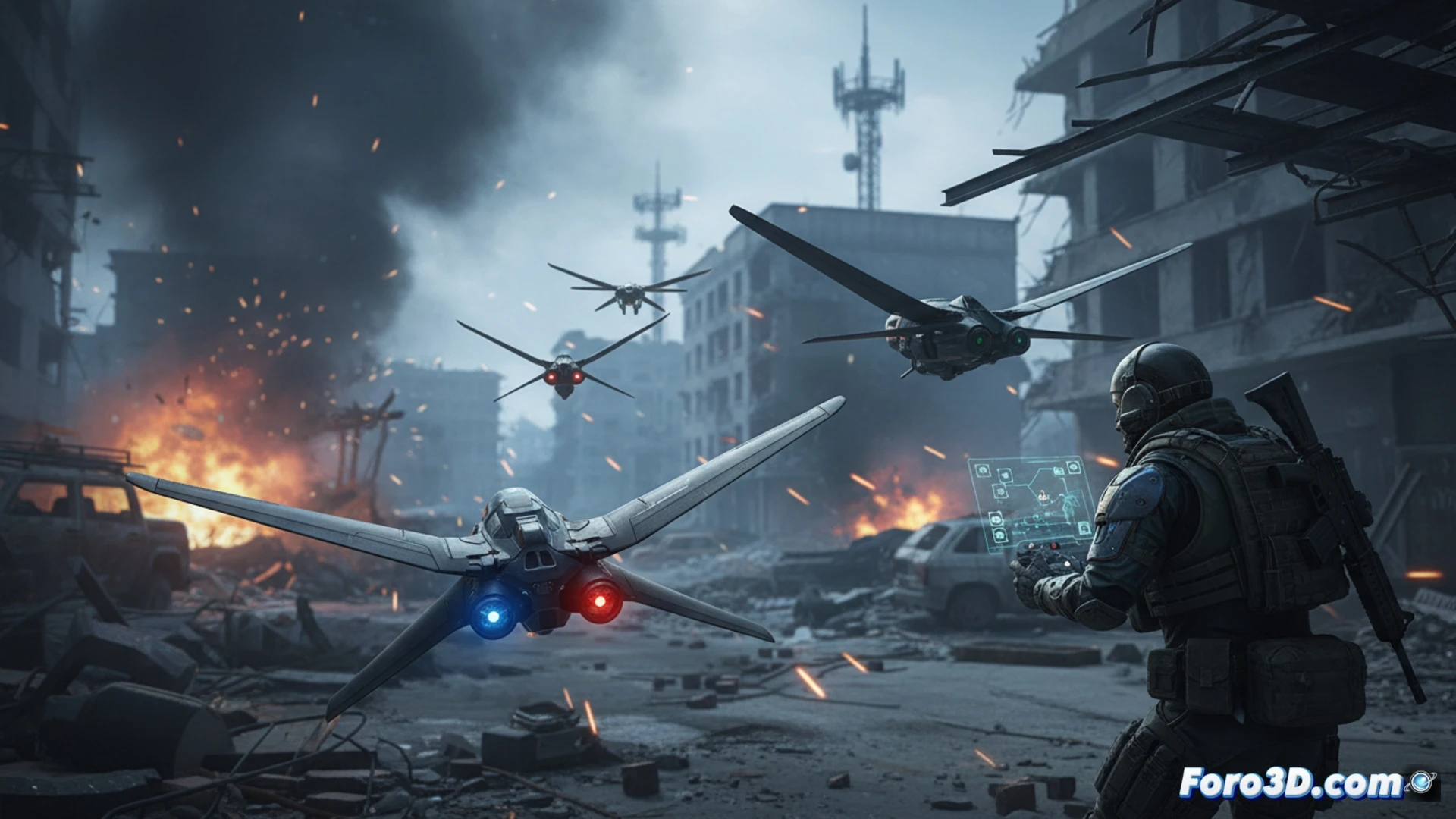
3D Simulation: From the Test Field to the Digital Battlefield 🎯
3D modeling and simulation technologies are key to analyzing this program. We can digitally recreate the Fort Benning tests, generating a digital twin of the environment to rigorously evaluate each drone's performance under various conditions. Additionally, simulation software can calculate and visualize optimal attack trajectories, taking into account obstacles, wind, and enemy defenses. This not only validates acquisition decisions but also trains operators in hyper-realistic scenarios and develops swarm tactics for the massive deployment of the 30,000 systems.
3D Visualization as a Critical Strategic Analysis Tool 🗺️
The ability to visualize in 3D the logistics of moving and employing tens of thousands of drones provides an unparalleled strategic perspective. Modeling their integration with other units or simulating their effects on different types of targets turns abstract data into concrete visual analyses. Thus, 3D technology ceases to be just a design tool and becomes a fundamental instrument for understanding, predicting, and explaining the evolution of modern conflicts, where systems like those in Gauntlet I redefine the rules of the game.
How can 3D modeling and computer simulation help analyze the tactical effectiveness and strategic implications of a massive swarm of 30,000 one-way attack drones on a modern battlefield?
(P.S.: Virtually reconstructing is the first step to reconstructing in reality)