Historical heritage restoration is modernized with digital tools. A clear example is the renovation of the Monument to the Fallen in Navarra, where drones equipped with high-resolution cameras have carried out a massive capture of images. This project demonstrates how 3D technology and photogrammetry are revolutionizing conservation processes, allowing millimeter-precise analysis and intervention planning with previously unattainable accuracy.
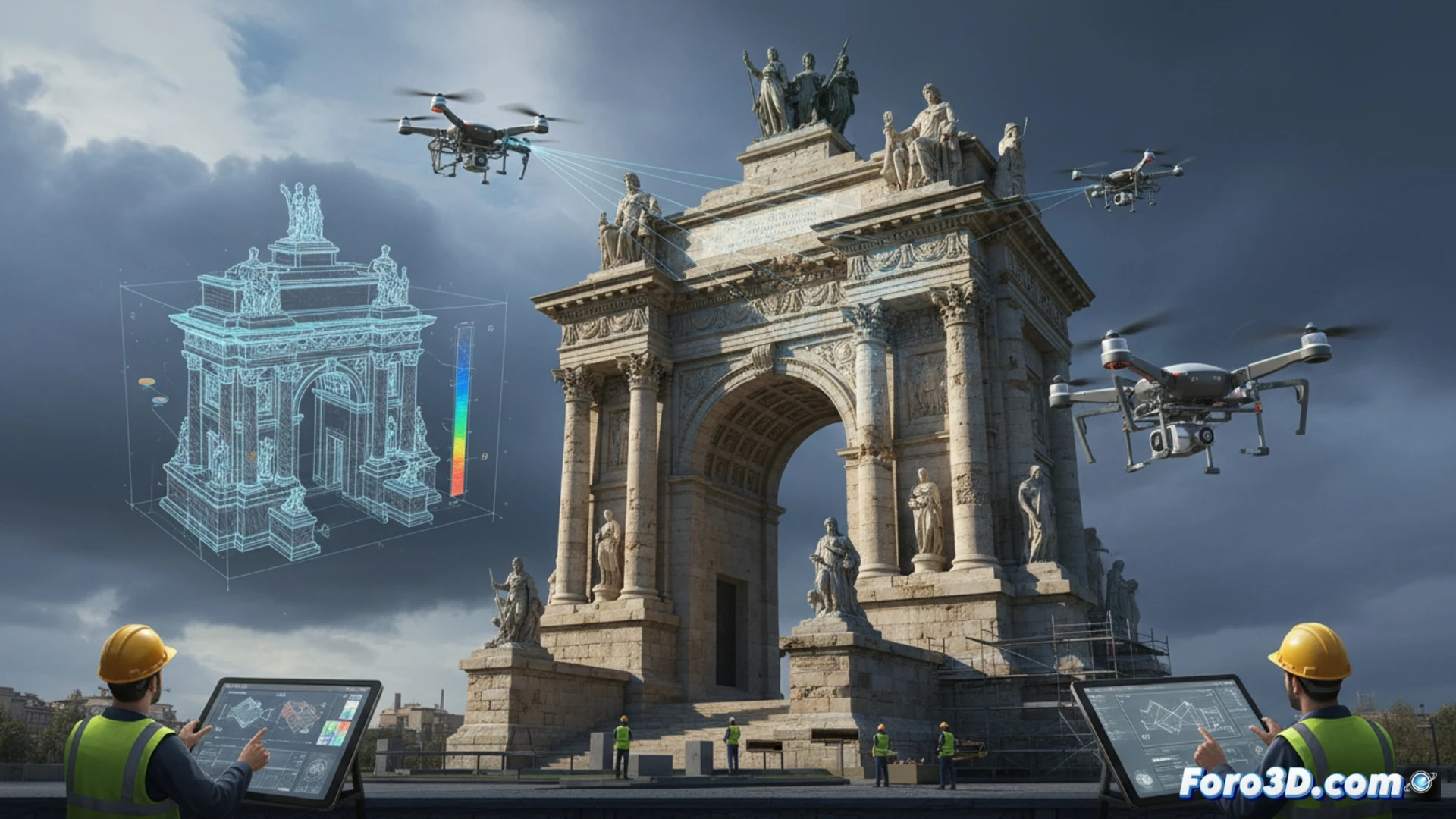
Workflow: from aerial capture to intervention digital model 🛠️
The process begins with a programmed drone flight to capture hundreds of overlapping photographs of every centimeter of the facade and structure. These images are processed using photogrammetry software, which generates a dense point cloud and a highly precise textured 3D model. This digital twin serves as the fundamental basis for diagnosis. Restorers can measure cracks, erosions, or deformations directly on the model, plan scaffolding, simulate cleaning results, and generate exhaustive technical documentation. The technology not only streamlines the work but also creates an exact historical record of the monument's state before, during, and after restoration.
Digital precision to preserve physical memory 💾
This approach marks a turning point. The combination of drones and 3D modeling provides objectivity and a level of detail that traditional sketching and photography methods cannot match. Beyond efficiency, its greatest value lies in creating a precise digital legacy. This 3D archive ensures the conservation of the monument's memory in its current state, serving as a reference for future interventions and patrimonial studies, thus fusing technological innovation with the mission of preserving history for future generations.
How are drones and 3D scanning revolutionizing documentation and diagnosis in the restoration of large-scale monuments with complex architecture?
(P.S.: Virtually restoring is like being a surgeon, but without blood stains.)