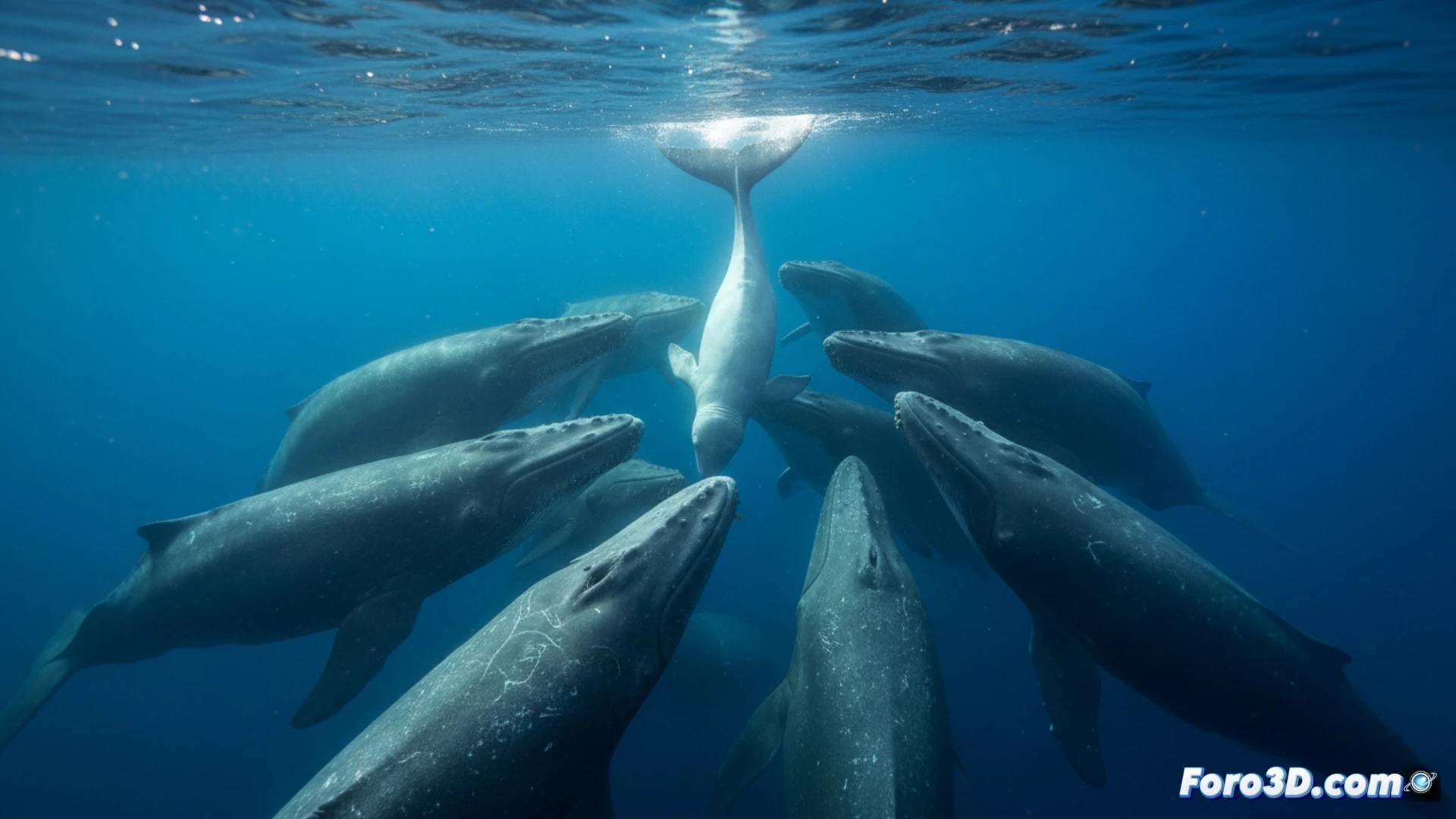
Scientists have captured, with unprecedented detail, the birth of a sperm whale and the complex cooperative care that followed. Using drones off the coasts of Dominica in 2023, the team documented how a female was assisted by ten other individuals during the birth and, subsequently, to keep the calf afloat and allow it to breathe. This visual finding is a treasure for ethology and an ideal case study for scientific visualization.
Aerial photogrammetry to reconstruct social dynamics 🗺️
The 34-minute video sets a new standard in cetacean observation. Drone technology allowed stable and non-invasive filming, generating exceptional reference material. From these images, photogrammetry could be applied to create a geospatial 3D model of the scene, identifying each individual and their relative movements. An interactive animated simulation would allow researchers to analyze shift patterns, proximity, and roles, transforming the flat video into a dynamic and quantifiable model that reveals how assistance transcended immediate family ties.
Visualize to understand and conserve 🐋
The significance of this recording multiplies when converted into scientific visualization assets. A detailed 3D model or simulation of this event serves not only for research but also for powerful outreach. Showing tangibly how a group of sperm whales collaborates to save a calf underscores the complexity of their society and emphasizes the urgency of their conservation. Visualization technology literally gives a new dimension to our understanding of nature.
How are 3D visualization and drone photogrammetry revolutionizing the understanding of marine species' behavior and biology in their natural habitat?
(P.S.: fluid physics to simulate the ocean is like the sea: unpredictable and you always run out of RAM)