The Vida Perra series, newly arrived on Prime Video, transposes the ideological battles of today's society to an apparently innocuous setting: a dog park. This scenario becomes a perfect microcosm, a social laboratory where owners with different mindsets clash while their pets play. The premise serves as a powerful narrative tool to dissect, with humor and satire, the mechanisms of coexistence, prejudice, and the formation of urban tribes in the contemporary world.
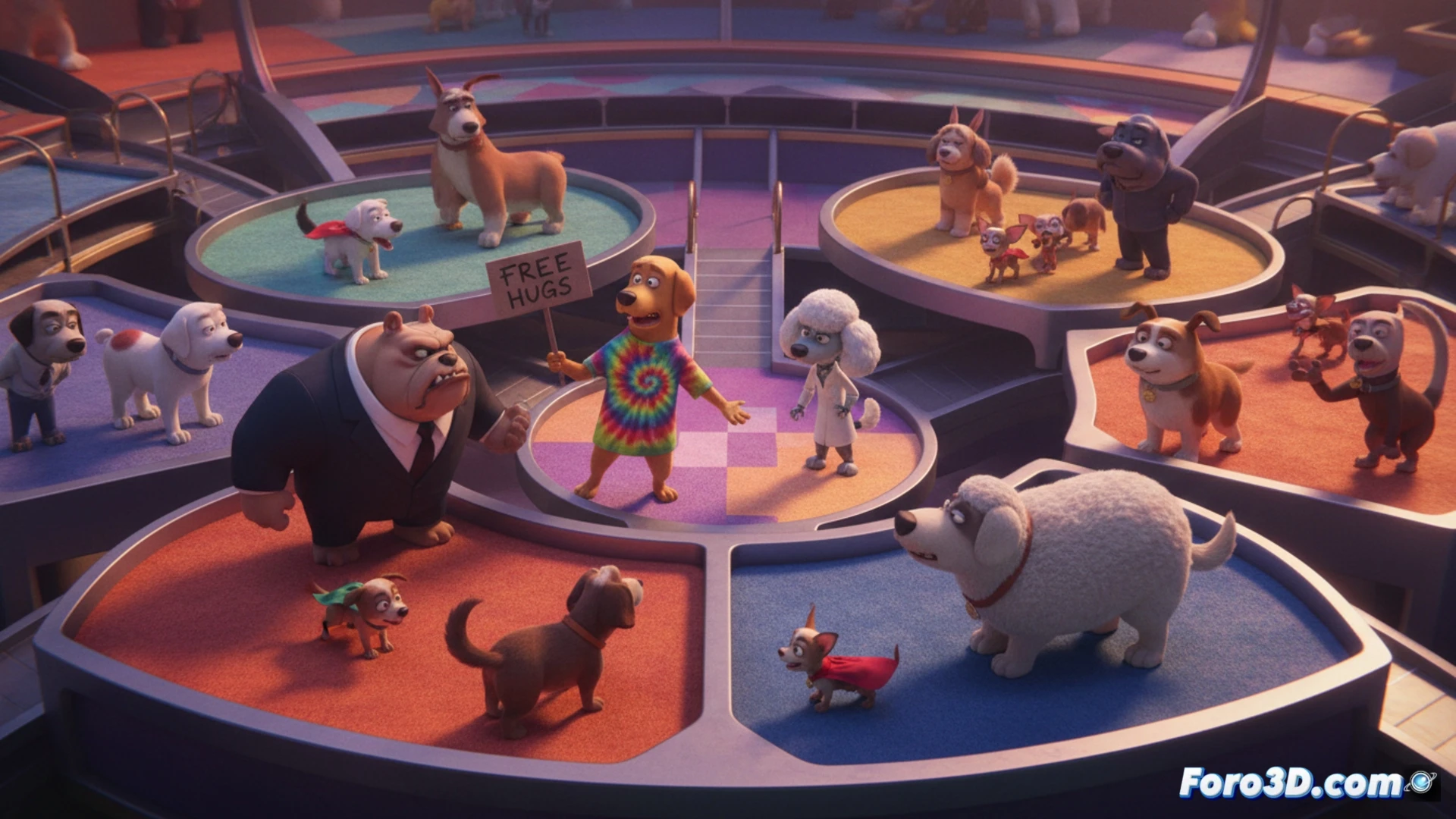
Design of a Narrative Microcosm: The Construction of the Park as an Activist Scenario 🎭
The park in Vida Perra functions as a perfectly textured 3D narrative model. Every element is loaded with meaning: the fences represent social boundaries, the benches are disputed territories, and the dogs' breeds amplify their owners' stereotypes. The characterization of the characters is an exercise in character design for activism. Each archetype, from the hippie to the businessman, from the gossipy neighbor to the young progressive, is a node in a network of conflicts. The narrative not only shows discussions but builds a complete ecosystem where every interaction, every glance, and every bark are part of a larger allegory about the difficulty of sharing public space and respecting difference.
Fiction as a Tool for Social Dissection 🔍
Vida Perra demonstrates that serial fiction can be an instrument of criticism as sharp as any artistic installation. By choosing an everyday and universal setting, the series disarms the viewer's defenses and manages to make them reflect on complex social dynamics without direct discourse. This allegorical approach is the core of digital activist art: using familiar narrative structures to visualize and question the unwritten codes that govern our interactions. The series, in essence, renders ideological conflict in an accessible scenario, inviting the audience to recognize themselves in the distorted but truthful mirror of the park.
How does the series Vida Perra use the metaphor of the dog park and its digital aesthetic to criticize polarization and the performativity of political identities on social media?
(P.S.: digital political art is like an NFT: everyone talks about it but no one really knows what it is)