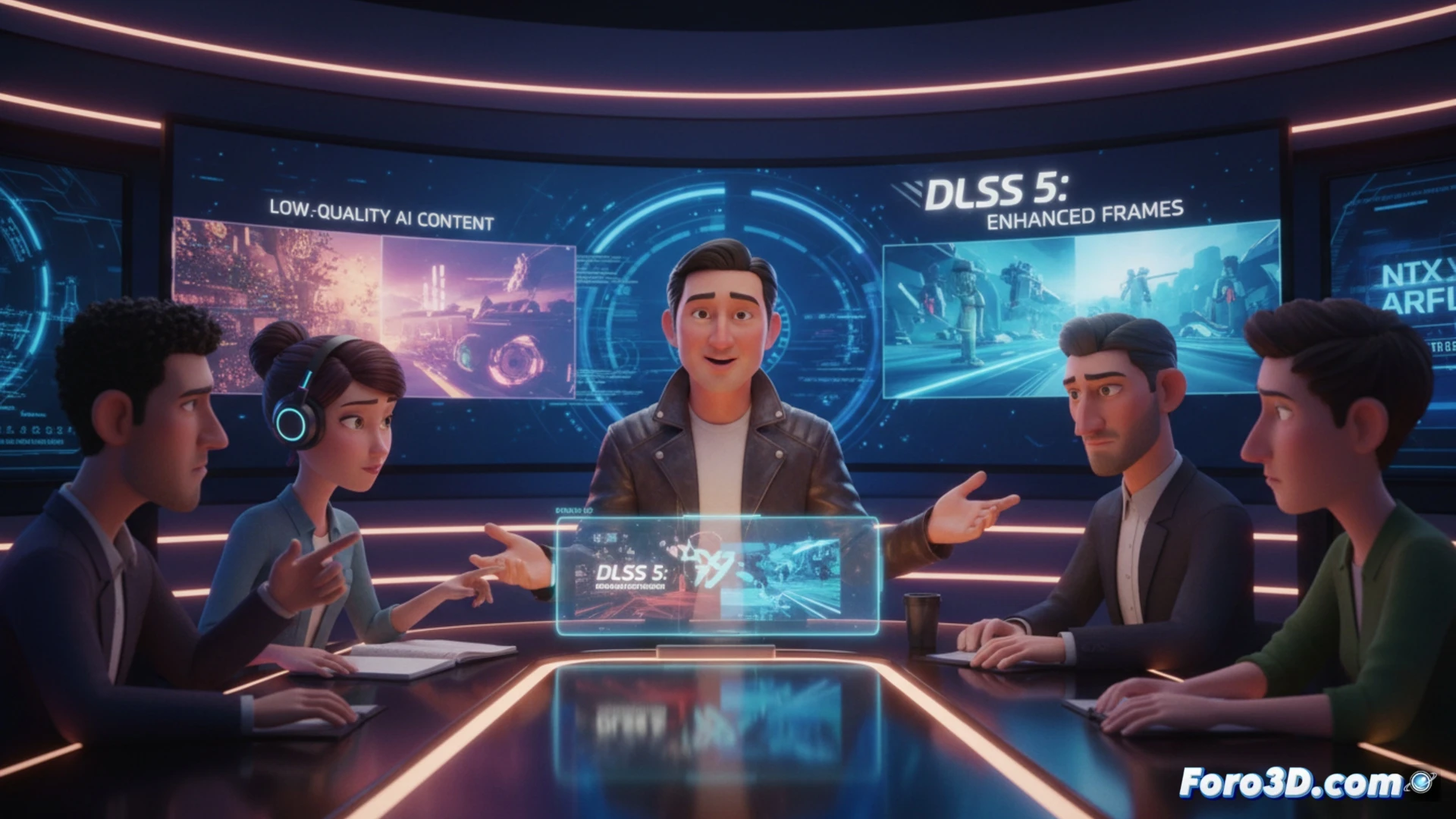
Nvidia CEO Jensen Huang has adopted a more conciliatory tone to defend DLSS 5, the controversial AI-powered image reconstruction technology. After previous dismissals of criticisms, he now claims to understand gamers' concerns and rejects low-quality artificial content. Huang insists that DLSS 5 only enhances each frame using the game's original assets, without altering the fundamental content. However, visual examples like the modifications to the character in Resident Evil Requiem contradict this narrative, fueling the debate on artistic fidelity.
The Technical Functioning and its Impact on the Pipeline 🤖
DLSS 5 represents a leap by employing generative neural networks to reconstruct images, extrapolating information beyond simple scaling. Unlike previous versions, it not only interpolates pixels but can infer and generate new details from the base art. Theoretically, it is conditioned by the textures and models created by artists. However, the case of Grace Ashcroft in Resident Evil Requiem shows how AI can radically reinterpret appearance, altering facial features, lighting, and materials. This introduces an unpredictable variable in the final rendering pipeline stage, where the engine delivers a result that developers did not directly supervise, blurring the line between optimization and automated creative reinterpretation.
A Dilemma for Developers and Artists 🎨
The controversy transcends the technical and touches the core of artistic authorship. If an AI can substantially modify the appearance of a character or environment, where does the original intention of the art team stand? For developers, DLSS 5 poses a trade-off: gain performance in exchange for ceding control over the final visual presentation. The skeptical community fears a homogenization of styles, where the AI signature overshadows manual detail. Nvidia has until 2026 to fine-tune the balance, but the challenge is as much perceptual as engineering: to demonstrate that technical improvement does not equate to artistic betrayal.
Can DLSS 5, with its AI-based image reconstruction, achieve visual fidelity that respects the developer's original artistic intention without introducing unwanted alterations?
(P.S.: optimizing for mobile is like trying to fit an elephant into a Mini Cooper)