The arrival of DLSS 5 has reignited a fundamental debate in video game development: to what extent can technical optimization alter the original artistic vision? While its performance improvements are undeniable, its AI-based core presents a dilemma. When reconstructing the image, the system not only scales pixels but interprets and generates content, which can lead to unwanted changes in crucial elements like characters, modifying the narrative and aesthetic intent of the creators.
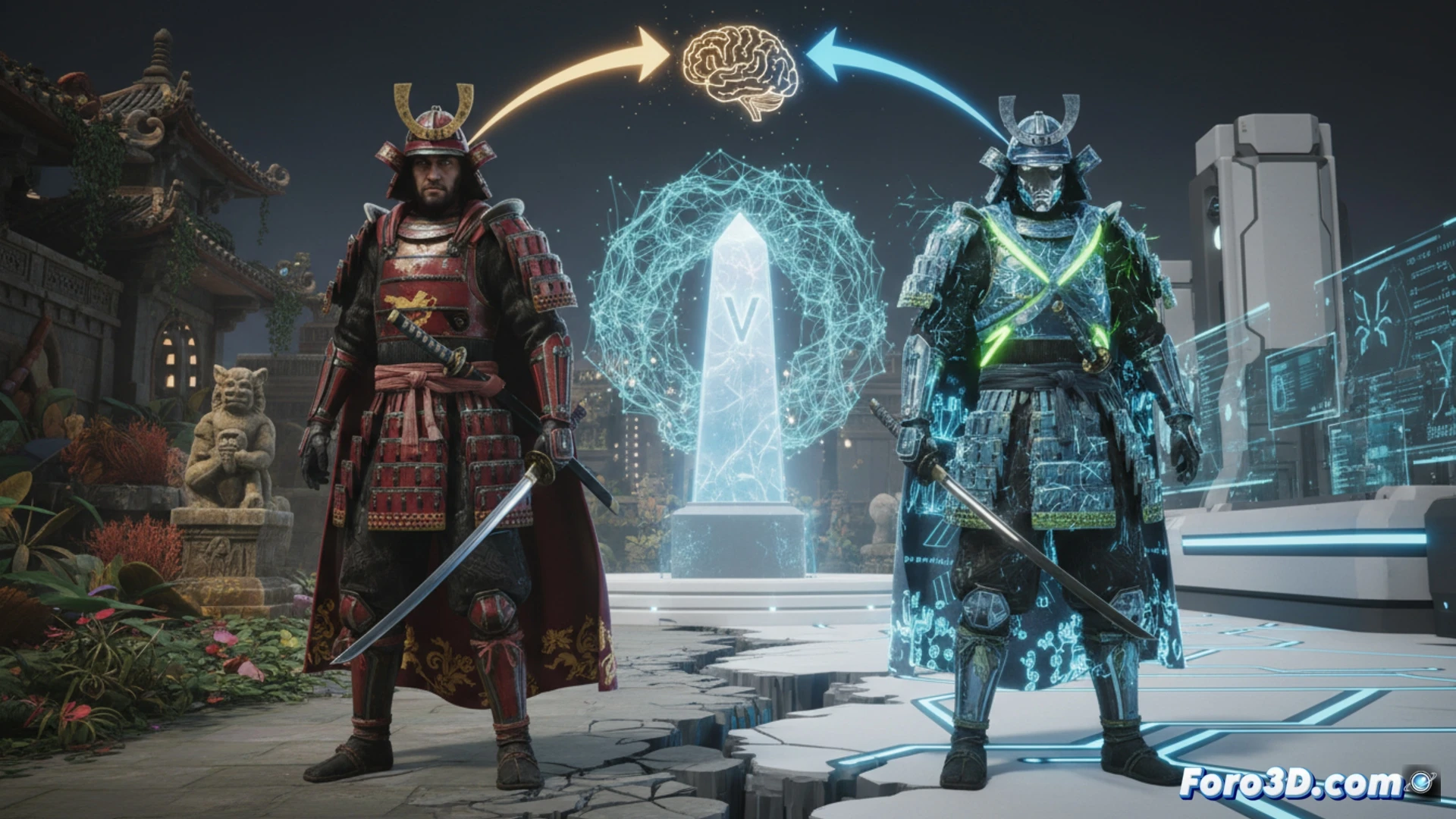
The technical problem: when AI reinterprets pixels 🤖
The DLSS 5 reconstruction process uses neural networks trained to predict and generate details from low-resolution samples and motion data. The conflict arises when this algorithmic process is applied to elements of high subjective artistic value. For example, it may overly smooth a skin texture designed to look tired or scarred, homogenizing its character. It may alter key facial microexpressions for motion capture acting, changing a determined gaze to a neutral one. Or it may reinterpret complex patterns in clothing, losing cultural or narrative symbolism. The AI optimizes for clarity metrics, not for artistic fidelity.
Art versus algorithm: a necessary balance 🎨
This technology forces development teams to make critical decisions. Artists and art directors must validate that the reconstruction does not betray their work, possibly requiring specific adjustments per asset. Players, on the other hand, may experience a slightly different version of the work. The future lies in tools that allow developers to train or guide the AI with their own assets, setting clear limits on what it can and cannot modify. The goal must be a symbiosis where technology serves art, not reinterprets it.
Should AI-based image reconstruction, like DLSS 5, be considered a technical optimization tool or a new form of visual art that redefines the original artist's authorship? 🎮
(P.S.: 90% of development time is polishing, the other 90% is fixing bugs)