Nvidia's announcement of DLSS 5 has sparked an intense debate that transcends the technical. Presented as a revolution that uses generative AI to add lighting and material details in real time, the technology has been received with skepticism by part of the community. The main criticism points out that it works like a generic content generator, homogenizing aesthetics and, most seriously, eroding the artistic control of studios. The controversy was fueled by a demo that drastically altered a well-known character, showing the deep gap between the company's vision and the creative sector's reception.
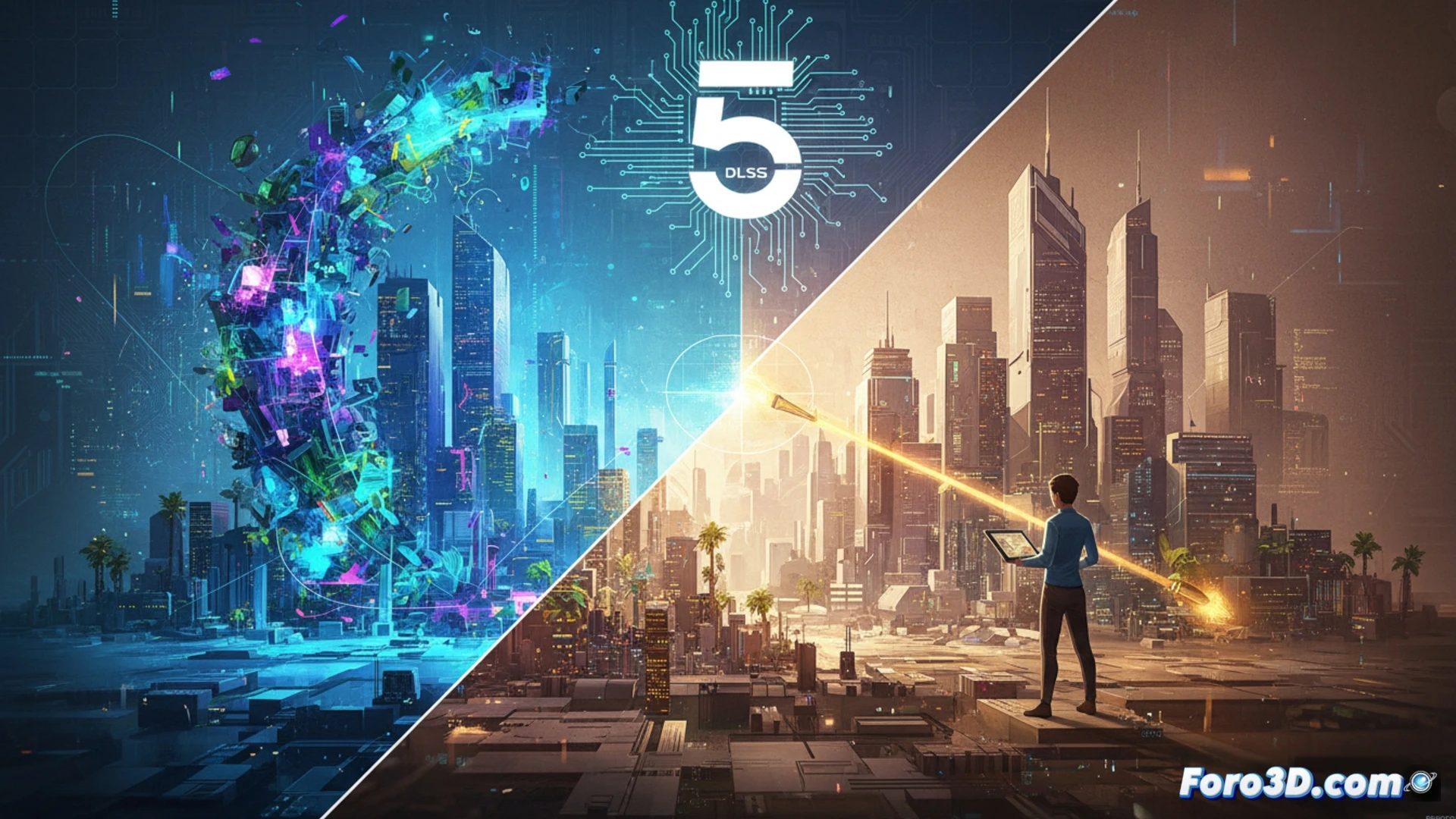
The technical and communicative gap: promises vs. reality 🤔
Technically, DLSS 5 promises a qualitative leap by generating graphical information that is not in the original image, using trained AI models. However, the conflict arises when that automatic generation of details clashes with deliberate artistic intent. The case of the Resident Evil character, whose appearance was modified toward an artificial beauty standard, exemplifies this clash. Additionally, Nvidia's communication management worsened the crisis. The apparent inclusion of partners like Capcom and Ubisoft without their prior consent, especially sensitive given Capcom's historical rejection of AI use, reveals a worrying disconnection with developers, who are the end users of the technology.
A precedent for the generative AI era in 3D ⚠️
This controversy sets a crucial precedent. Beyond frames per second, it raises who dictates the artistic vision in an AI-assisted pipeline: the artist or the hardware manufacturer's algorithm. Jensen Huang's response, dismissing the criticisms, suggests a path of technological imposition that could alienate creators. The future of tools like DLSS 5 will depend on a collaborative design that respects authorship and offers granular control to studios. Otherwise, technical efficiency could be achieved at an unacceptable creative cost for the industry.
Will the massive adoption of technologies like DLSS 5, which reconstruct or generate visual content through AI, lead to an erosion of the artist's creative control and aesthetic homogenization in video games and digital media?
(P.S.: trying to ban a nickname on the internet is like trying to cover the sun with a finger... but in digital)