Daniel Vavra, director of Kingdom Come: Deliverance 2, has defended Nvidia's upcoming DLSS 5 against criticisms accusing it of homogenizing the visual style of games. Vavra argues that this neural rendering technology is not a threat, but a tool that, when properly calibrated, can respect and enhance the unique aesthetic of each project. His stance opens a crucial debate in development: how to integrate intelligent scaling techniques without sacrificing artistic identity.🎮
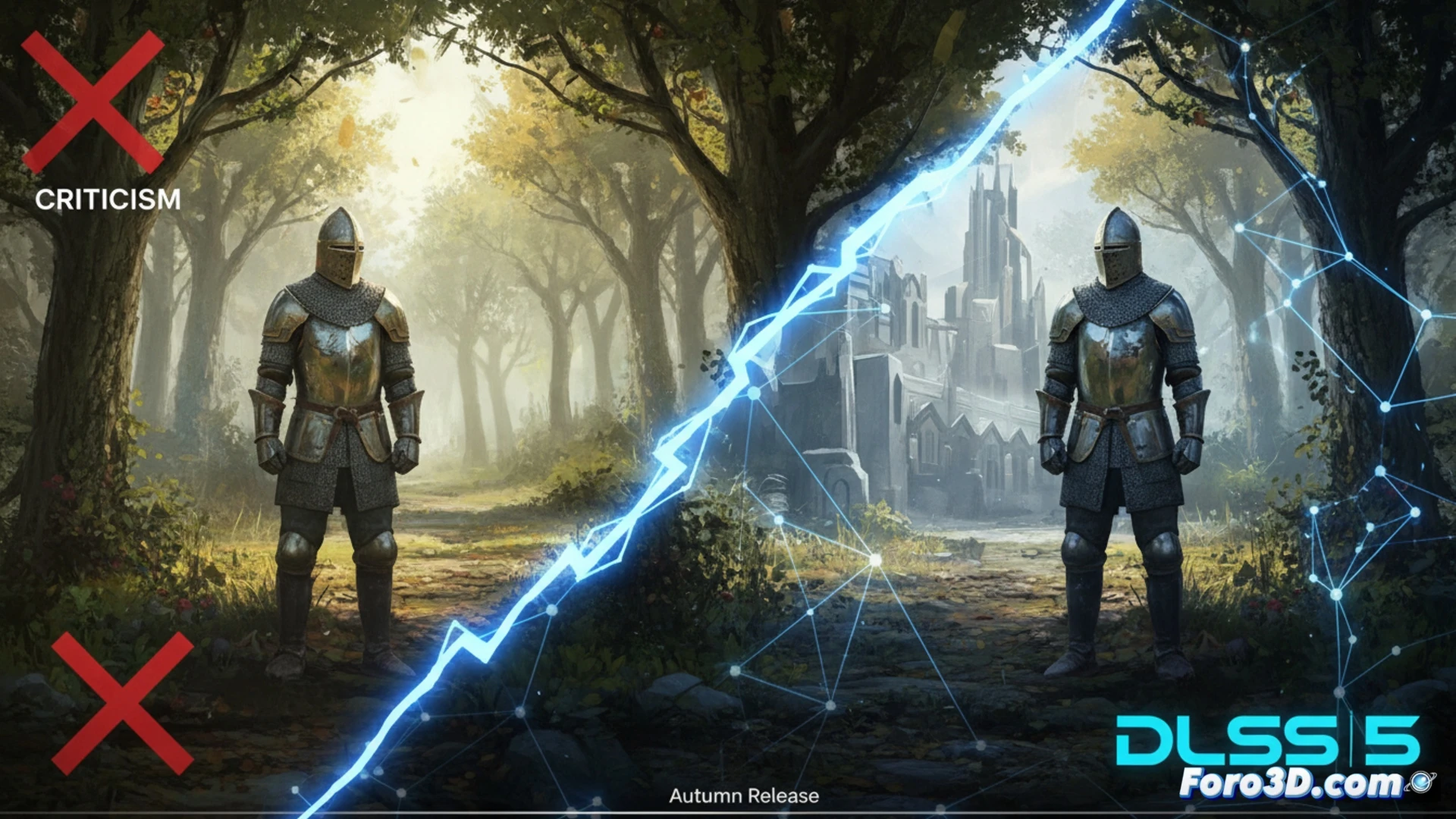
Temporal scaling: performance versus visual fidelity⚖️
Technologies like DLSS or FSR use artificial intelligence algorithms to reconstruct a high-resolution image from a low-rendered one, gaining performance. The technical challenge lies in the fact that these models, trained with generic data, can misinterpret deliberate artistic elements, such as dithering patterns, hand-painted textures, or cinematic grain effects, smoothing or eliminating them. This generates the complaint of an aesthetic that is too clean and artificial. The key, as Vavra suggests, lies in engines and developers offering finer control over the process, allowing the model to be adjusted to preserve the original intention.
One more tool in the developer's toolbox🧰
Vavra's vision positions DLSS 5 not as a substitute for art, but as an advanced component of the rendering pipeline. Its potential to make ray tracing or complex techniques viable on more modest hardware is undeniable. The future will involve artistic and technical teams collaborating to train or configure these systems, ensuring that performance gains do not come at the expense of style. The current controversy is a necessary step toward the maturity of a technology that has come to stay.
How can artificial intelligence in technologies like DLSS 5 become a creative tool that respects and enhances the developer's intentional artistic direction, rather than just a performance shortcut?
(P.S.: shaders are like mayonnaise: if they break, you start all over again)