Frederick Douglass's manuscripts and speeches are not just historical texts; they are artifacts of resistance. His powerful rhetoric, captured in ink and paper, was a fundamental weapon against slavery. Today, digital and 3D technologies offer an unprecedented opportunity to preserve, analyze, and revive these documents, transforming them into tools for contemporary activism and bridges between his struggle and ours.
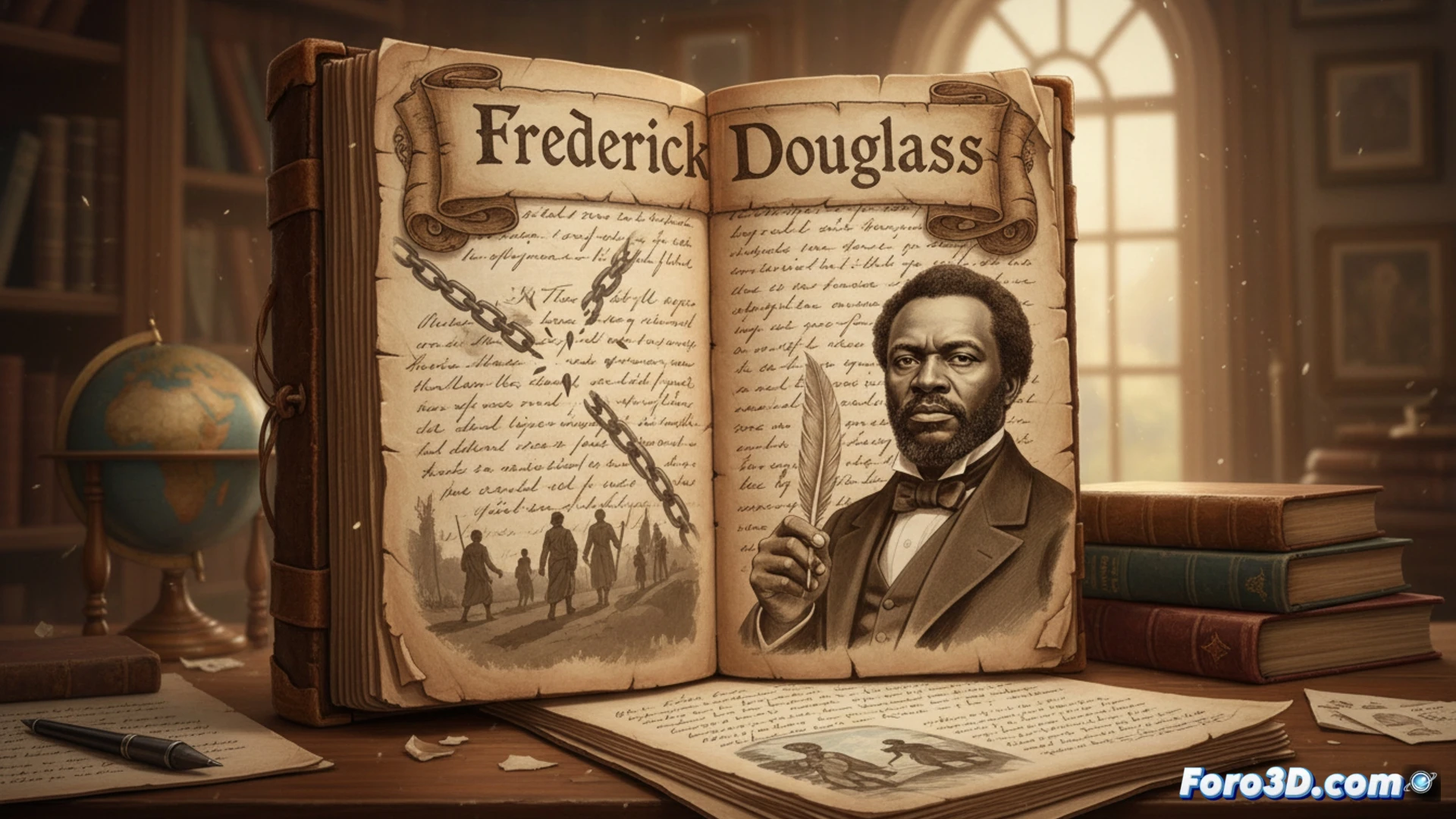
Beyond Scanning: Material Analysis and Rhetorical Visualization in 3D 🔍
Digitization goes beyond a simple flat image. 3D scanning of a manuscript can capture the texture of the paper, the depth of the ink, corrections, and pen pressure, revealing the materiality of its creation. These techniques enable a forensic analysis of its writing process. Additionally, we can visualize data from his speeches: mapping the frequency of keywords, the structure of his arguments, or the geography of his tours in interactive models. This not only enriches academic research but creates new visual narratives to understand the construction of his powerful oratory.
Immersive Legacy: Awareness Through Digital Recreation 🕶️
The most transformative potential lies in creating immersive experiences. Imagine walking through a virtual reconstruction of the platform where he delivered a crucial speech, or holding a digitized manuscript in augmented reality. These recreations can connect the viewer emotionally and viscerally with the historical context, making Douglass's legacy dialogue directly with current struggles for social justice. Thus, 3D technology becomes the medium for his activist art to resonate with renewed force.
How can 3D modeling and interactive visualization of historical artifacts, like Frederick Douglass's manuscripts, transform public perception and empower new forms of digital activism?
(P.S.: pixels have rights too... or at least that's what my latest render says) ✨