The Champions League match between FC Barcelona and Atlético de Madrid has been declared high risk, activating a reinforced security protocol. This scenario is a perfect example to analyze how 3D technology and simulation can revolutionize security management in mass events. Beyond traditional measures, the creation of a digital twin of the stadium offers a proactive tool to plan, train, and prevent incidents more efficiently and safely. 🏟️
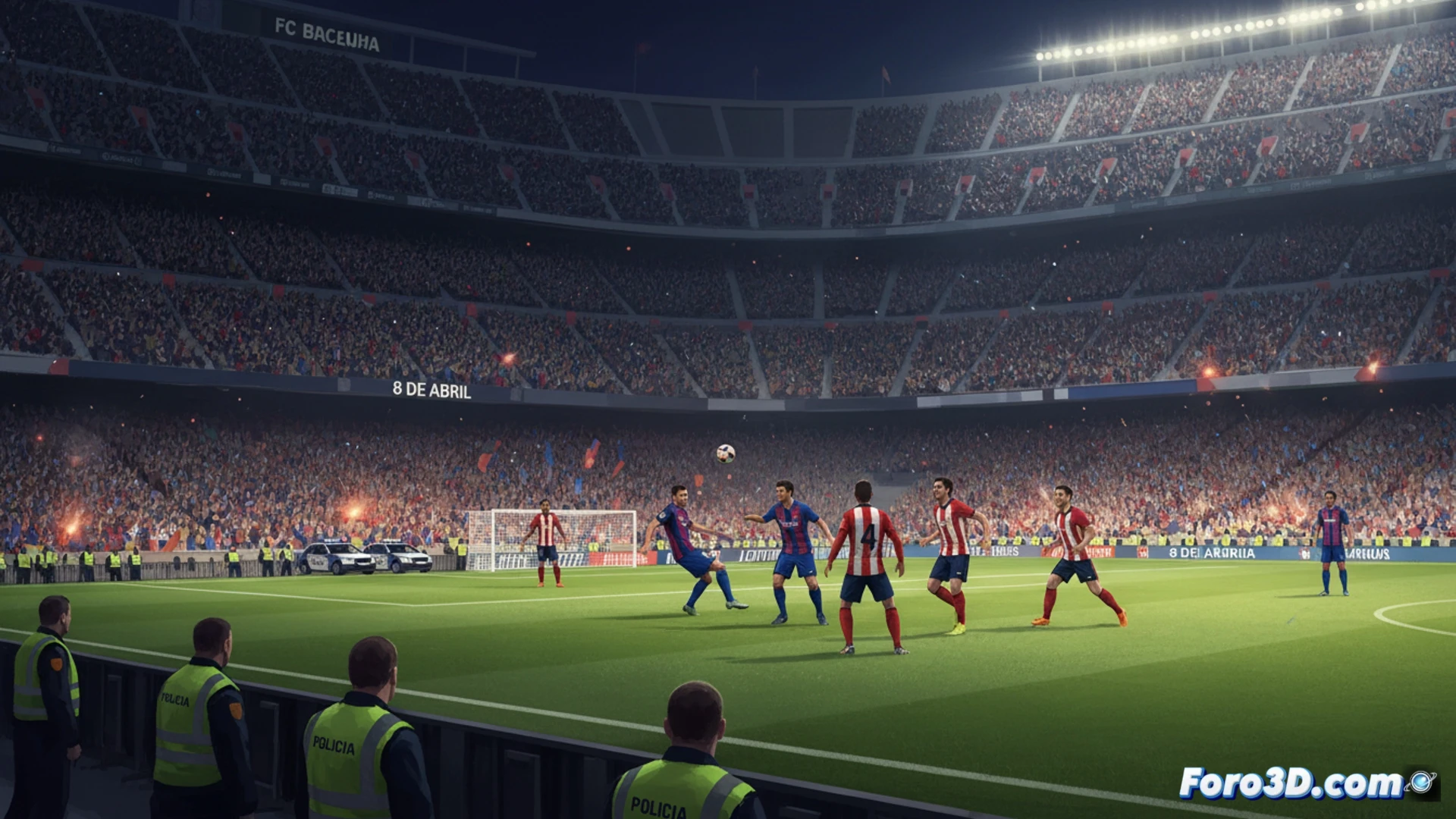
3D Simulation for Tactical Planning and Crowd Management 🧠
A digital twin of the Camp Nou would allow recreating the stadium and its surroundings with millimeter precision. In this interactive 3D model, security managers could simulate entry and exit flows of the public, identifying bottlenecks and congestion points. Different arrangements of barriers, checkpoints, and security devices could be tested virtually. Additionally, it is possible to recreate specific crisis scenarios, such as emergency evacuations or incidents in the stands, allowing police forces to train their tactical responses in a risk-free virtual environment, optimizing reaction times and coordination.
Proactive Prevention: The Future of Sports Security 🚨
The implementation of these technologies represents a leap from reactive to preventive security. Analyzing millions of simulation data points helps make evidence-based decisions, allocating resources where they are truly needed. For a high-risk match, this means greater protection for fans, players, and residents. Investment in digital twins and 3D simulations not only mitigates risks but also establishes a new standard in the organization of safe and sustainable sports events.
What biomechanical metrics would be relevant to analyze in soccer players?