The design of Non-Terrestrial Networks with massive constellations in low Earth orbit presents unprecedented technical challenges. A recent seminar, sponsored by Mathworks and IEEE Spectrum, proposes a solution through a unified modeling methodology. This approach enables the creation of a comprehensive digital twin of the NTN, simulating everything from orbits and antennas to channels and receivers, to accurately predict system performance before its costly physical deployment. 🛰️
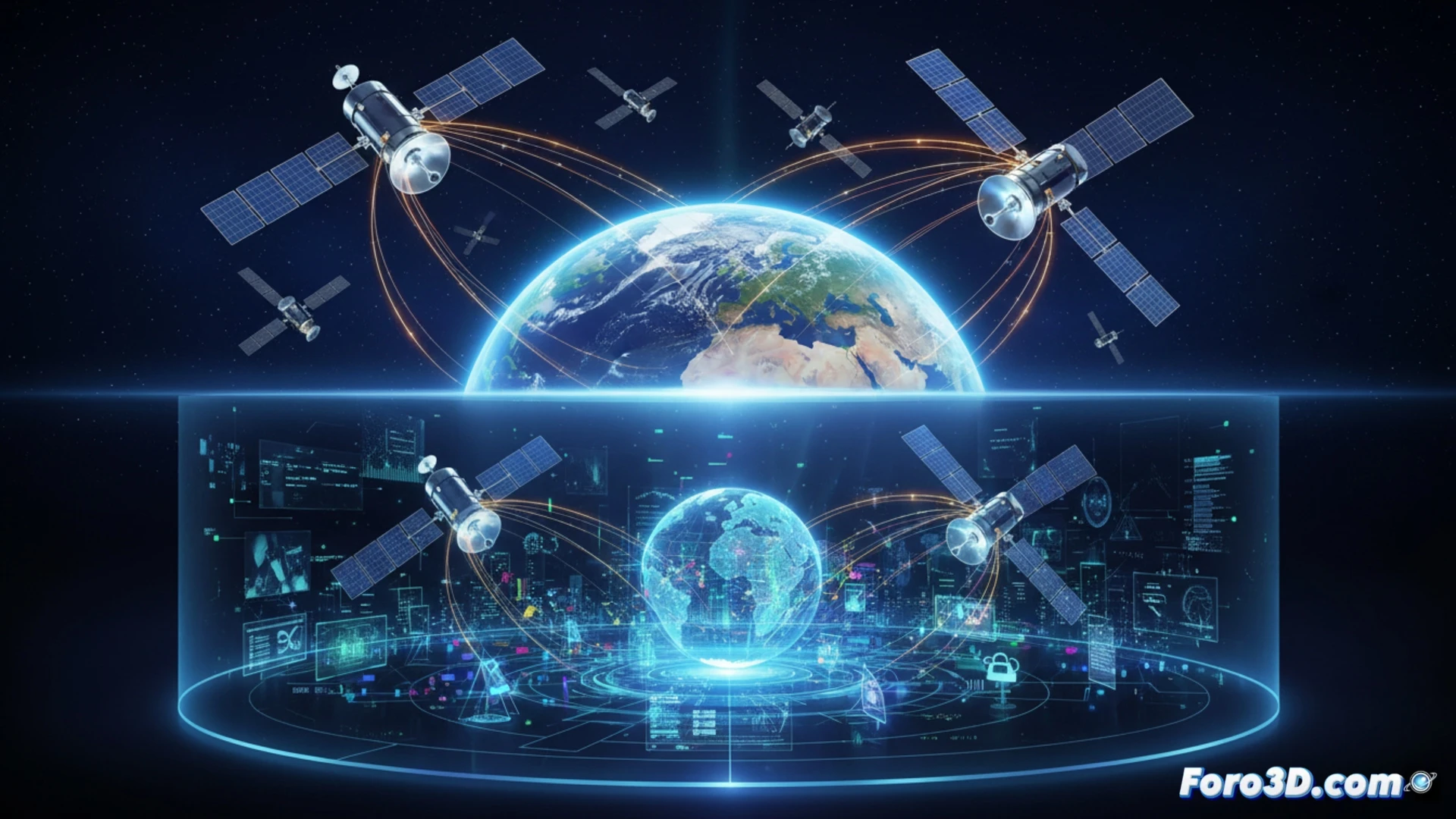
Unified methodology: from constellation analysis to link simulation 📡
The presented methodology addresses all communication link components cohesively. It begins with the analysis and visualization of the satellite constellation and its orbital dynamics. Then, it integrates detailed modeling of onboard antennas and power amplifiers. The propagation channel is simulated considering atmospheric effects and relative mobility. Finally, the ground receiver is modeled. This complete chain enables critical studies, such as co-channel interference analysis and link availability, in a virtual environment that faithfully replicates the operational conditions of the physical system.
Beyond simulation: the digital twin as an optimization strategy ⚙️
This approach goes beyond isolated component simulation. By building a holistic digital twin of the NTN, engineers can explore "what-if" scenarios, optimize design parameters, and validate protocols iteratively and cost-effectively. This establishes a virtuous cycle where the digital twin not only predicts performance but becomes a fundamental tool for decision-making and risk reduction in the development of complex space telecommunications infrastructures.
How can digital twins optimize the planning and real-time operation of massive NTN constellations, considering orbital dynamics, interference, and resource management in an environment of extreme complexity?
(P.S.: don't forget to update the digital twin, or your real twin will complain)