The recent evacuation of Spaniards from the Middle East, using military aircraft and complex ground operations, underscores the need for precise planning in hostile environments. At Foro3D, we analyze how 3D simulation and digital twins offer key tools for these crises. They would allow recreating scenarios, optimizing routes, and managing resources virtually before real execution, increasing the safety and effectiveness of humanitarian missions amid international conflicts.
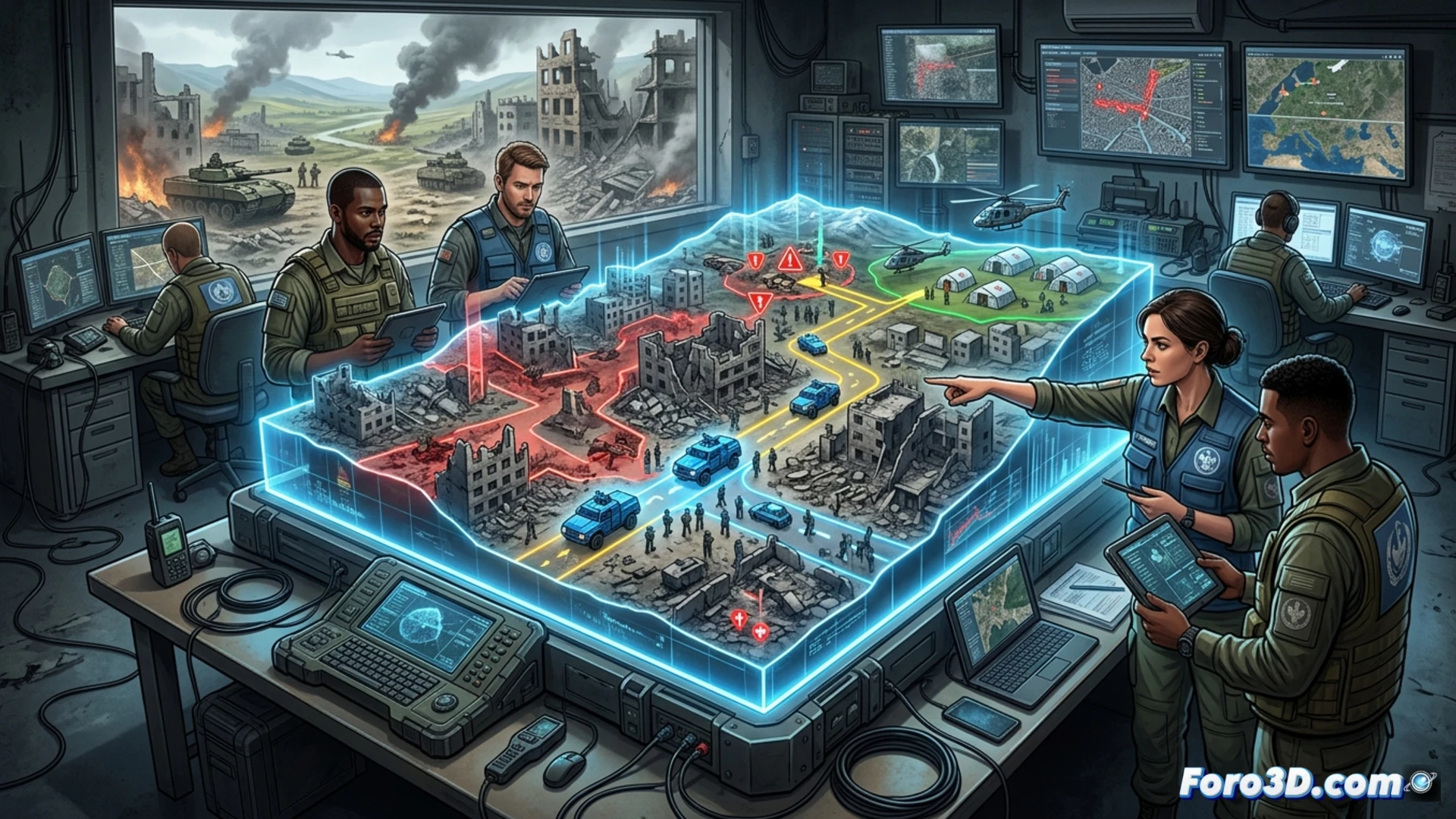
3D Modeling and Logistics Simulation for Mass Evacuations 🗺️
3D technology enables the creation of virtual replicas of cities, airports, and border routes. In a case like evacuation from multiple countries, safe meeting points could be modeled, the flow of people toward them simulated, and real times calculated considering blockades or dangers. A digital twin of the operation would integrate real-time data on the location of evacuees, the status of infrastructures, and transport availability. This would facilitate decision-making to coordinate, for example, the land departure of a group from Iran with the scheduled arrival of a military flight at a specific base like Torrejón, optimizing every movement and available resource.
Data Visualization for an Effective Humanitarian Response 📊
Beyond logistics, 3D data visualization is crucial for crisis command. Representing in an interactive model the location of the initial 31,000 Spaniards, the 3,000 already evacuated, and ongoing flights provides an instant understanding of the situation. This geospatial information layer over the 3D model helps prioritize actions, identify vulnerable groups, and communicate the operation's status clearly. It is the future of disaster management, where every decision is supported by a simulated and visually precise environment.
How can digital twins optimize the evacuation of civilians in conflict zones amid the growing complexity of rescue operations? 🤔
(P.S.: Simulating catastrophes is fun until the computer melts down and you become the catastrophe.)