Mariano García, world champion in 1,500 meters, trains on the agricultural paths of Cuevas de Reyllo, Murcia. His success is based on consistency, the supervision of his coach Gaby Lorente, and techniques like hypoxia. This apparently simple routine hides enormous potential for 3D technology. What if we could create a digital twin of Mariano to optimize every aspect of his preparation? The intersection between sports and three-dimensional modeling opens a new paradigm.
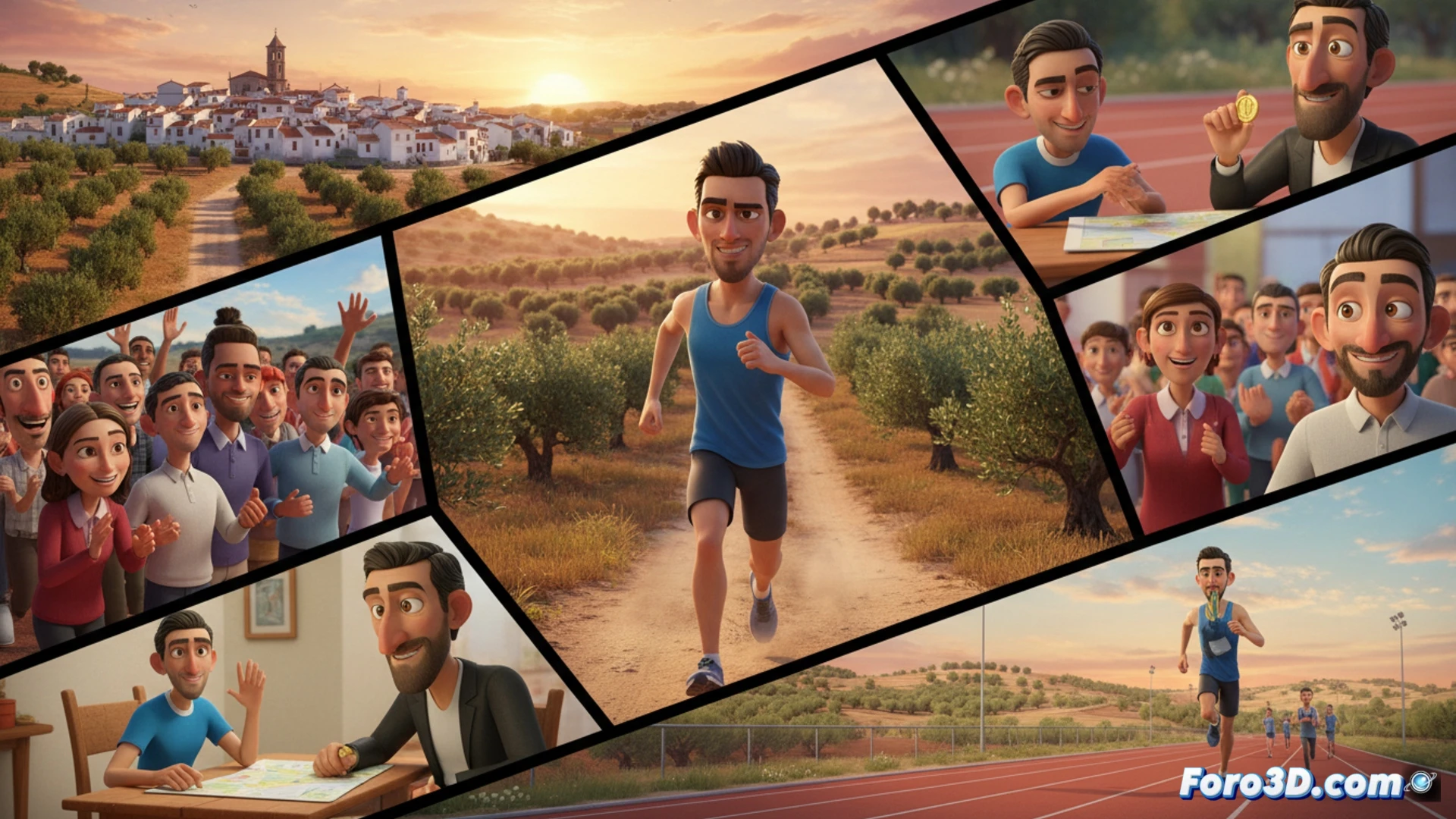
3D Modeling Applied: From Biomechanics to Hypoxia Simulation 🤖
3D technology would allow scanning the athlete's body to create an exact biomechanical model. This digital twin could run on a virtual replica of the paths in Murcia or any track in the world, analyzing in real time his stride efficiency, force distribution, and energy expenditure. Additionally, the effects of hypoxia could be simulated in 3D environments, modeling how his physiology responds to different altitudes without the need to travel to high-altitude centers. This would complement his real training with quantifiable data, allowing his coach to adjust loads and technique with millimeter precision.
Technology at the Service of the Human Essence of Sports ❤️
The ultimate goal is not to replace the dusty paths or his connection with his community, which Mariano values so much. 3D technology is a tool to enhance human work, not to replace it. By freeing up time from manual analysis and offering deep insights, it allows the athlete and his coach to focus on the essentials: the feeling, the competitive mindset, and the bond with the environment that forges a champion.
How can creating a digital twin of an athlete revolutionize the preparation of a world champion training in uncontrolled environments like agricultural paths?
(P.S.: 3D VAR: now with replays from angles that didn't even exist)