The startup Aikido proposes a radical solution for data centers: integrating them into the submarine base of floating wind turbines. Its prototype for the North Sea would house server rooms of up to 12 MW in the ballast tanks, using the energy generated on-site and cold seawater for liquid cooling. This complex physical system is governed by a digital twin, which simulates and optimizes the synergy between generation, computing, and climatization.
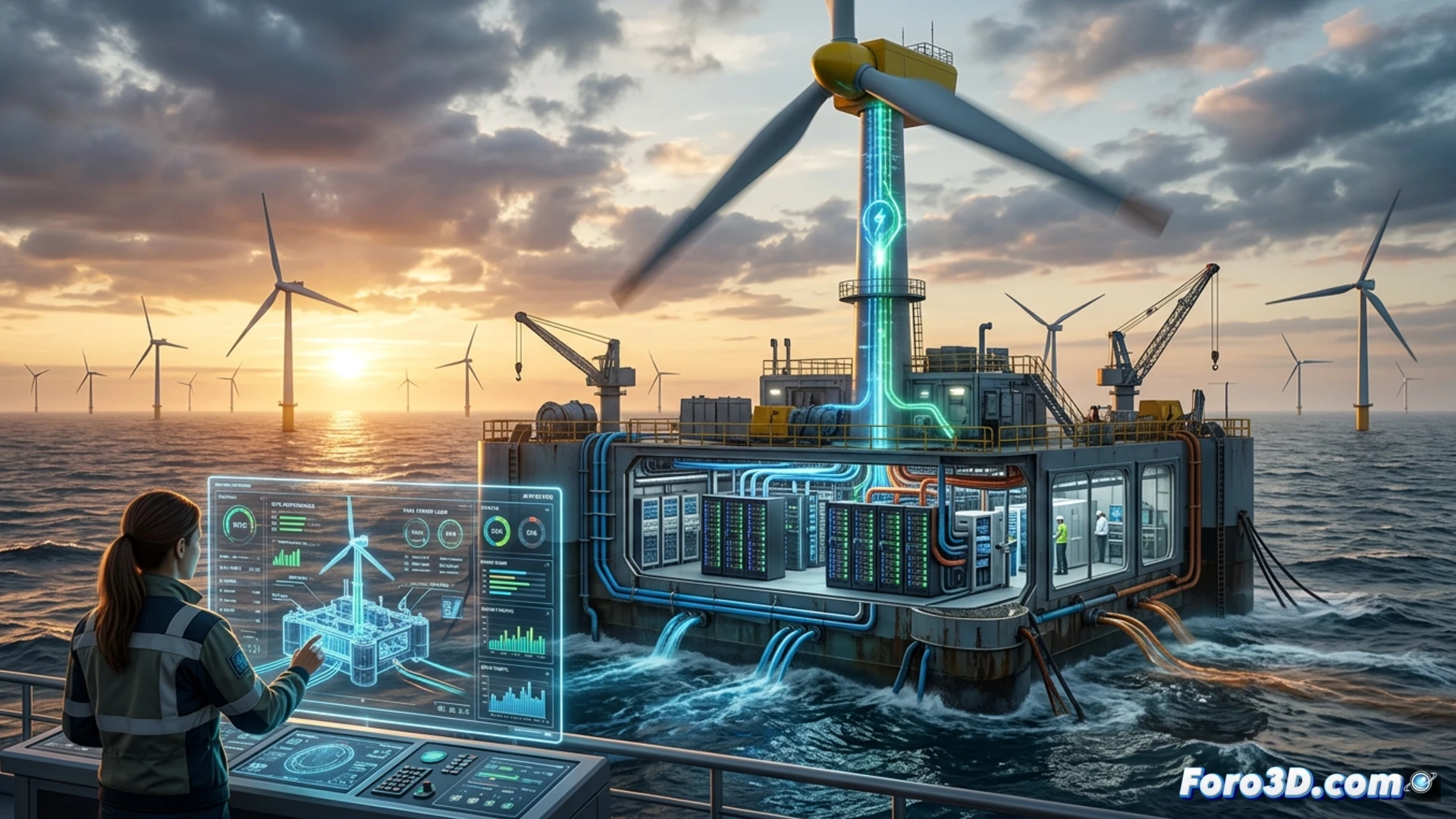
Integral simulation of subsystems in adverse marine environment 🌊
The digital twin is crucial for modeling this interdependent ecosystem. The virtual replica must simulate the platform's dynamic response to extreme oceanic conditions, ensuring stability for the servers. Simultaneously, it models the energy flow from the wind turbine to the racks, and the liquid cooling system that exchanges heat with the sea. This allows optimizing the design to maximize energy efficiency (PUE), predict maintenance, and ensure that the available computational power matches the variable wind generation.
A model for the sustainability of critical infrastructures ♻️
This project goes beyond the mere innovative location. It represents a case study where the digital twin is the core of a sustainable and autonomous infrastructure. By integrating energy physics, thermodynamics, and computing into a single virtual model, a continuous optimization cycle is created that reduces waste and grid dependency. This approach could define the future of decentralized and low-emission data centers.
How can a digital twin ensure the long-term viability and efficiency of a data center integrated into the submarine base of a floating wind turbine?
(P.S.: don't forget to update the digital twin, or your real twin will complain) 😅