Transformer design faces the challenge of validating its behavior against complex phenomena such as harmonics or transients. Creating a digital twin using the finite element method (FEM) solves this challenge. This precise virtual replica allows simulating and analyzing the equipment's performance under operational and extreme conditions, eliminating the costly and slow need for multiple physical prototypes, and establishing itself as an indispensable tool for modern engineering.
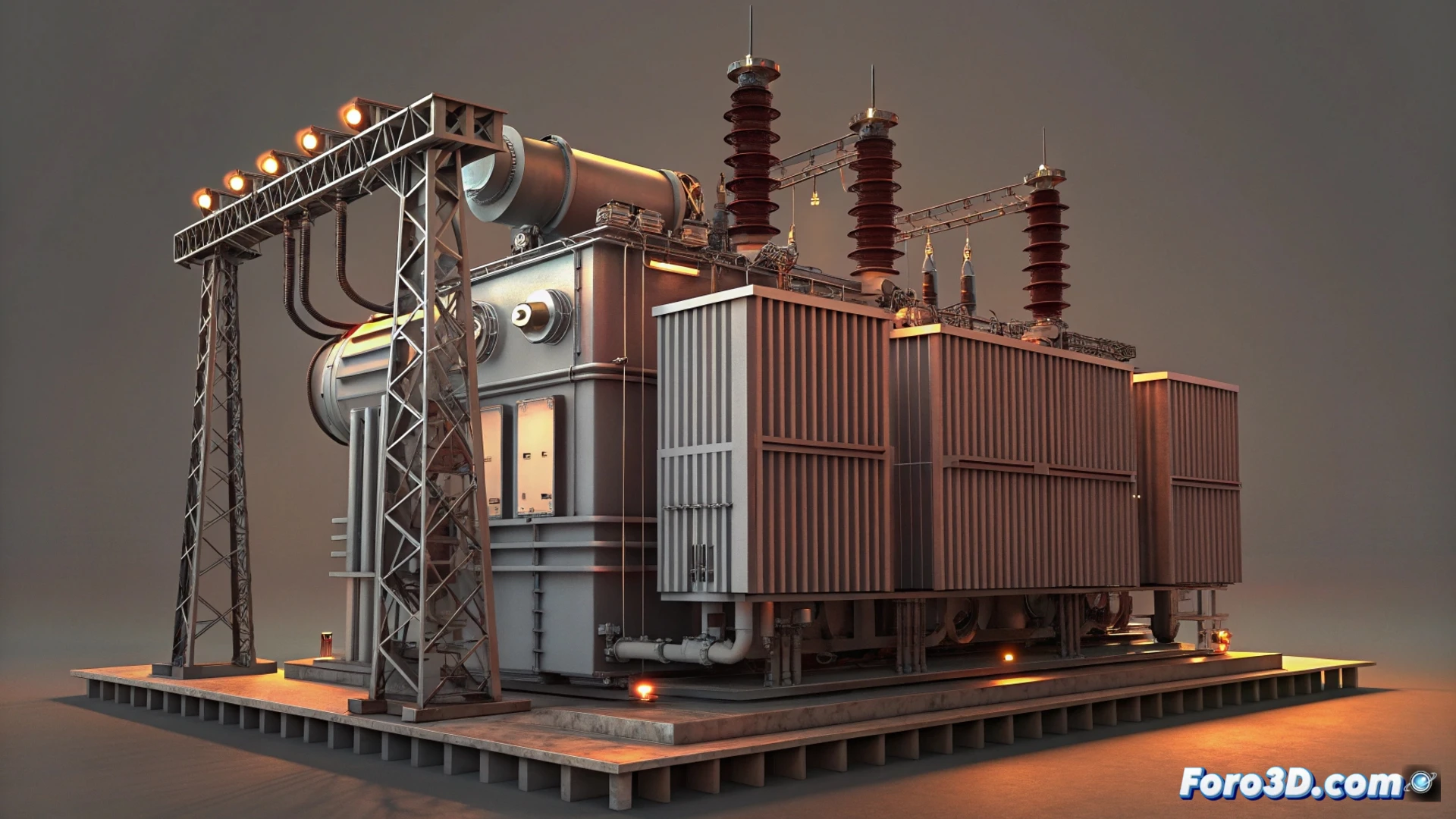
FEM Model Construction and Analysis Methodology 🔬
The construction of the digital twin begins with the preparation of the 3D geometry and the precise assignment of material properties, such as the B-H curve of the core. Subsequently, the physics of the problem is defined, configuring the windings and their excitations. The analysis is divided into two key phases. In the harmonic regime, the magnetic field distribution is identified, locating areas of possible saturation and imbalances. In the transient simulation, dynamic responses such as the dreaded inrush current are characterized. The overall accuracy critically depends on the correct modeling of the windings and the configuration of the numerical solver.
Validation and Impact on the Engineering Process ⚙️
The results of the digital twin, such as magnetic flux distributions and current waveforms, are validated by comparing them with known physical parameters, such as the turns ratio. This validation consolidates the model as a reliable source of truth. Its impact is tangible: it enables optimizing designs, mitigating operational risks such as thermal stress due to harmonics, and reducing development costs and timelines. The FEM thus proves to be the core of a practical digital twin, transforming the design paradigm in the electrical industry.
How can a finite element-based digital twin be used to predict and mitigate excessive heating in power transformers subjected to harmonic distortion?
(P.S.: My digital twin is currently in a meeting, while I'm here modeling. So technically, I'm in two places at once.)