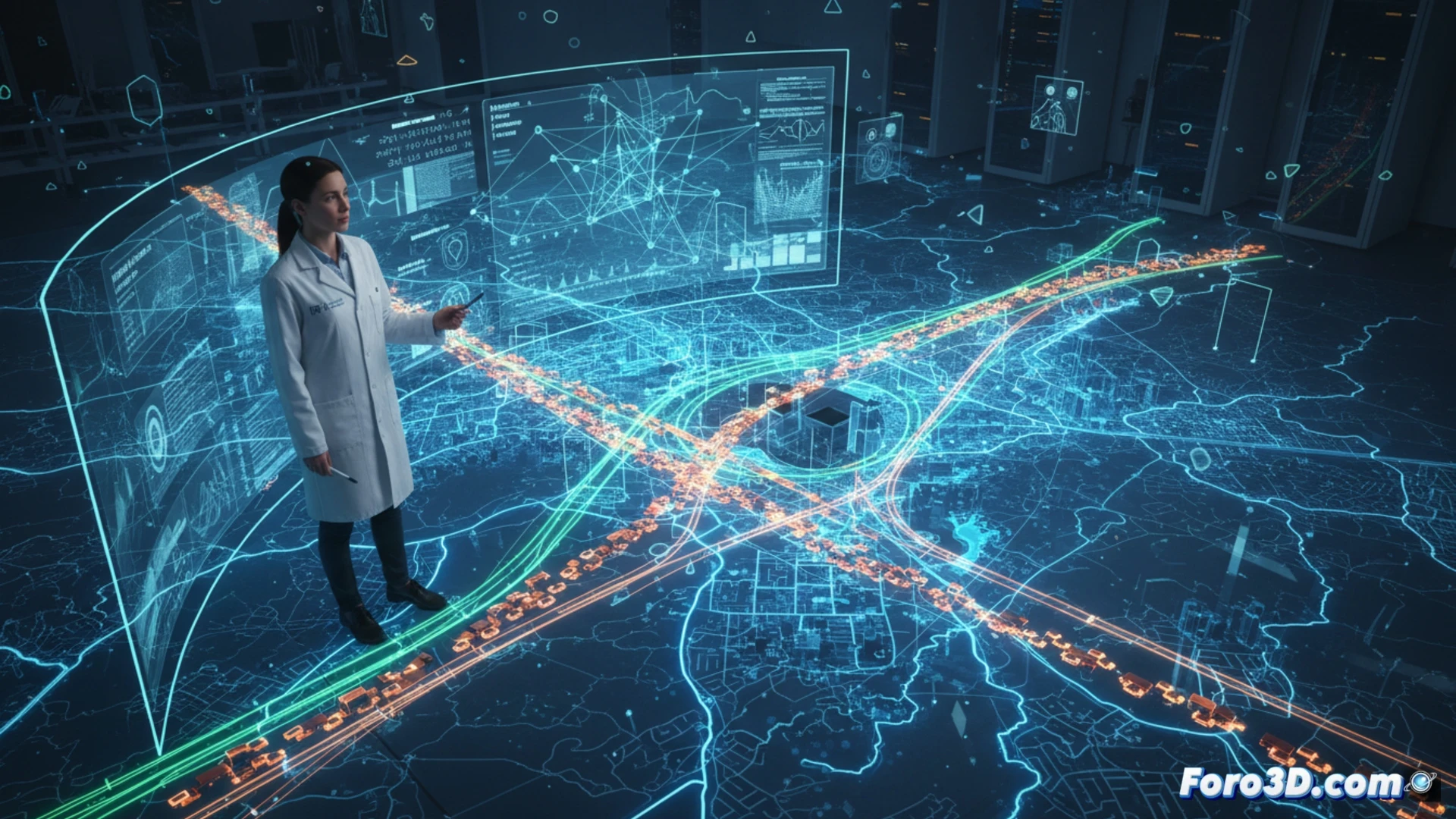
Researcher Grace Kagho, from ETH Zurich, has created a digital twin of chaotic Lagos to revolutionize its urban planning. Her virtual model, based on agent-based traffic simulations, allows analyzing and optimizing the Nigerian megacity's transportation system. This case exemplifies how digital twins transition from academic research to practical application, offering urban planners and engineers a powerful tool to test mobility solutions in a virtual environment before implementing them in the real world.
Agent-based modeling: the core of urban simulation 🧠
The precision of Lagos' digital twin lies in its use of agent-based models. Unlike aggregate simulations, this technique models the individual behavior of each vehicle or transport user as an autonomous agent that makes decisions according to predefined rules and its environment. By running millions of interactions between these agents, the model emerges a realistic picture of traffic flow, identifying bottlenecks, travel times, and congestion patterns. This predictive capability enables scenario analyses, such as evaluating the impact of a new bus lane or traffic restrictions, with a level of detail impossible to achieve with traditional planning tools.
From academia to market: the scalability of smart urban planning 🚀
Kagho's work transcended the lab with the founding of the spin-off UrbanEcho, backed by ETH. This crucial step demonstrates the maturity and commercial potential of digital twins for urban management. The vision is to scale this technology, offering cities worldwide data-driven and simulation-based planning solutions. The ultimate goal is clear: transform urban mobility towards more efficient, resilient, and sustainable systems, making informed decisions that improve citizens' quality of life.
How can a digital twin of a megacity like Lagos optimize traffic flow and predict the impact of new mobility policies before their real implementation?
(P.S.: don't forget to update the digital twin, or your real twin will complain)