The European space industry is accelerating its digital transformation with a strategic alliance. The Exploration Company and LEAP 71 join forces to integrate the computational engineering model Noyron RP into propulsion development. This platform acts as the core of an advanced digital twin, translating performance objectives into manufacturing-ready component geometries, surpassing traditional manual design methods and compressing development timelines from months to weeks.
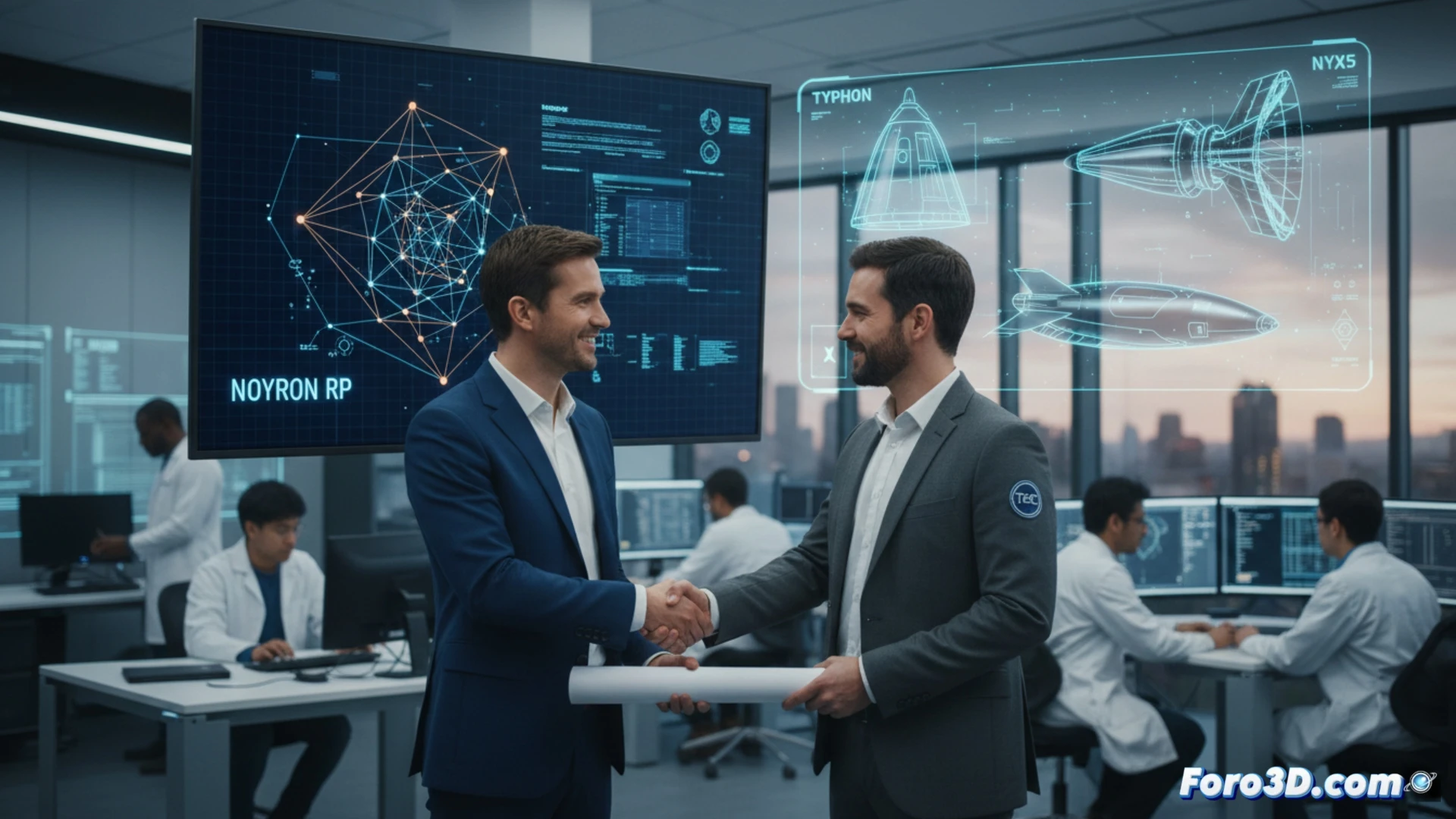
Noyron RP: the generative digital twin for propulsion 🚀
Noyron RP is not a simple simulation tool; it is a computational model that encodes physical laws and engineering principles to function as a generative digital twin. For systems like the Typhoon engine or the Nyx capsule, the platform enables the automatic exploration of a vast design space, iterating thousands of virtual configurations that meet performance and manufacturing requirements. Integrated into TEC's infrastructure, the digital twin optimizes every component before any physical testing, creating a development cycle where test campaigns validate and refine the model, which in turn generates new and better design iterations at an accelerated pace.
Software-first paradigm in aerospace engineering ⚙️
This collaboration symbolizes a profound shift toward a software-driven design approach. The digital twin becomes the primary source of engineering truth, where the final geometry is an output of the computational model. This method, demonstrated in the XRA-2E5 aerospike engine printed in one piece, prioritizes systemic optimization over manual intuition, redefining workflows in aerospace engineering and establishing a new standard for efficiency and performance.
How is the collaboration between startups and specialized software companies revolutionizing the creation of digital twins for the design and testing of space engines?
(P.S.: My digital twin is currently in a meeting, while I'm here modeling. So technically, I'm in two places at once.)