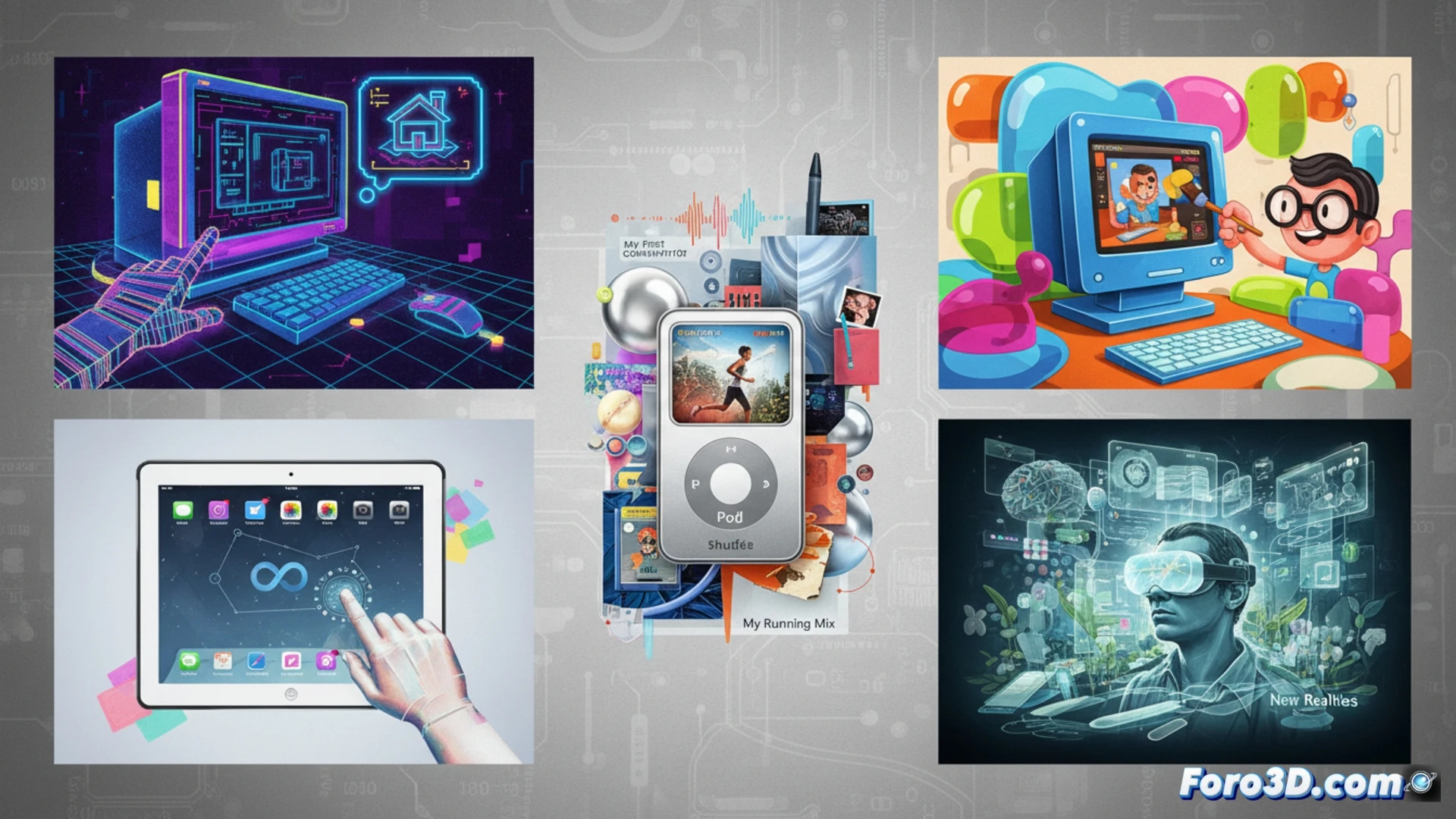
On the occasion of Apple's 50th anniversary, the 99designs platform has launched a collective project where designers from around the world pay homage to the brand's iconic products. Far from Apple's characteristic minimalism, this series of illustrations adopts a maximalist and expressive approach, reinterpreting devices like the iMac G3 or the iPod Shuffle in the visual style of the decade in which they were launched. Each piece combines technological nostalgia with the artist's personal vision, offering a vibrant visual chronology of five decades of innovation.
Technique and narrative: the conceptual brief as a creative engine 🎨
The project serves as an excellent case study on digital artistic creation guided by a solid conceptual brief. The commission had clear guidelines: choose an iconic product, adopt the visual aesthetic of its launch era, and incorporate a personal memory. This seemingly simple structure forced artists to undertake an exercise in historical and stylistic synthesis. The result is illustrations that not only represent an object but encapsulate the entire cultural essence of a decade, using color palettes, textures, and graphic resources that evoke everything from psychedelic eighties to futuristic 2000s. The technique, although not algorithmically generative, is deeply generative in concept, where the brief's rules act as parameters to produce unique yet cohesive results.
Beyond the icon: the value of aesthetic contrast ✨
The strength of this series lies precisely in its contrast with Apple's identity. By applying maximalism where simplicity reigns, the designers not only celebrate the products but reinterpret and humanize them. This approach underscores a fundamental idea in contemporary digital art: the device is not just a tool, but a cultural artifact loaded with affective memory. The project transcends mere commercial homage to become a collective reflection on how technology intertwines with our biographies, demonstrating that artistic value often arises from reinterpreting the familiar under a radically different light.
How can 3D generative art techniques reinterpret Apple's design icons to create a maximalist aesthetic that encapsulates half a century of innovation? 🍎
(P.S.: Generative art is like having a child who paints by itself. And you don't even have to buy it paints.)