Blizzard is injecting an experimental and wild dose into Diablo IV with its Season of Slaughter and the crossover with DOOM: The Dark Ages. These novelties, along with the upcoming Lord of Hatred expansion and new classes, are not just content, but strategic design tools. We analyze how these production decisions aim to retain players, test mechanics, and maintain engagement in the demanding games-as-a-service model of a contemporary AAA title, all before the next major narrative advancement. 🎮
Rotational Mechanics and Crossovers as Pillars of Continuous Service 🔄
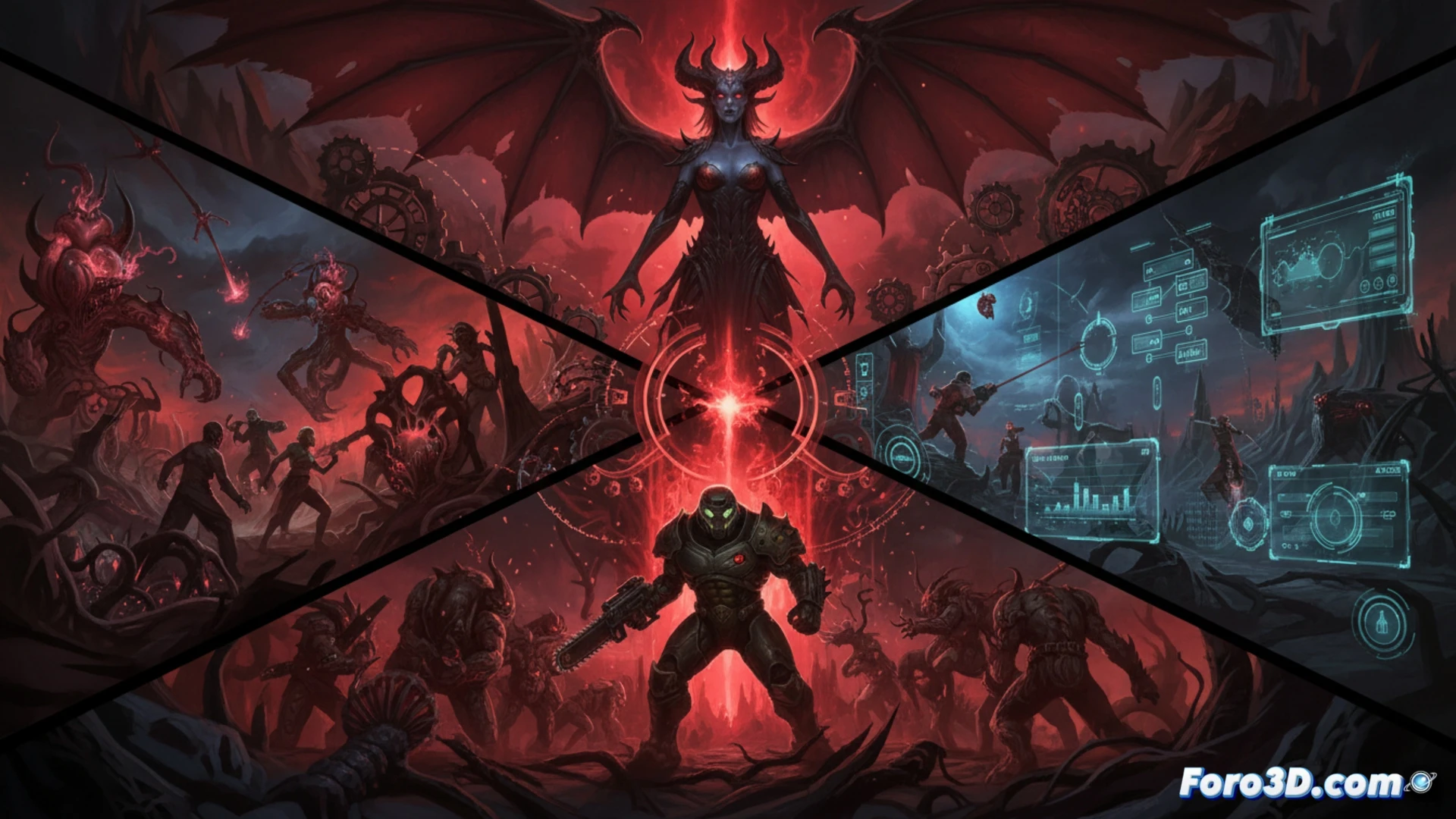
The transformation into the Butcher and the introduction of the witch as a temporary class are examples of high-impact rotational mechanics. This design allows developers to test radical concepts in a controlled sandbox, collect usage data and community reactions without compromising long-term core balance. Parallely, the official crossover with DOOM, offering free themed cosmetics, is a proven marketing and retention tactic. It fosters brand loyalty, generates social media conversation, and attracts players from other franchises, all while the art pipeline is optimized by reusing cosmetics as vectors for cross-narrative.
The Expansion as a Reinvention of the Game Loop ⚙️
Lord of Hatred, by doubling monster density and introducing sea beasts and the Rat King, is not just more content, it is a deliberate recalibration of the pace and core experience. This approach reflects a mature phase in post-launch development, where gameplay data indicates the need to intensify combat and renew environmental challenges. The clear strategy is to use an experimental season and a crossover as an immediate hook, while cooking up an expansion that aims to redefine the game's fundamentals to prepare for the next plot chapter.
How can extreme cross-over collaborations, like the one between Diablo IV and DOOM, redefine player retention strategies and the evolution of a game as a service in the current industry?
(P.S.: a game developer is someone who spends 1000 hours making a game that people complete in 2)