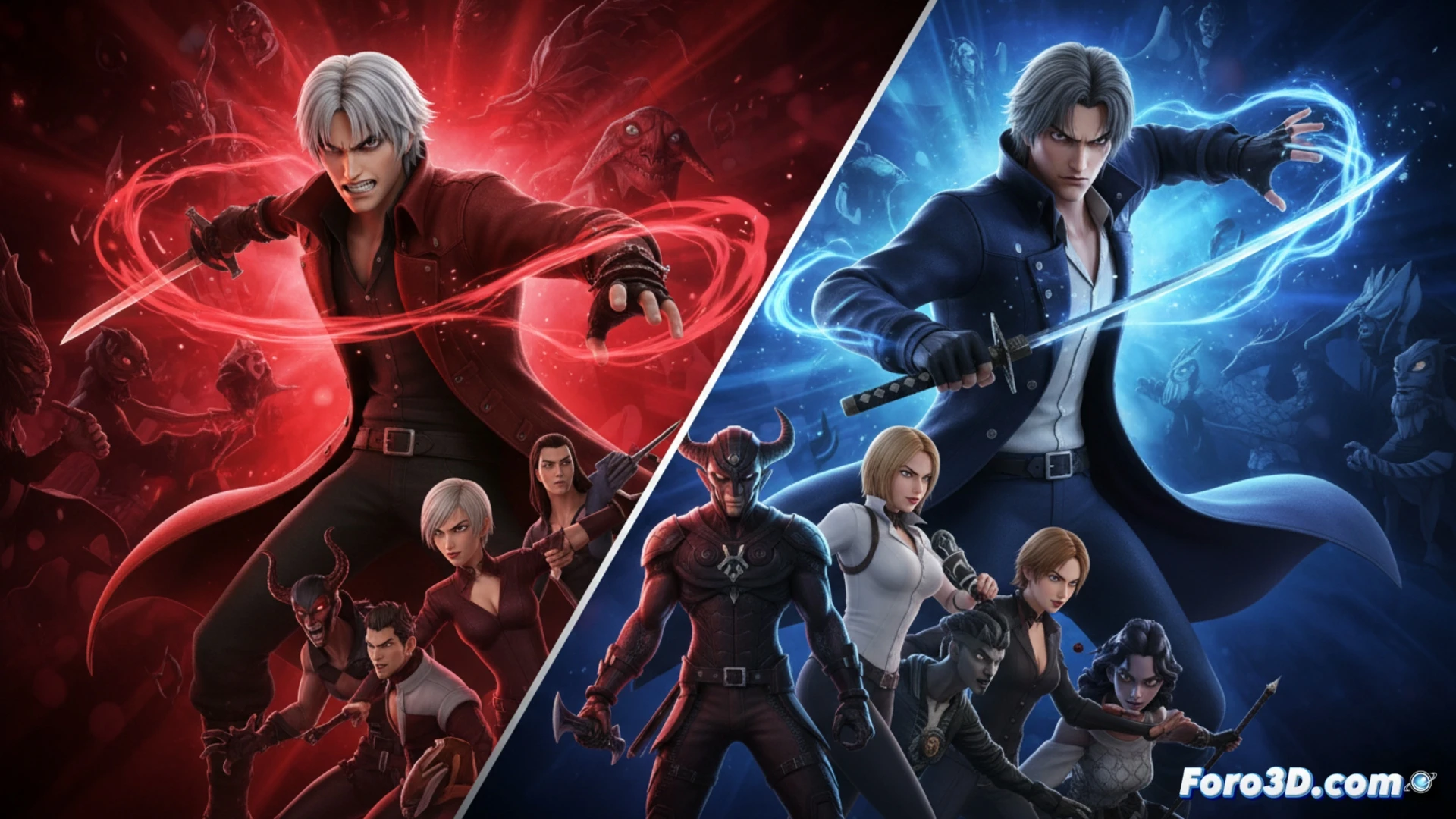
Netflix has unveiled the teaser for the second season of its animated adaptation of Devil May Cry, with a premiere date of May 12. The trailer centers its narrative on the fraternal conflict between Dante and Vergil, inviting fans to choose a side. This announcement reignites the debate on how to translate an interactive experience based on stylized combat and cool attitude to a passive medium like animation, a key technical and narrative challenge.
The extended cinematic: translating the game's language 🎬
The Devil May Cry adaptation essentially operates as an extended cinematic, the non-interactive element already present in the original game. The challenge for the series developers lies in maintaining the essence: the choreography of fluid and exaggerated combats, charismatic character designs, and gothic-punk aesthetics. Fidelity to the source material is measured by how each action sequence emulates the feel of a playable combo, prioritizing movement readability and visual impact, principles also crucial in video game animation design.
Adaptations that feed the cultural source code 📚
These successful adaptations consolidate the video game as a pillar of modern entertainment, validating its narrative universes beyond gameplay. For the development industry, they represent an opportunity to expand audiences and reignite interest in classic sagas. The phenomenon invites reflection on creating intellectual properties with transmedia potential from their conception, where the story and characters have the necessary depth to flourish in any medium.
How does the keyframe animation of the new season of Devil May Cry on Netflix influence the design of animations for action and hack and slash video games?
(P.S.: 90% of development time is polishing, the other 90% is fixing bugs) 🤖