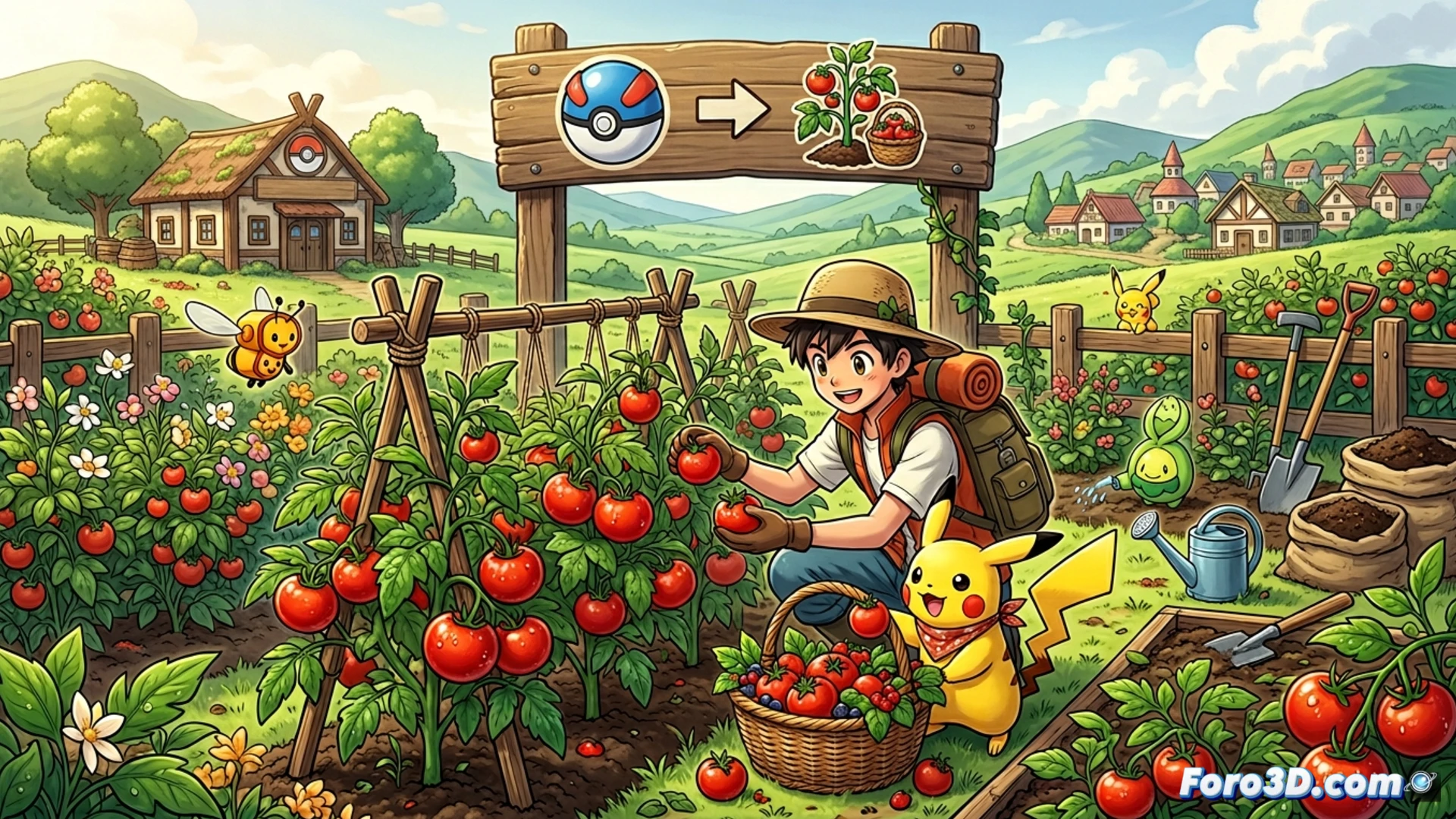
In video game design, the distribution of key resources must be tied to player progression, incentivizing exploration and mastery of mechanics. In Pokémon Pokopia, the tomato is a multifunctional resource used in crafting, construction, and missions. Its acquisition is not immediate, but unlocked after reaching the Great trainer level, a clear example of progression gatekeeping. This design forces the player to interact with the core combat systems before accessing new gameplay branches, such as agriculture or cooking, creating a structured and rewarding gameplay flow.
Technical implementation: zone connections and unlock triggers 🧩
The path to the resource exemplifies a classic level connection. First, a trainer level checkpoint is implemented in Withered Wasteland that acts as a trigger to unlock physical doors, literally opening new paths. The location of the door to Bleak Beach near a Pokémon Center is a deliberate design decision, offering a known safety point before transitioning to a new zone. The lower level with two houses uses the environment to guide the player: the layout directs attention toward the backyard garden, an area visually demarcated as a point of interest. The methods for obtaining seeds implement multiple economy systems: purchase after upgrading the meta-game environment, Pokémon drops, and world interactions like water splashes, ensuring the player can access the resource through different paths once the location is discovered.
The logic behind the multifunctional resource 🔗
The tomato transcends its function as a simple consumable. By being required for farms, recipes, and specific challenges like the Team Initiation Challenges, it becomes a connection node between disparate game systems. This multifunctionality is a powerful design tool, as it exponentially increases the perceived value of the resource and justifies the guided effort of its acquisition. The design not only teaches the player to farm, but shows them how a single element can integrate exploration, combat, economy, and mission mechanics, enriching the overall cohesion of the game world and offering multiple reward points.
How can we design the farming curve of a key resource, like tomatoes in Pokémon Pokopia, to incentivize exploration and feel like a natural extension of player progression, rather than a repetitive task?
(P.S.: game jams are like weddings: everyone happy, no one sleeps, and you end up crying)