Pokémon Pokopia transcends its first impression as a mere crossover between Pokémon and Animal Crossing. Its design proposal focuses on restoring an arid world after the disappearance of humans, embodying a Ditto whose transformation ability is the central mechanic. This analysis breaks down how the game builds an engaging gameplay loop through exploration, habitat building, and a surprising narrative, positioning itself as one of the most innovative proposals in the franchise from a design perspective. 🎮
Transformation as the core mechanic and biome design 🔄
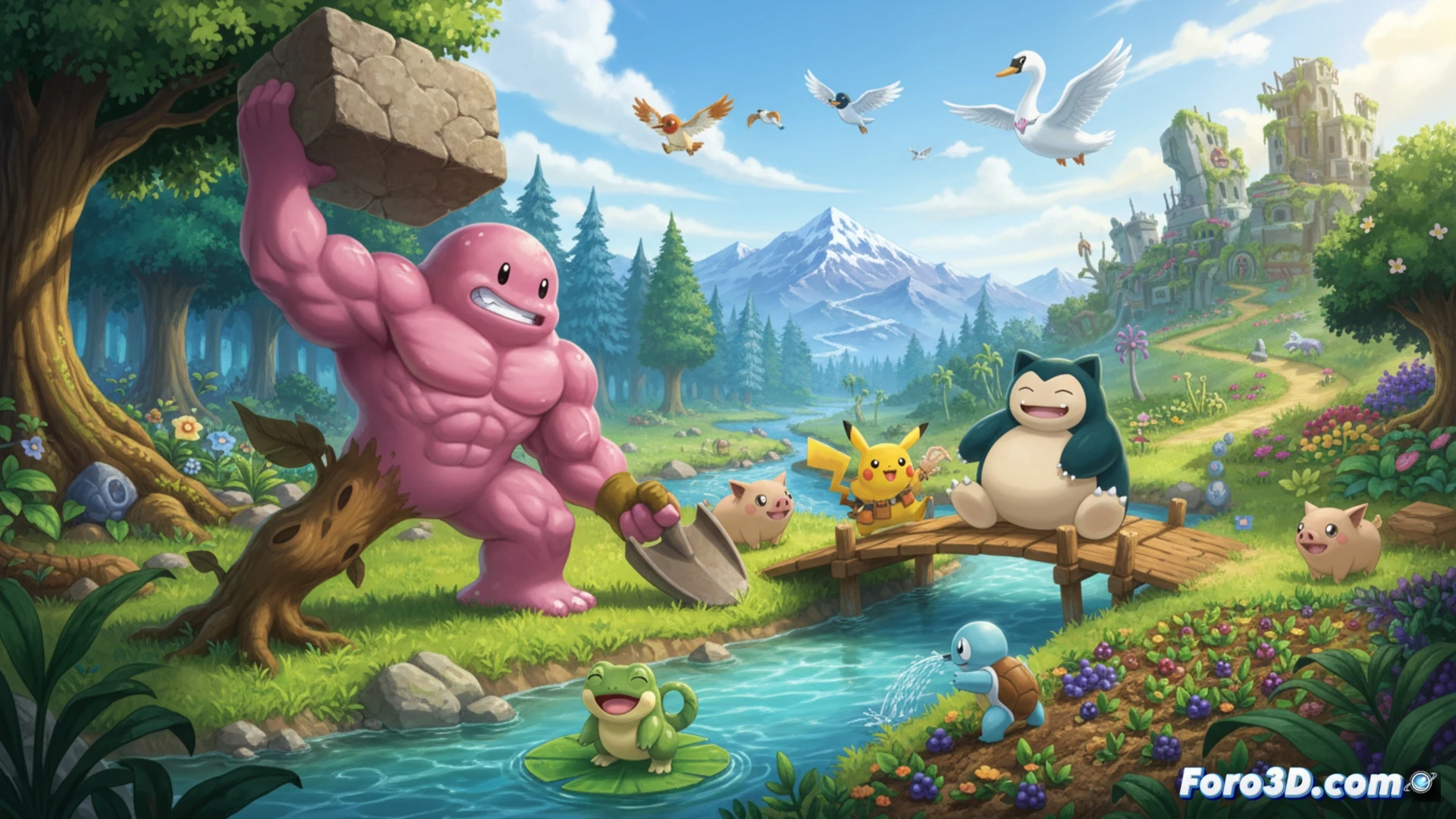
Pokopia's design is supported by two fundamental technical pillars. First, the Ditto's transformation is not merely a thematic element, but the main progress tool. The player acquires specific abilities by copying other Pokémon, which structures the resolution of puzzles and increasingly complex building tasks. Second, the world is organized into differentiated biomes that act as natural levels, guiding exploration and the pace of discovery. The vocal and humorous personality of the creatures is not a minor detail, but a key design resource to generate a welcoming atmosphere and retain the player, compensating for possible repetitions in care missions.
Lessons for designing non-linear experiences 💡
Pokopia demonstrates how a well-defined central mechanic can sustain a genre, in this case the life-sim, moving away from the traditional combat and capture formula. Its success lies in integrating narrative, skill progression, and building into a customizable loop, where the player decides their approach. This design offers a valuable lesson: innovation in established franchises does not require abandoning their essence, but reinterpreting it through cohesive gameplay systems that prioritize the atmospheric experience and the sense of impact on the world.
How does Pokémon Pokopia integrate life-sim mechanics with the essence of Pokémon breeding to create a gameplay loop that rewards both social management and the trainer's strategic progress?
(P.S.: shaders are like mayonnaise: if they break, you start all over again)