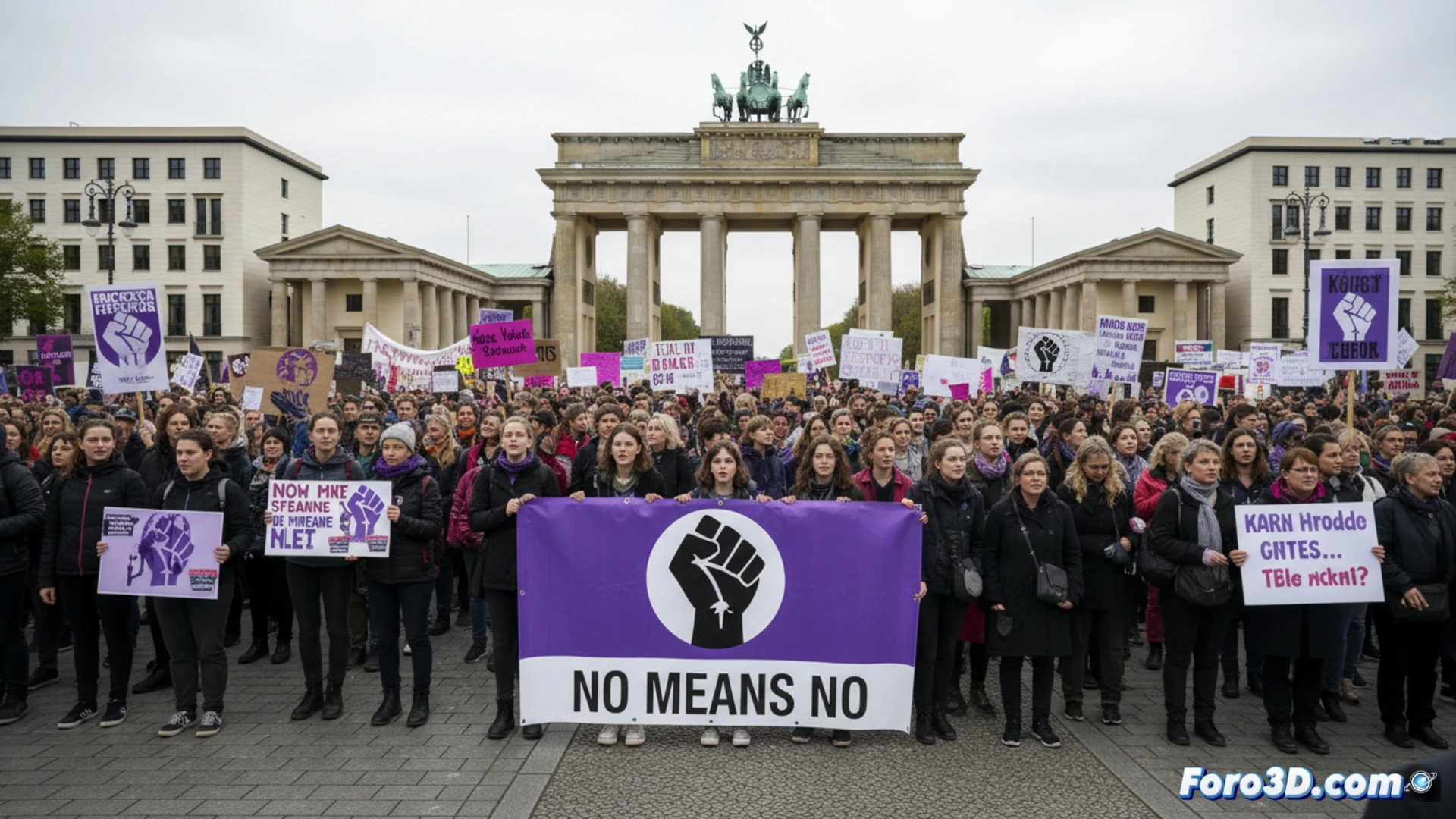
Actress Collien Fernandes' complaint for deepfake pornography has reopened the debate on legal protection in the digital era. By filing her case in Spain, considering its law more protective, she has highlighted a gap in German legislation, which requires physical contact to classify sexual assaults. This fact, combined with massive protests, has driven a political initiative to criminalize the creation and distribution of pornographic deepfakes, underscoring the urgency of adapting regulations to new forms of digital violence.
Digital forensic audit: technical keys to detect deepfakes 🔍
The generation of pornographic deepfakes uses generative adversarial networks and diffusion models that synthesize faces onto foreign bodies. The technical audit to identify them is based on digital forensic analysis. Inconsistencies in lighting, resolution differences between the face and body, or blending artifacts on the facial contour are sought. 3D analysis of geometry, such as lack of coherence in projected shadows or discrepancies in skin texture under different lights, is crucial. Automated tools examine blinking, lip sync, and unnatural microexpressions, generating an expert report that can be key in a judicial process.
Digital self-determination as an urgent right ⚖️
Beyond the technical challenge, the case underscores a fundamental violation of the right to sexual and image self-determination. Laws must evolve to recognize that digital violence causes real harm. Classifying these acts as crimes, requiring rapid removal of content, and prohibiting AI nude apps are necessary steps. Deepfake auditing thus becomes a tool not only technical, but of reparation and justice, protecting people's integrity in the virtual space.
What digital forensic tools do you recommend?