The news of the North American premiere of Decorado, the film by Alberto Vázquez, highlights a key phenomenon in contemporary animation: the expansion of an award-winning short film into an auteur feature film. This process, beyond mere footage extension, poses fascinating narrative and production challenges. The case of Decorado, which starts from a short that won a Goya in 2016, serves as a perfect example to analyze how a unique aesthetic and critical vision are scaled from a short format to a work of greater scope, maintaining the visual and thematic essence.
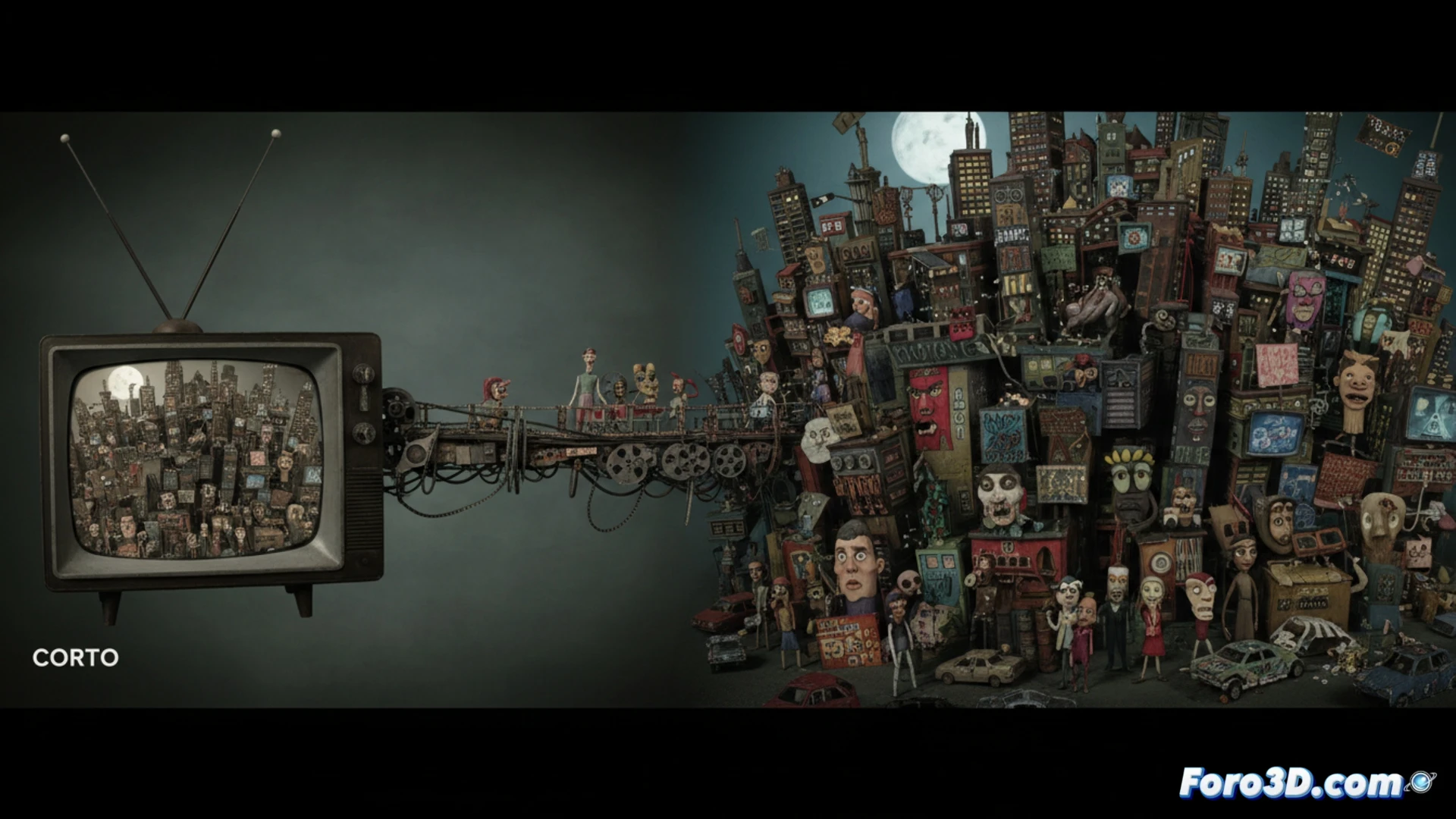
Pipeline and aesthetics: How 3D design builds social critique 🎨
The contrast between adorable designs and a dark theme is not merely a stylistic resource, but the core of Decorado's message. This visual decision, executed through 3D techniques, requires a meticulous production pipeline. Studios like UniKo and Abano Producións had to work on the evolution and consistency of a world that, although seemingly innocent, is a media and capitalist prison. The design of characters like the mouse Arnold, with his endearing appearance, intensifies the impact of his existential crisis and the satire of the system. 3D technology allows this precise control over lighting, texture, and composition, creating an artificial universe that reflects the plot itself about simulation and control.
Animation for adults: A visual language with depth 🧠
Decorado fits into the growing tradition of animation aimed at an adult audience, where the medium is not a genre, but a powerful language for complex ideas. Its success, endorsed by the Goya and its international distribution, demonstrates that 3D tools are ideal for exploring psychology and sociopolitical critique. The film proves that animation can transcend the childish, using its aesthetic to deconstruct narratives of conformism and fabricated reality, offering an inspiring case study for artists seeking to boldly fuse form and content.
How does the construction of the visual world and social satire expand and transform when moving from a short film to an animated feature film?
(P.S.: Previz in cinema is like the storyboard, but with more possibilities for the director to change their mind.)