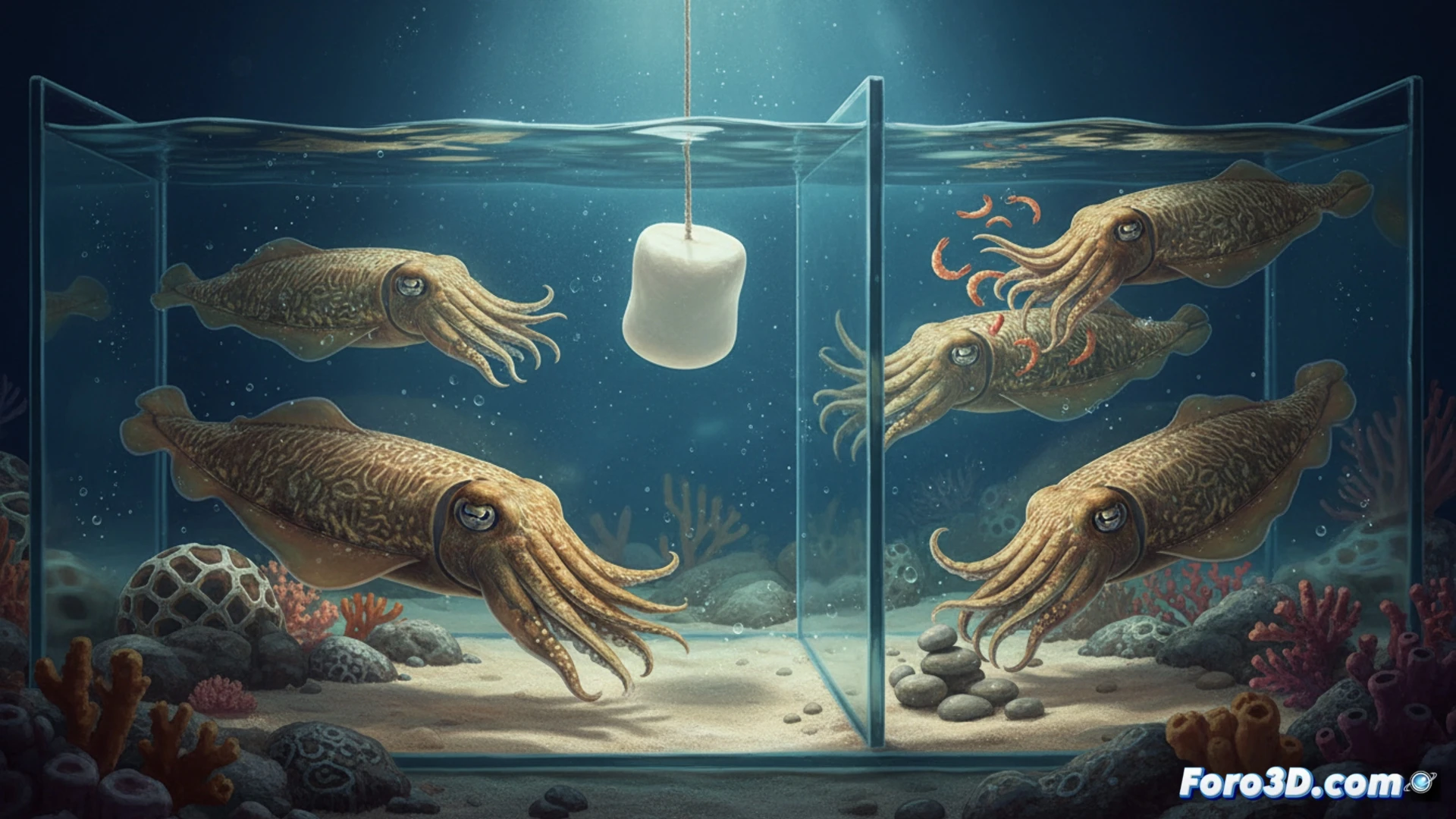
A study from the University of Cambridge reveals that cuttlefish, cephalopod mollusks, possess self-control capacity. They surpass an adapted version of the marshmallow test, opting to wait for a better reward instead of consuming an immediate one. This behavior, linked to future planning, was previously observed in vertebrates such as primates and corvids, raising questions about cognitive evolution.
AI Modeling and Biological Decision-Making Algorithms 🤖
This finding is relevant to technology. The cognitive mechanisms that allow the cuttlefish to evaluate, delay gratification, and make an optimal decision serve as a model for decision-making algorithms in environments with limited information. Studying its neural network can inspire more efficient AI architectures in handling deferred rewards, useful in autonomous robotics or resource management where patience has a quantifiable value.
Next step? A time management course for octopuses 🐙
With these results, it wouldn't be strange if the next study examines octopus productivity. We might discover that they organize their day to hunt, maintain their den, and still have time to play. The image of a cephalopod using a pocket planner, deciding between a crab now or two later, highlights that perhaps we, with our smartphone in hand, are the ones who need lessons in marine focus.