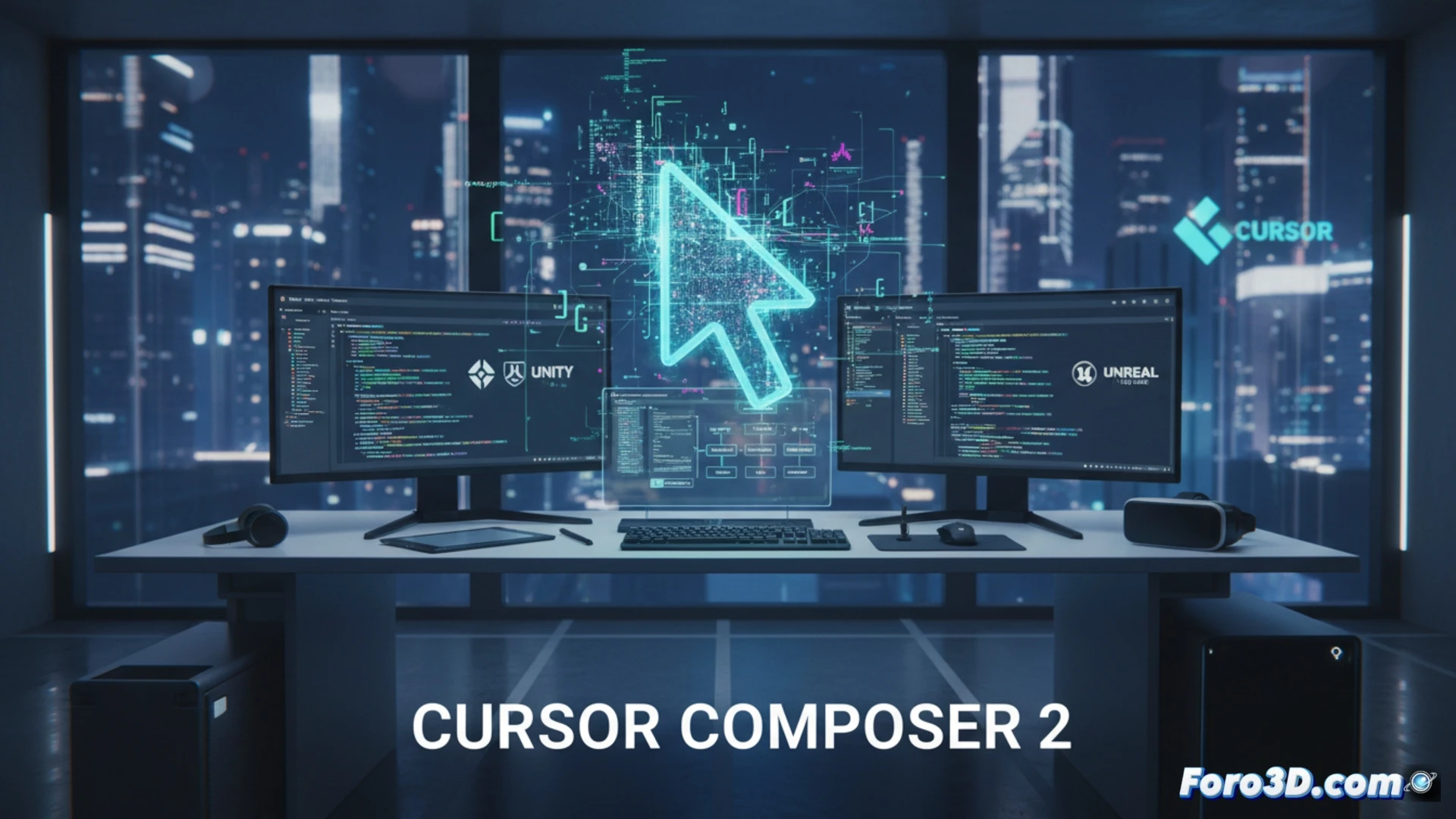
Cursor, the AI code editor, has launched its first proprietary model: Composer 2. This model is specialized in code and promises superior performance in specific benchmarks at a very reduced cost. For video game developers, this means a potentially powerful tool for generating scripts, debugging complex logic, and optimizing performance within engines like Unity or Unreal Engine, directly integrated into their work environment.
Autocompression and performance: technical advantages for long projects 🚀
The technical key of Composer 2 is autocompression, a mechanism that reduces errors in long programming sessions while maintaining coherence in complex tasks. In video game development, where a project can have thousands of interconnected scripts and extensive debugging sessions, this capability is crucial. The model outperforms alternatives like Claude Opus in terminal tests and is significantly more cost-effective, positioning it as an attractive option for studios seeking cost efficiency without sacrificing robust assistance in gameplay-specific code, character AI, or resource management.
The bet on specialization against AI giants ⚔️
Cursor bets on combining its specialized model with the integrated editor experience to differentiate itself. For a video game developer, the promise is more contextual and precise assistance for domain-specific problems, compared to generalist models. However, reliance on other models for non-code-related tasks and a market where AI providers are also direct competitors creates a scenario of uncertainty. The true test for Composer 2 will be its adaptation to the unique and demanding needs of the video game development pipeline.
Can Cursor Composer 2 really understand and generate code specific to engines like Unity or Unreal better than a generalist AI model?
(P.S.: 90% of development time is polishing, the other 90% is fixing bugs)