The escalation between the U.S. and Iran has led to the blockade of the Strait of Hormuz, the most critical bottleneck for global crude oil transportation. This technical analysis, supported by 3D maps and logistics flow simulations, examines how this geopolitical disruption fractures energy supply chains, spikes prices, and forces dependent nations to activate contingency plans, reconfiguring the world energy map in real time.
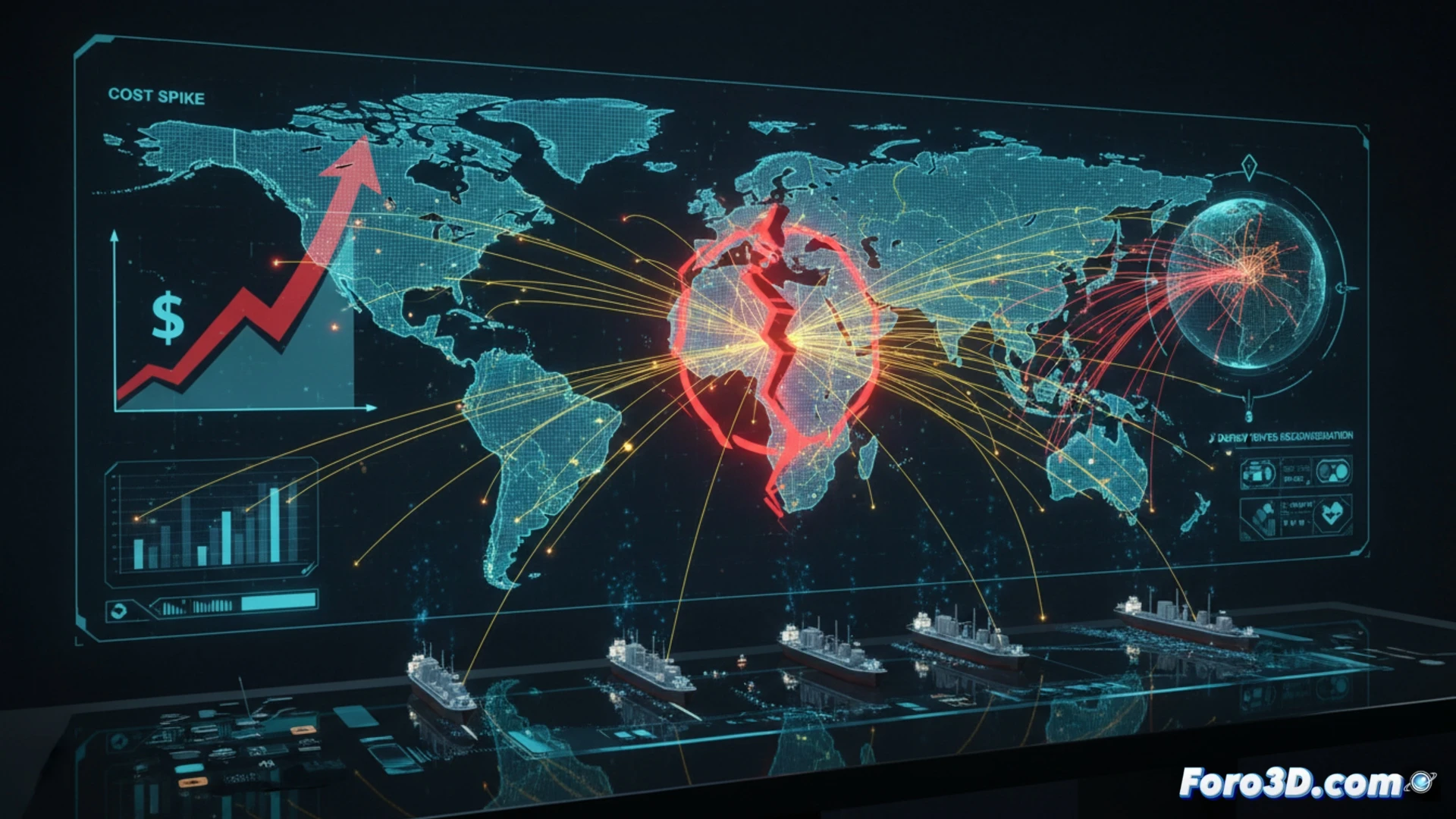
Simulation of the Logistical Disruption and Cascade Effects 🔄
Through 3D geospatial visualizations, we can model the abrupt interruption of 21% of seaborne-traded oil that passes through Hormuz. The simulation shows tanker congestion, forced rerouting to longer passages like the Cape of Good Hope, and the immediate increase in costs and times. Simultaneously, a data model overlays the release of strategic reserves, such as Japan's, demonstrating their temporary but limited mitigating effect on global prices, unable to replace the constant flow disruption.
Lessons for a Fragile Global Logistics ⚠️
This crisis is a live case study on the vulnerability of hyper-optimized supply chains. Dependence on single points of failure, like Hormuz, exposes the world economy to systemic risks. Reactive measures, from consumption restrictions in South Korea to the use of reserves, are palliatives. The visualization of alternative scenarios underscores the strategic need to diversify routes and energy sources to build resilience against geopolitical volatility.
How to model in 3D the vulnerability of a global supply chain to the closure of the Strait of Hormuz and what alternative logistics can be simulated?
(PS: geopolitical risk maps are like the weather: there's always a storm somewhere)