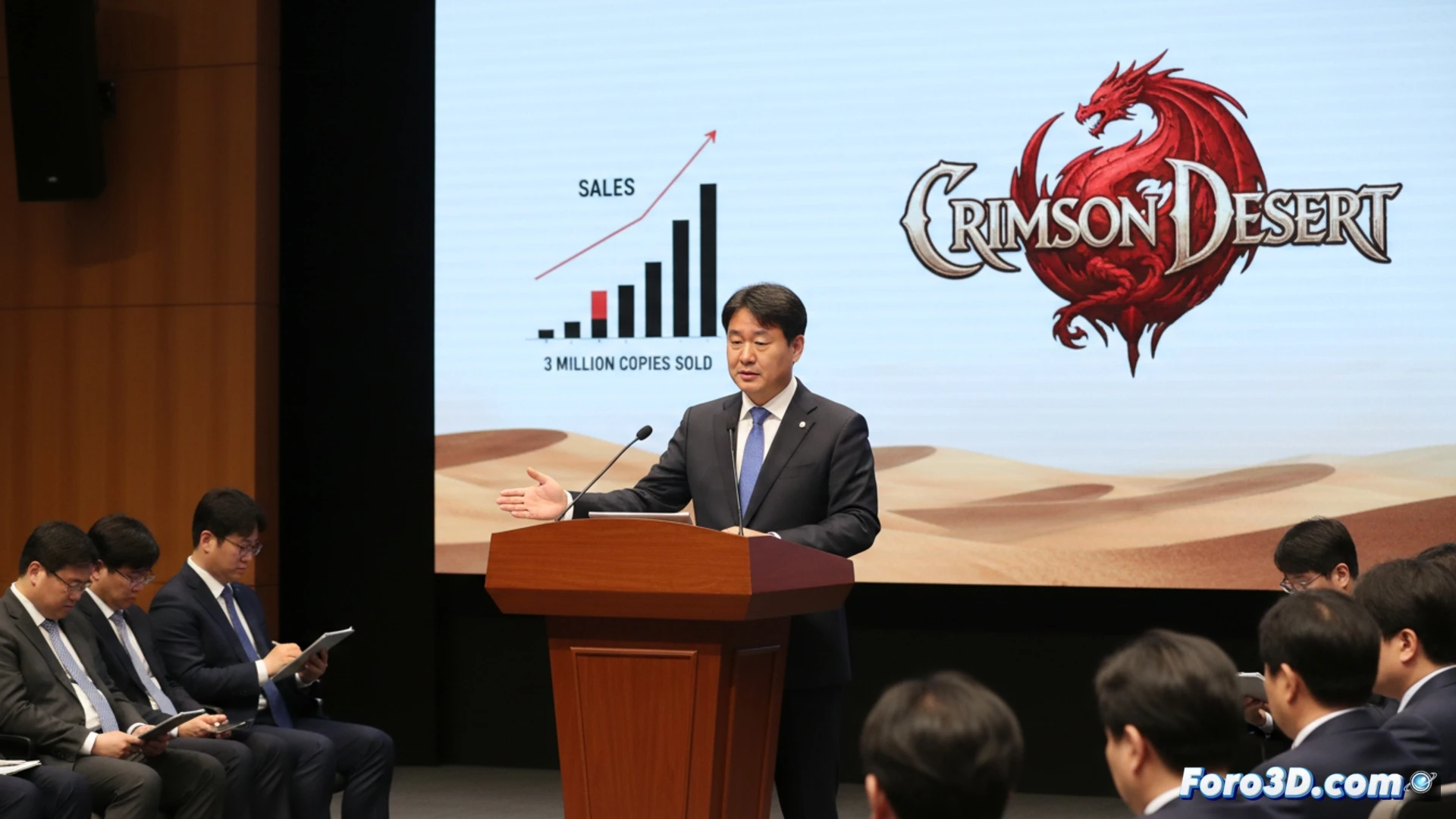
In an unusual admission of shortcomings, Pearl Abyss CEO Heo Jin-young has confirmed to shareholders what many players were already pointing out: the narrative of Crimson Desert is deficient and lacks depth. The executive attributed this issue to a rushed development cycle following its premature announcement in 2019, where the absolute priority was polishing the gameplay. Despite this internal criticism, the title has been a commercial success, surpassing three million copies sold. The company has stated that its future updates will focus solely on gameplay and balance, ruling out revising the main storyline.
The Development Dilemma: Early Announcement vs. Overall Quality 🎯
The case of Crimson Desert is a clear example of how a premature announcement can distort the priorities of an AAA project. By revealing the game in 2019, Pearl Abyss subjected itself to external pressure and expectations that, according to its CEO, forced a rushed development. In this context, the studio made a conscious decision: sacrifice narrative depth to ensure polished gameplay. This choice reflects a classic dilemma in large-scale project management, where resources and time are finite. The strategy prioritized the core loop and the player's immediate sense of control, crucial elements for retention and initial reviews, but left the story as a secondary and poorly resolved component.
Feedback and Post-Launch: What Really Deserves to Be Patched? ⚖️
Pearl Abyss's post-launch decision is equally revealing. By announcing that patches will only improve gameplay and balance, ignoring the narrative, the company sends a clear message: they will prioritize maintaining the active player base over repairing the overall narrative experience. This raises a crucial question for developers: should feedback address only systems and balance aspects, or also structural flaws in the plot? Crimson Desert's commercial success seems to validate their pragmatic approach, but it solidifies an incomplete product where the story remains a neglected appendix, a risk to the franchise's long-term reputation.
How can the priority between ambitious narrative and polished gameplay be balanced in the development of an AAA RPG to avoid delays and disappointments, as seems to have happened with Crimson Desert? 🤔
(P.S.: game jams are like weddings: everyone happy, no one sleeps, and you end up crying)