The recent technical demo of Crimson Desert, captured in native 4K with Ray Tracing on AMD hardware, has served as a showcase for Pearl Abyss's BlackSpace Engine. Beyond performance, this demonstration is a perfect case study for analyzing the rendering capabilities of a proprietary engine. Its ability to handle diffuse global illumination and ray-traced reflections in a dynamic open world raises questions about its architecture and potential applied beyond entertainment, in fields like simulation and forensic recreation.
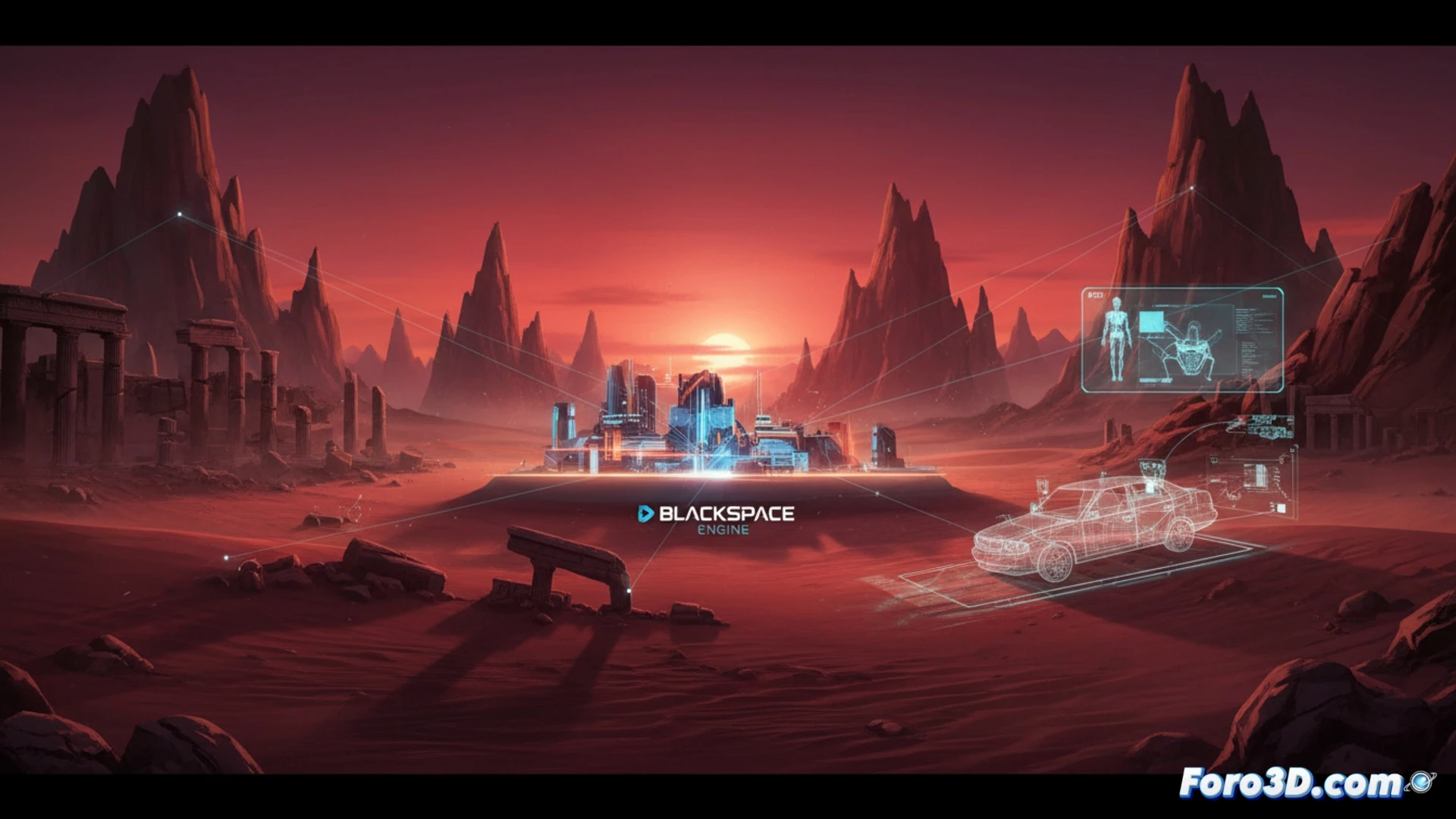
BlackSpace Engine: Breakdown of its Advanced Rendering Techniques 🔍
The core of the visual fidelity shown lies in the implementation of global illumination and reflections via ray tracing. Unlike precalculated solutions, the engine calculates in real-time how light scatters and reflects on complex surfaces, varying with the time of day. This dynamism is crucial for realism. Compared to Unreal Engine 5 and its Lumen, or Unity with its Enlighten, BlackSpace Engine seems to opt for a native and highly optimized integration of RT for its specific world, prioritizing physical coherence in vast environments. This specialization can offer advantages in efficiency for its concrete use case, a key factor for recreations that require environmental and lighting precision.
Lessons for Forensic Recreation and Simulation ⚖️
The demo underscores a fundamental principle for technical recreation: the choice of engine depends on specific visualization needs. While UE5 offers a powerful generalist ecosystem, proprietary engines like BlackSpace demonstrate how deep specialization in certain techniques, such as dynamic global ray tracing, can achieve exceptional results in a specific domain. For forensic projects that require environmental reconstruction with precise and dynamic physical lighting, studying these specialized approaches is as valuable as mastering the industry's standard tools.
How does the BlackSpace Engine's approach to forensic reconstruction of materials and environments influence its resource management to achieve real-time ray tracing at native 4K?
(P.S.: if the physics doesn't work, restart Unity. If it still doesn't work, restart Unity again)