Crimson Desert, the upcoming action RPG from Pearl Abyss, not only promises an epic narrative but stands as a technical showcase for the company's proprietary engine, the BlackSpace Engine. This analysis focuses on breaking down how this internal technology is the cornerstone for achieving the extreme visual fidelity and atmospheric density that have characterized its advancements. From blizzards that obscure the landscape to realism in combat animations, every detail is a testament to the capabilities of an engine designed with a very specific purpose.
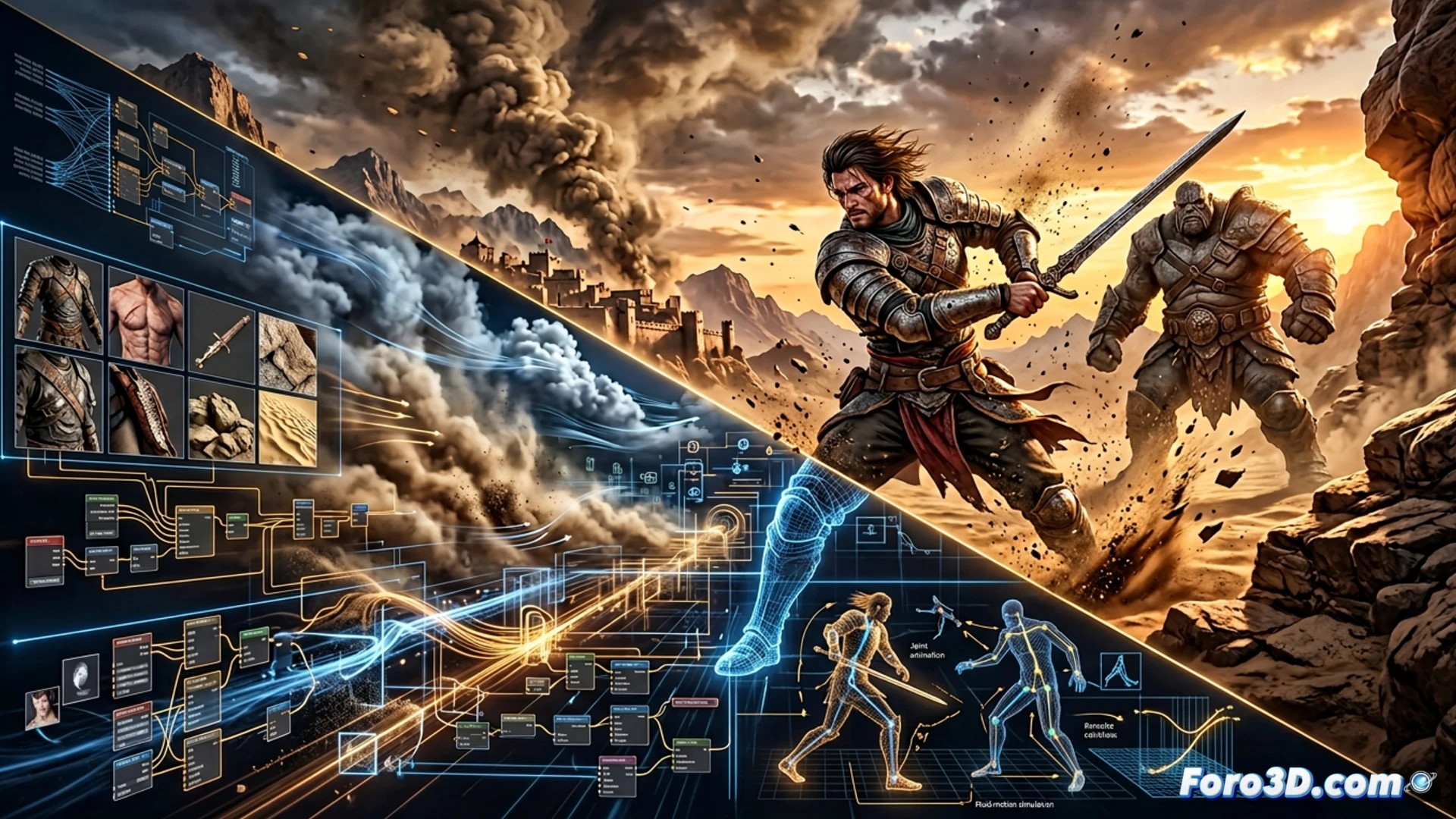
BlackSpace Engine Breakdown: Rendering, Physics, and Tools 🛠️
The BlackSpace Engine demonstrates its power in two key fronts: environment rendering and physical simulation. The cloud and atmospheric effects system is not merely decorative; it is a dense volumetric system that interacts with light and world geometry, consuming a large amount of GPU resources but offering unprecedented immersion. On the other hand, physics-based combat animations suggest a partial ragdoll system or a smooth transition between predefined animations and real-time simulations, adding rawness and unpredictability to every encounter. All of this is developed using Pearl Abyss's internal tools, optimized for their production pipeline, which streamlines the creation of complex assets and the integration of high-quality motion capture data.
The Strategic Advantage of a Proprietary Engine ⚙️
Opting for a proprietary engine, as opposed to generalist solutions like Unreal Engine 5, involves risks and benefits. For Pearl Abyss, the BlackSpace Engine is a strategic asset that allows absolute control over optimization for their type of open world and art style, being able to prioritize techniques like rendering dense atmospheric volumes. This path, though costly in R&D, can define the unique technical identity of Crimson Desert, differentiating it visually and mechanically from other titles in the genre. Its ultimate success will validate whether the investment in exclusive technology is the key to a new generation of persistent worlds.
How is Pearl Abyss's BlackSpace Engine redefining memory management and open-world streaming to overcome technical limits in Crimson Desert?
(P.S.: 90% of development time is polishing, the other 90% is fixing bugs)