After 57 hours of play, Crimson Desert emerges not only as the next big action RPG, but as a milestone in open-world design. The sense of immersion and the density of its environment evoke a technical quality and narrative coherence that we haven't experienced since Red Dead Redemption 2. This work-in-progress analysis breaks down how Pearl Abyss has built a living ecosystem that prioritizes organic exploration and a personal story, setting a new bar for the genre. 🎮
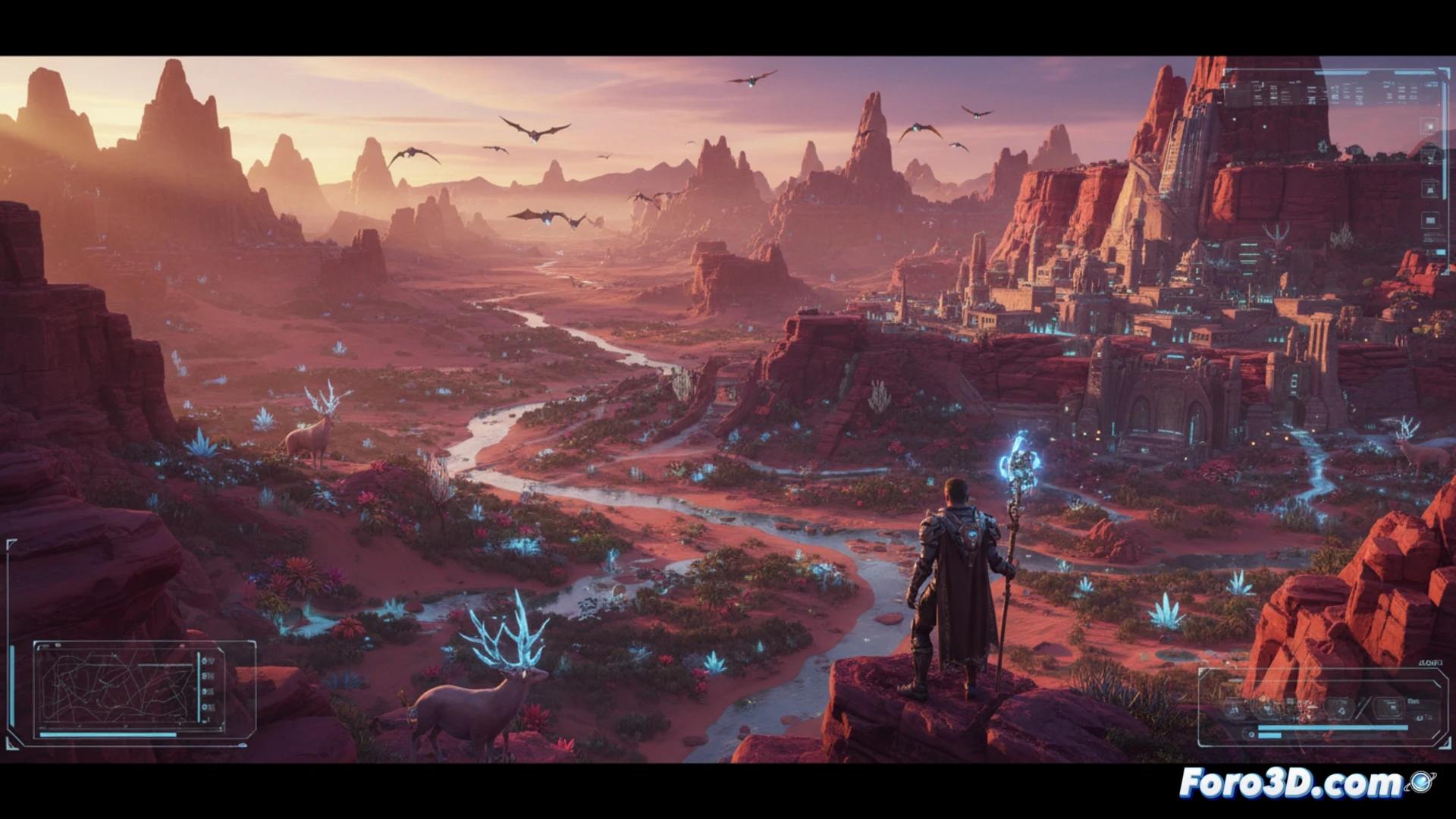
Engineering a Living World: Techniques and Technology 🔬
The technical achievement of Crimson Desert lies in the systemic integration of its layers. World creation goes beyond a picturesque setting; it is a web of interconnected mechanics. The AI of non-playable characters, with believable cycles and reactions, interactive environmental physics, and level design that guides without marking waypoints, generate an illusion of autonomy rarely seen. The graphics technology, with obsessive attention to detail in textures, dynamic lighting, and animations, serves this purpose, where every technical element is in service of immersion and emergent narrative, not just visual spectacle.
Lessons for Open-World Design 📚
Crimson Desert reflects on the evolution of the genre. Its success is not in brute scale, but in meaningful density and contextualized freedom. It demonstrates that true innovation lies in how gameplay, story, and environment intertwine to create a coherent whole. For developers, it is a masterclass in how to prioritize the player experience over the feature checklist, marking a path to follow where every technical system has a narrative and ludic justification.
How has Crimson Desert evolved memory management and asset streaming to achieve its persistent open world without loading screens?
(P.S.: 90% of development time is polishing, the other 90% is fixing bugs)