Chevrolet has revived the legendary Grand Sport designation by presenting the 2027 Corvette C8 at Sebring, with Roger Penske as the guest of honor. This new model, which celebrates the legacy started in 1964, features a naturally aspirated 6.7-liter LS6 V8 engine with between 535 and 550 HP. Its development, however, no longer relies solely on mechanical intuition, but on a thorough digital process where 3D modeling and simulation are the true protagonists of the design.
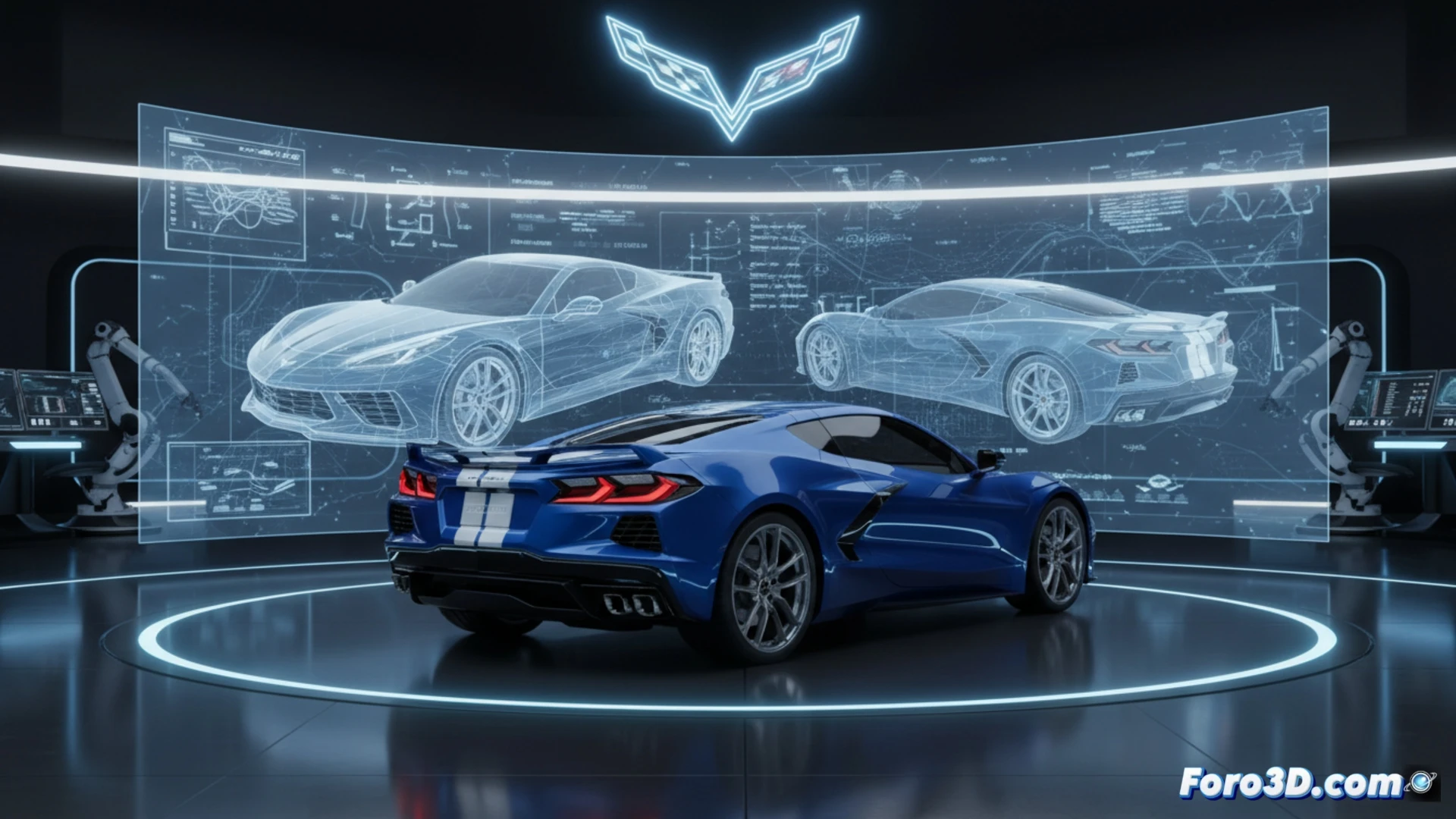
Digital Engineering: CFD, FEA and Hybrid Integration 💻
The creation of the C8 Grand Sport is an exercise in advanced virtual engineering. CFD simulations (Computational Fluid Dynamics) optimize every surface to manage airflow, cool the powerful V8, and generate efficient aerodynamic downforce. Simultaneously, FEA analysis (Finite Element Analysis) ensures the rigidity and lightness of the aluminum chassis, calculating stresses under extreme conditions. For the anticipated 721 HP Grand Sport X hybrid version, these tools are vital for integrating the front electric motor, battery, and control systems, ensuring perfect balance and predictable dynamic behavior before manufacturing a single physical prototype.
From Sketch to Reality: A Digital Legacy 🏁
This launch symbolizes the evolution of automotive development. The original Grand Sport's pure performance philosophy is maintained, but its execution is now based on digital data. Every curve, every engine mount, and every airflow is validated in a 3D environment, fusing emotional heritage with the precision of modern digital manufacturing. The result is a car where tradition and technological innovation converge inseparably.
How has 3D simulation influenced the design and aerodynamic optimization of the new 2027 Corvette C8 Grand Sport?
(P.S.: at Foro3D our cars have more polygons than horsepower)