Cooper Lutkenhaus, at just 17 years old, is already the indoor world champion in the 800 meters. This young American, the youngest to sign with Nike, holds a record of 1:42.27 that is also the world under-18 best mark. His case is fascinating not only for his achievements, but for the potential analysis it offers to 3D technology. In our niche, his technique and performance are the perfect testing ground for simulation and advanced visualization.
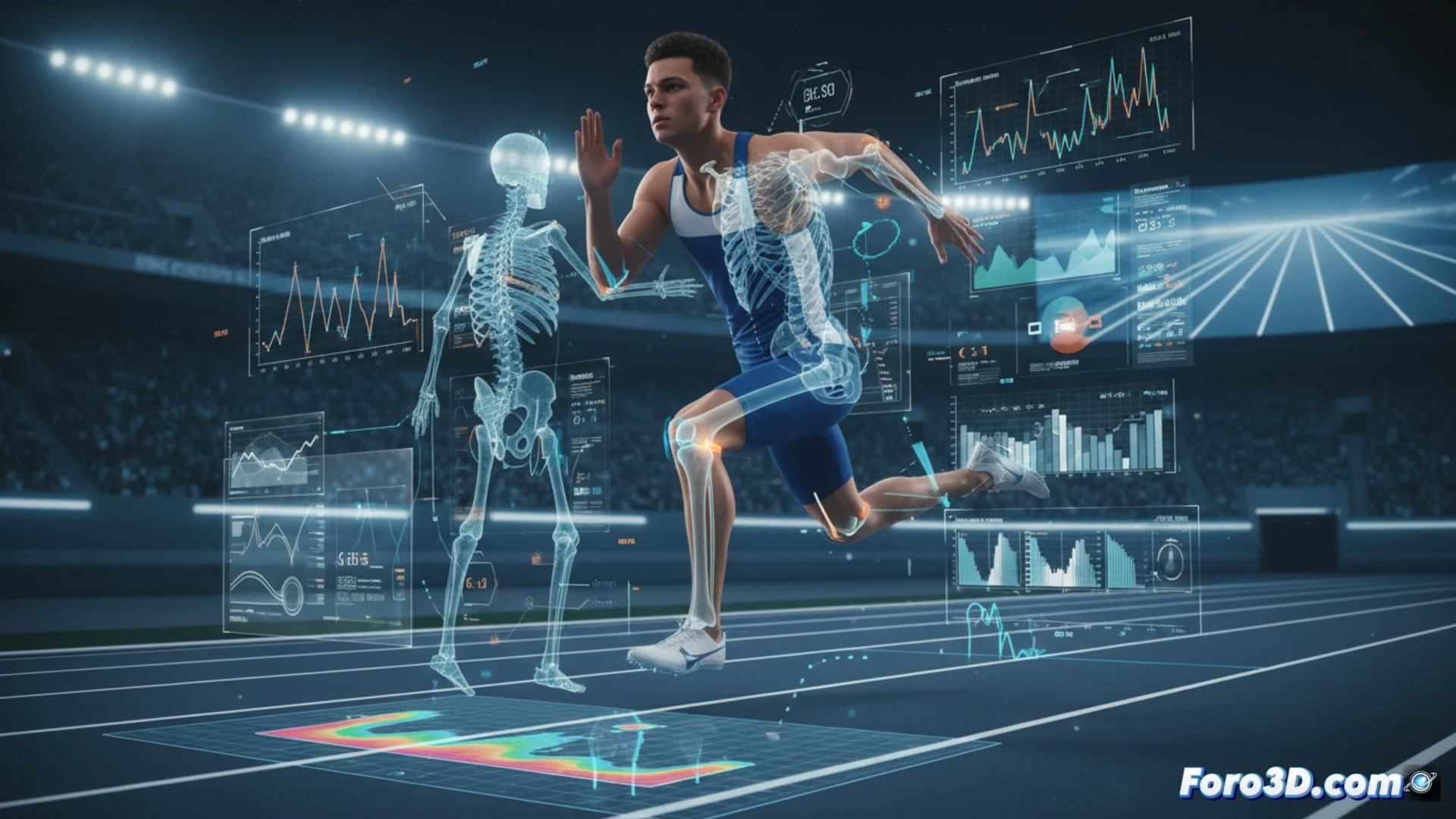
Visualizing Excellence: Scanning and Biomechanical Simulation 🧠
Lutkenhaus's race can be digitally broken down to understand his success. Through 3D body scanning, we can obtain a precise model of his somatotype, analyzing muscle mass distribution and key bone angles. Biomechanical simulation allows recreating his stride in a virtual environment, evaluating the efficiency of his movement, the propulsion angle, and running economy. It is even possible to simulate his 800-meter strategy, testing alternative pace distributions against avatars of other athletes to optimize his race plan.
The Fusion of Natural Talent and Technology ⚙️
Lutkenhaus's humility and focus are his foundation, but 3D technology acts as an amplifier. These tools do not create champions out of nothing, but allow refining existing talent to the maximum. For an athlete who still balances world championships with high school, 3D analysis offers objective and in-depth feedback, accelerating his technical development. His case demonstrates that the future of elite sport lies in this symbiosis between human potential and the precision of digital modeling.
How can 3D biomechanical analysis optimize running technique and prevent injuries in young elite athletes like Cooper Lutkenhaus?
(P.S.: VAR in 3D: now with replays from angles that didn't even exist)