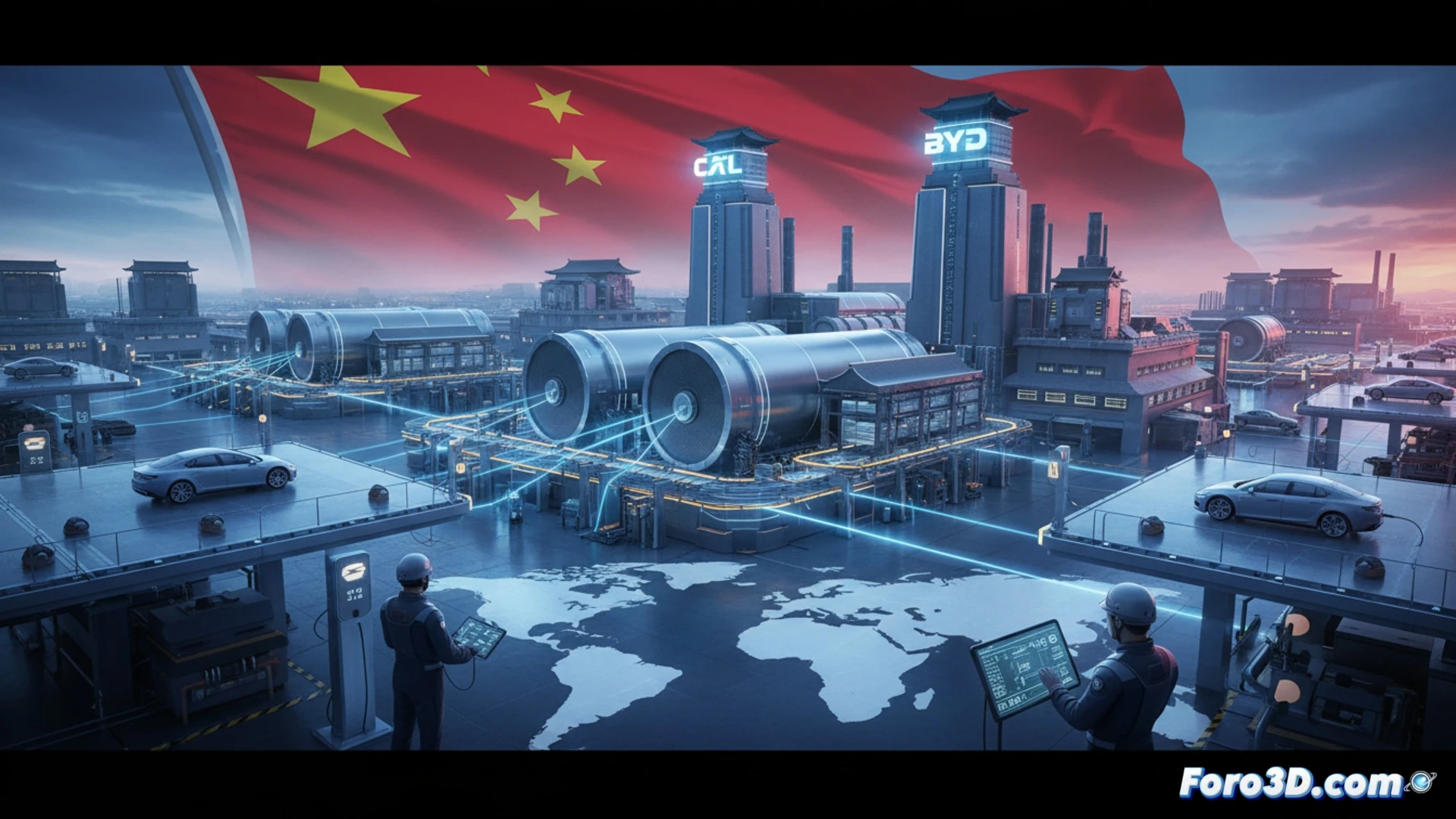
The transition to the electric vehicle has a proper name: China. The country controls more than 80% of the world's battery cell manufacturing, a vital component. Giants like CATL and BYD not only dominate the local market, but are in a phase of aggressive expansion in Europe and other regions, building factories where profitability is higher. This position generates debates about industrial autonomy and technological dependence in the West.
The technological and scale advantage behind the leadership 🔋
This dominance is not accidental. It is based on an integrated supply chain, from the extraction of minerals like lithium to large-scale production. Chinese companies have managed to continuously reduce costs through economies of scale and innovation in cell chemistry, such as lithium iron phosphate (LFP) batteries. Their sustained investment in R&D allows them to offer battery packs with a balance between energy density, safety, and price that is difficult to match in the short term.
The West seeks its stack... while China sells the charger and the power plant ⚡
The race to build gigafactories in Europe has a curious detail: they often depend on Chinese technology and capital. It's like trying to set up your own café to not depend on the Starbucks around the corner, but having to buy the machines, beans, and instruction manual from them. While political speeches talk about industrial sovereignty, reality shows that the recipe for energy independence still has many ingredients with an export stamp.