In 2025, China set a new record by adding 542.7 GW of new electricity generation capacity, a figure that surpasses the total energy infrastructure of the United States. This deployment, led by wind energy, consolidates the country's technological position, which hosts eight of the ten largest turbine manufacturers in the world. For 3D artists at Foro3D, these megaprojects are a relevant field of study, where modeling and visualization of large-scale infrastructures are key tools for the design and communication of engineering and sustainability projects.
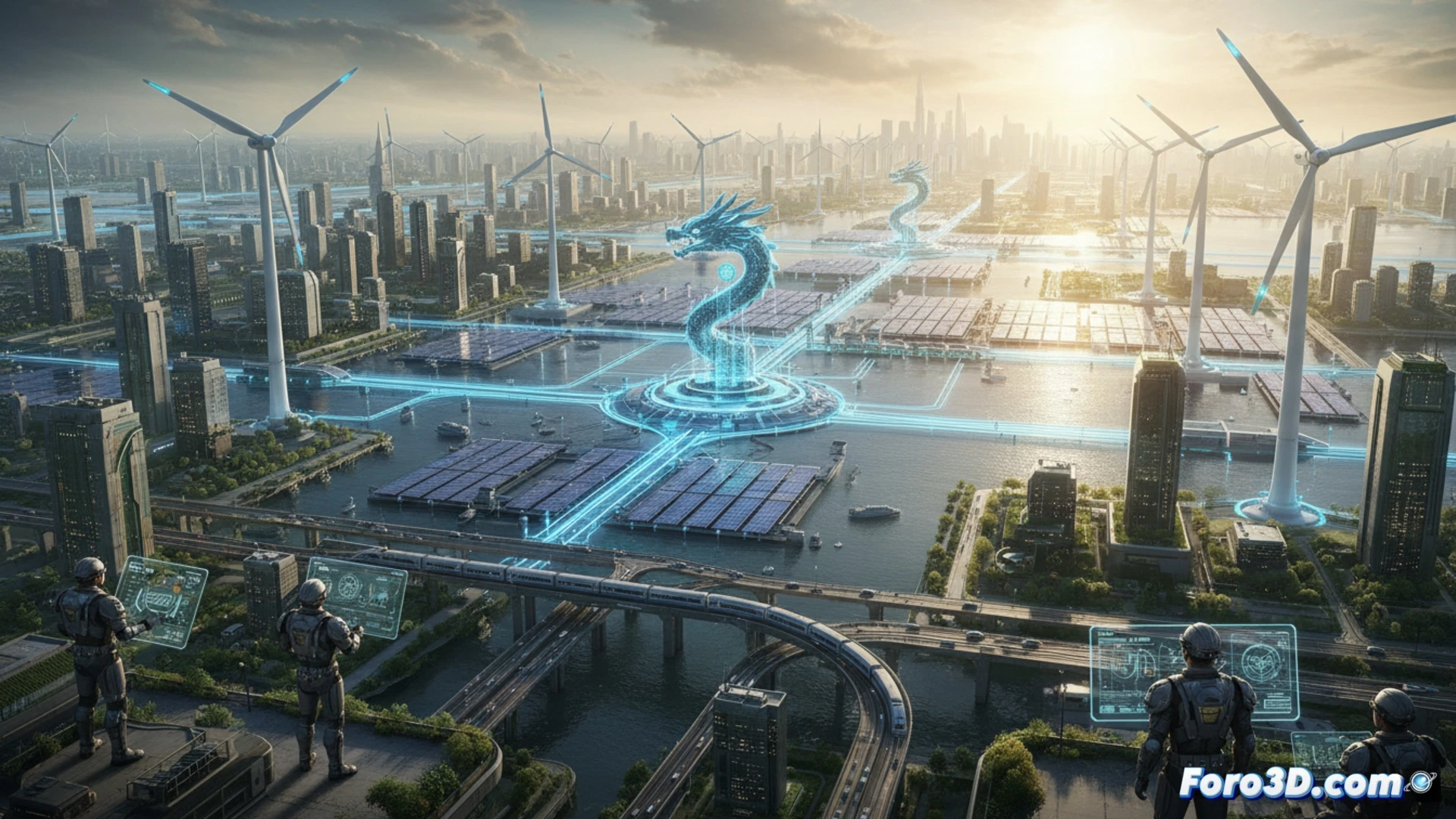
3D Visualization and Planning of Large-Scale Infrastructures 🌍
The planning and design of wind farms of this magnitude rely on advanced 3D visualization and simulation tools. GIS software, terrain modeling, and architectural rendering allow for analyzing visual impact, optimizing turbine layout, and simulating environmental conditions. Creating realistic environments with thousands of 3D assets, from turbines to transmission networks, is a technical challenge that requires handling large scenes, levels of detail (LOD), and atmospheric lighting effects, common topics in infographics forums.
Rendering the Breeze: When Your PC Sounds Like a Turbine 💨
Imagine the scene: you spend days modeling a photorealistic wind farm with hundreds of detailed turbines. When you launch the final render, your GPU fan starts spinning so fast it almost generates more wind than the model you're creating. It's the digital circle of life: you use energy to visualize infrastructures that generate energy. Perhaps, in the future, our overloaded PCs could connect to the grid and contribute, with their whine, to the energy transition. A necessary sacrifice for art.