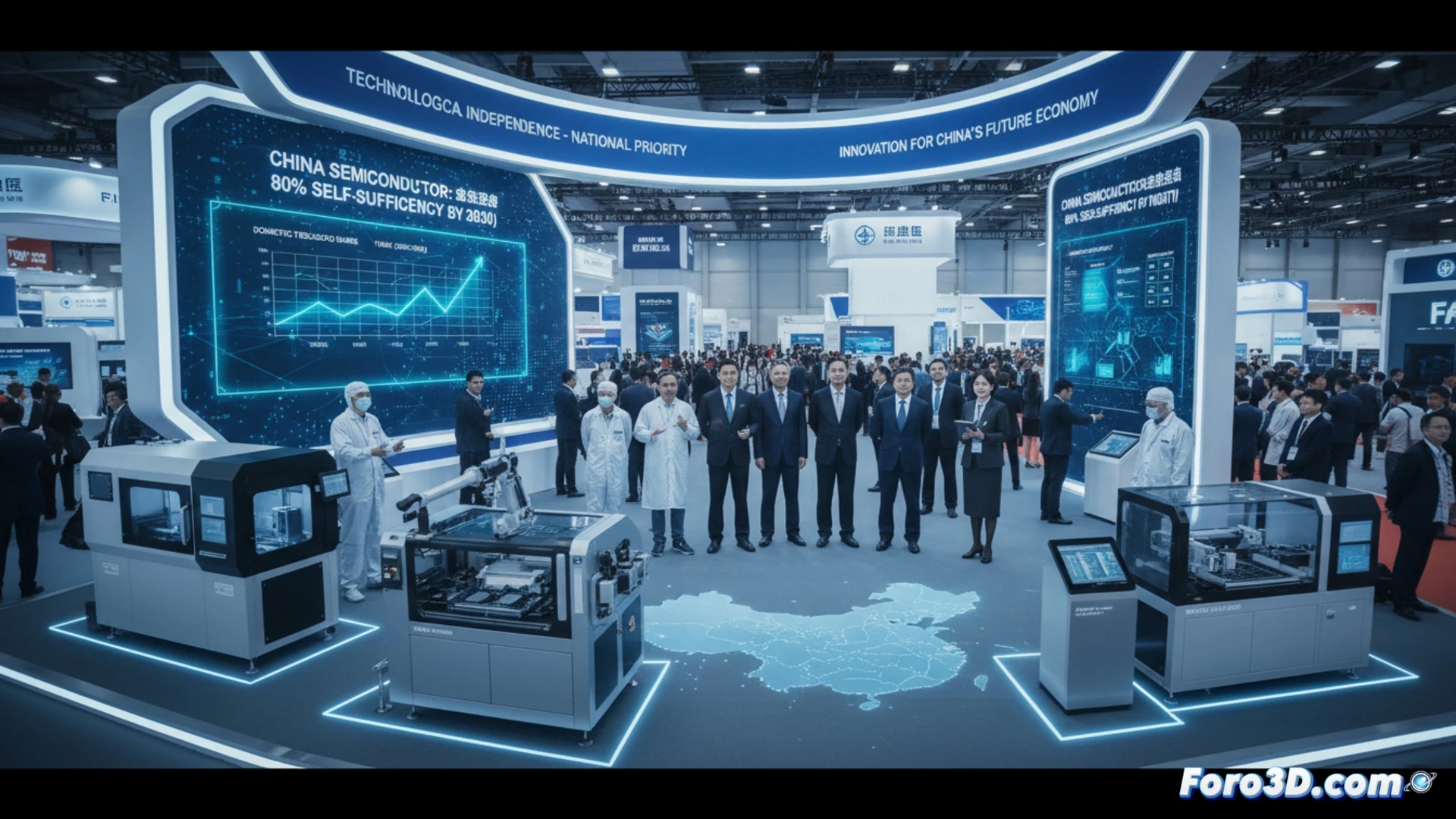
The Chinese semiconductor industry has set an ambitious goal: to achieve 80% self-sufficiency in equipment and technologies by 2030. This objective, a direct response to global trade restrictions, is not based solely on physical manufacturing. Internal development and strategic acquisitions are boosted by a critical digital tool: 3D visualization and simulation technologies. These are the invisible axis for designing, testing, and optimizing complex chip manufacturing processes, accelerating the path to technological independence without relying on foreign physical prototypes.
Digital twins and nanometric process simulation: the keys to internal development 🧠
The Chinese plan is based on the ability to model and master extremely complex processes. Here, 3D simulation is indispensable. On one hand, wafer modeling and simulation of advanced lithography processes, such as 5 nanometers presented by companies like Naura and AMEC, allow engineers to virtualize the behavior of light, materials, and etchings at the atomic scale before conducting costly factory tests. On the other hand, the creation of digital twins of complete factories (fabs) enables optimization of production flows, predictive maintenance, and staff training in virtual environments identical to the real ones. This capability drastically reduces the time and risk of implementing national technologies, accelerating the learning curve and debugging of equipment such as etchers or layer depositors.
Technological autonomy is built first in the virtual world 💻
The Chinese strategy reveals a fundamental truth for the global chip industry: technological sovereignty in the 21st century does not begin in the clean room, but in the simulation servers. Mastering 3D modeling software and digital twins is equivalent to mastering the master plan of manufacturing. By investing in these digital capabilities, China not only seeks to replicate existing equipment but to create an autonomous innovation ecosystem where the next generations of manufacturing processes can be designed, tested, and optimized. True independence comes from controlling the entire cycle, from the digital idea to the physical chip.
Can 3D simulation tools become the key for China to overcome restrictions on advanced chip design and manufacturing without access to Western technology?
(PD: integrated circuits are like exams: the more you look at them, the more lines you see)