China has put into operation the world's most powerful hypergravity centrifuge, CHIEF1900. This machine, capable of generating a force 1,900 times greater than Earth's gravity, compresses decades of geological processes into hours. Its main objective is to simulate extreme catastrophe scenarios, such as dam failures, contaminant propagation, or earthquake effects, to obtain crucial data that allows designing more resilient infrastructures and effective mitigation plans.
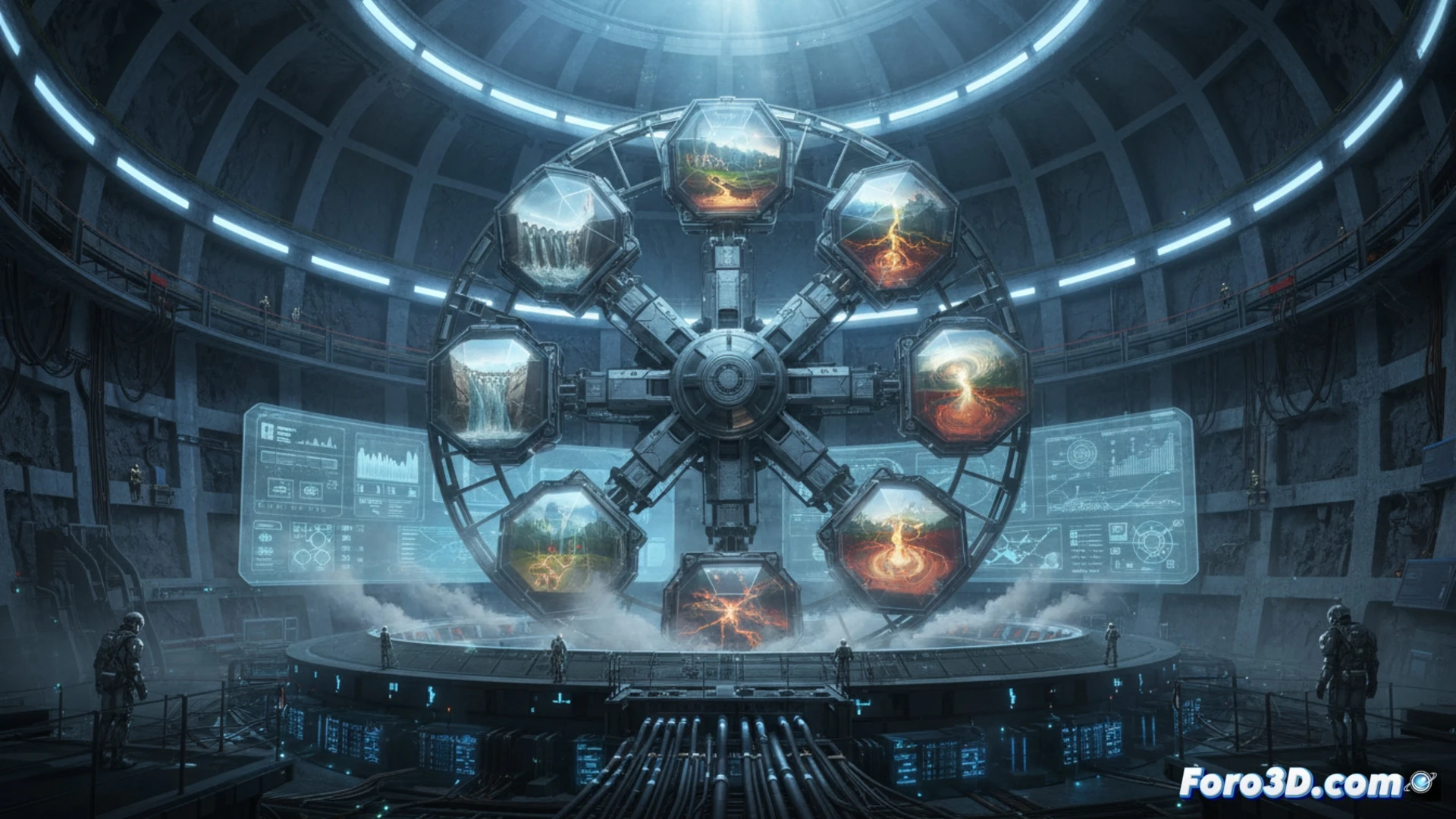
The crucial role of 3D modeling in hypergravity interpretation 🧠
The raw power of CHIEF1900 would be useless without 3D simulation and visualization technology. The complex physical data obtained from the tests, which show soil deformations and structural failures under massive forces, are translated into detailed three-dimensional digital models. These models allow visualizing, layer by layer, the propagation of a crack in a dam, the path of a contaminant in an aquifer, or the interaction between a tsunami and coastal terrain. This visualization is key for engineers and scientists to diagnose weak points and test solutions in a virtual environment before implementing them in the real world.
Proactive prevention through accelerated simulation ⚡
The combination of hypergravity and 3D modeling represents a paradigm shift in catastrophe studies. We no longer rely solely on observing past disasters or costly full-scale prototypes. Now we can provoke and analyze catastrophic failures in a controlled and accelerated manner in the laboratory, visualizing their consequences in 3D to anticipate them. This capability turns prevention into a proactive and data-driven process, saving lives and resources by allowing us to build and plan with an unprecedented understanding of the limits of our materials and environments.
What variables would you consider for modeling this disaster?