A team from Texas has achieved a crucial milestone for space colonization: growing chickpeas in a substrate that simulates lunar regolith. The success lies in the use of mycorrhizal fungi as biofertilizers, which allow plants to complete their life cycle and produce seeds even with 75% simulated lunar soil. This advance, a leap from simple vegetables to protein-rich legumes, opens the door to sustainable diets beyond Earth. 🌱
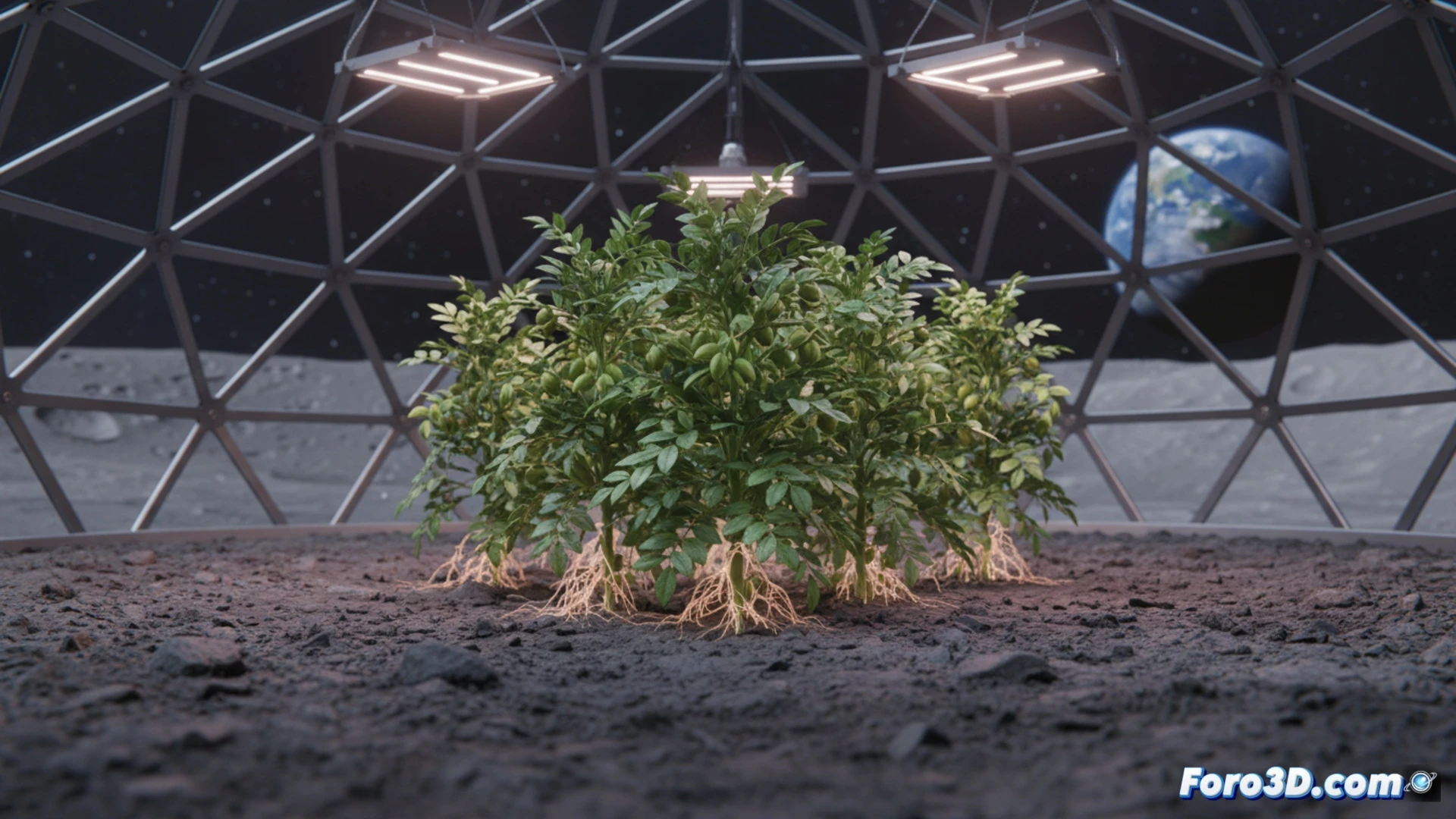
3D Modeling to Unravel an Extraterrestrial Symbiosis 🍄
Scientific 3D visualization is key to understanding and disseminating this achievement. An interactive model could show the chickpea's root system in symbiosis with the fungal hyphae network within the regolith, illustrating how the fungi expand the absorption zone. A comparative 3D infographic would allow visualizing growth and yield in different soil mixtures, from 25% to 75% regolith. Additionally, a narrative animation could detail the complete process, from inoculating the sterile substrate to harvesting the seeds.
Beyond Efficiency: Visualization as a Tool for Progress 🚀
Although carrying packaged food remains more efficient in the short term, this experiment demonstrates fundamental progress in bioremediation. Here, 3D visualization transcends illustration to become an analysis tool, allowing researchers to study hidden interactions below the surface and communicate the complexity of creating minimal ecosystems. Each model brings closer a future where being able to visualize a harvest on Mars will be the first step to achieving it.
How can scientific visualization techniques be used to analyze and optimize the development of crop root systems, such as chickpeas, in substrates analogous to lunar soil?
(P.S.: fluid physics for simulating the ocean is like the sea: unpredictable and you always run out of RAM)