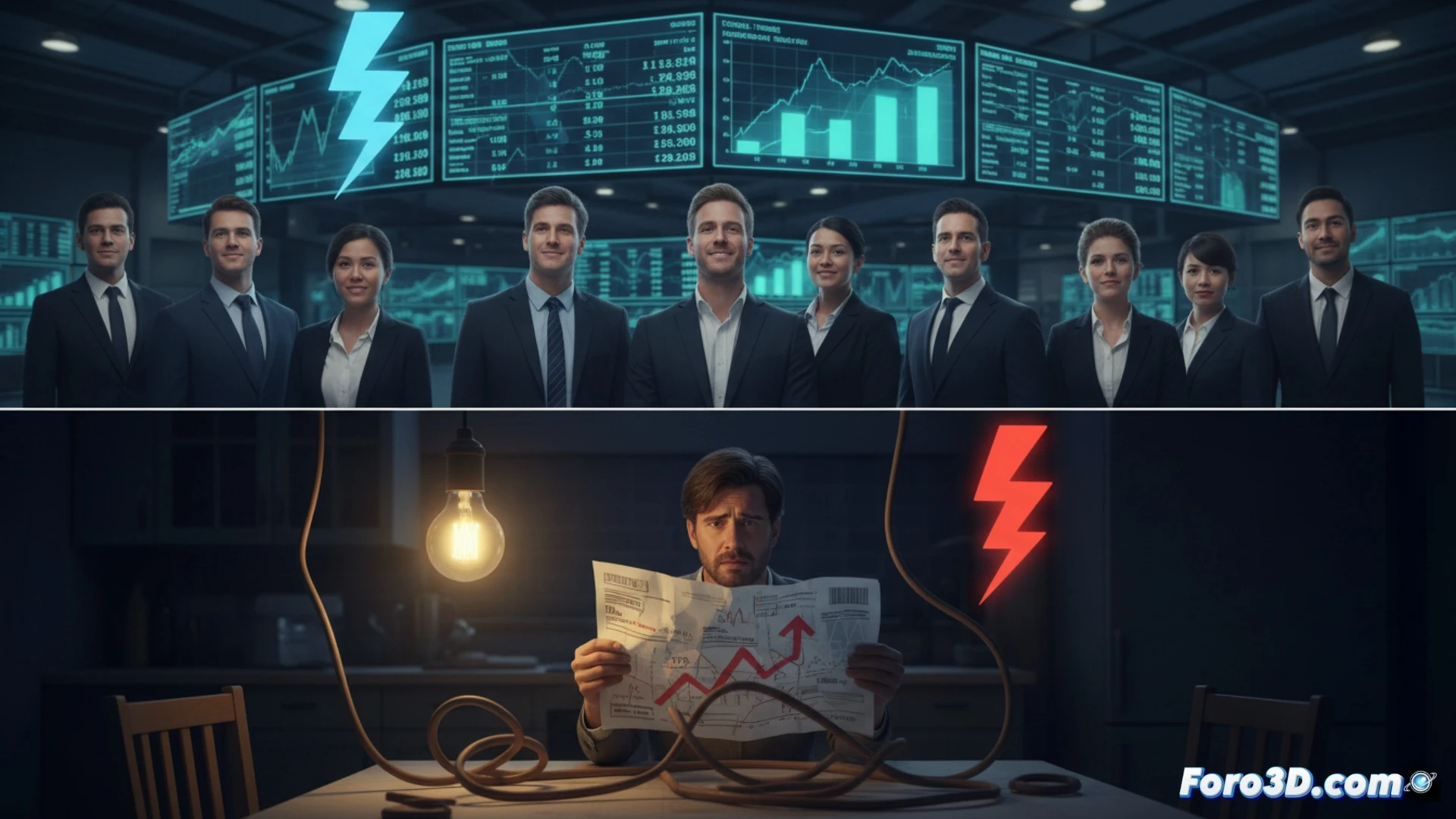
Wholesale market data shows low electricity prices. However, household users do not notice that relief in their bills. The reason is that the final price adds many fixed components: taxes, network costs, renewable premiums, and commercialization. Additionally, many indexed contracts reflect quick increases, but cushion the decreases.
Metering technology and dynamic contracts ⚙️
The technical solution involves greater digitalization and flexibility. Smart meters allow precise hourly measurement. Together with dynamic or truly indexed contracts, the user could adjust their consumption to the cheapest hours. This requires the retailer to transparently pass on the wholesale price, without opaque margins. The technology exists, but its commercial implementation is not complete.
The goes up and doesn't go down effect of the electricity bill 📈
It's like the law of gravity, but applied only halfway: what goes up is noticeable; what goes down is diluted. Our bill has a selective memory for bad news. While the wholesale market does somersaults downward, our bill seems to have a parachute that slows its descent. A system where cheap energy is almost a spectacle we watch, but do not enjoy.