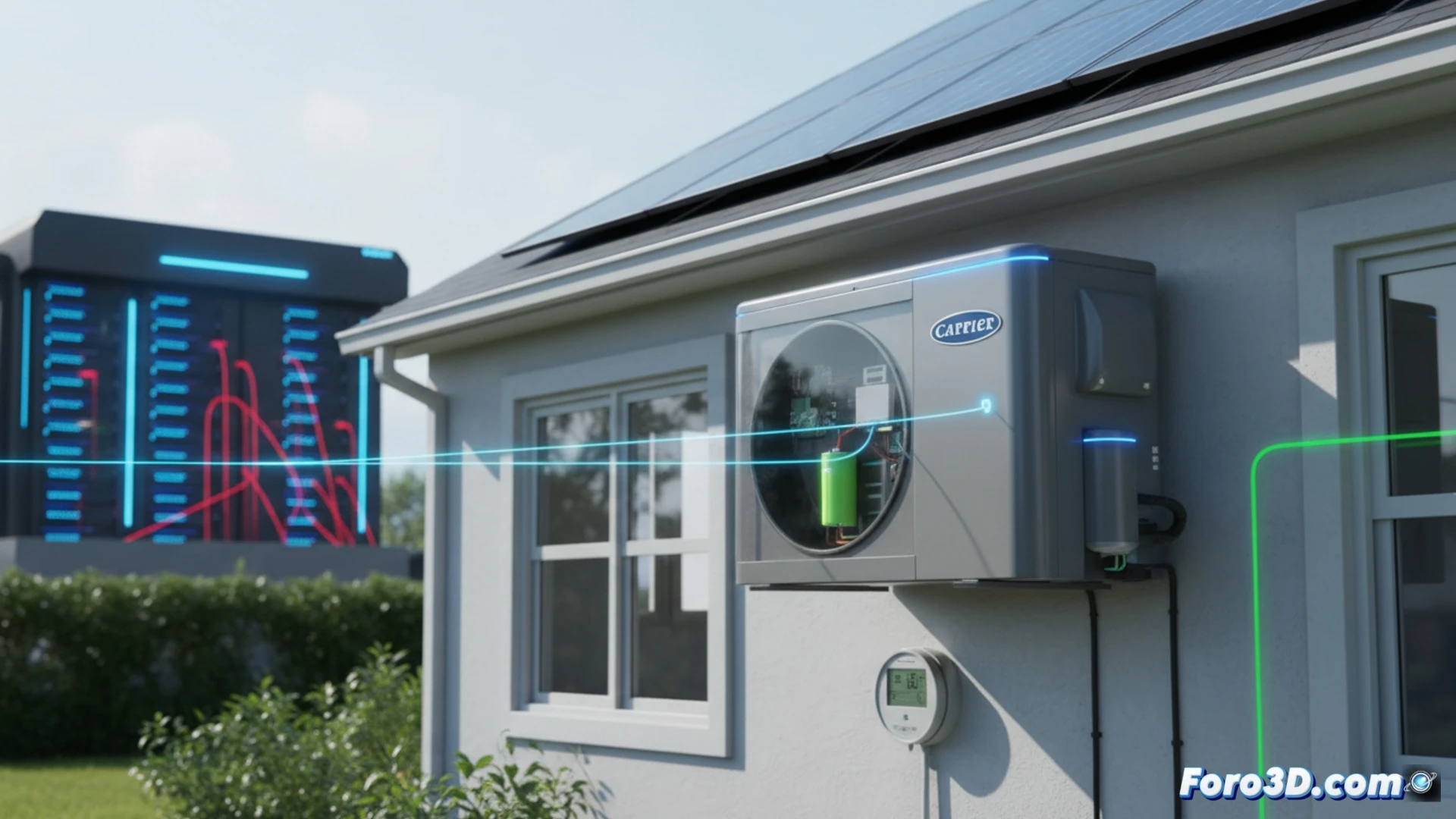
Carrier is testing a residential air conditioning system with an internal battery, a tangible step toward smart grids. The unit charges the battery when energy is cheap and uses it during peak hours, optimizing costs. This dynamic behavior is not random; it is the result of a digital twin that replicates the physical system and the grid, simulating prices and demand to make autonomous decisions. It is energy efficiency guided by a virtual model.
Modeling and simulation: the core of the energy digital twin 🔋
The digital twin of this system integrates multiple layers of data. It models the thermal behavior of the home, the battery capacity, the compressor efficiency, and, crucially, real-time external data flows: electricity prices and grid demand forecasts. The twin runs continuous simulations, anticipating peaks and calculating the optimal moment to switch between the grid and the battery. This automated decision-making, based on the virtual replica, relieves pressure on the physical infrastructure without sacrificing comfort.
Beyond savings: toward stable electrical grids ⚡
The true potential goes beyond bill savings. If millions of these units are deployed, their digital twins will act as an army of decentralized managers, stabilizing the grid autonomously. This mitigates the urgent need for costly expansions, a key benefit for utilities. Carrier's initiative demonstrates that digital twins are no longer just for heavy industry; they are arriving in the home, laying the foundations for a more resilient energy system.
How are digital twins optimizing the integration of air conditioning systems with energy storage in smart electrical grids?
(P.S.: don't forget to update the digital twin, or your real twin will complain) 👥