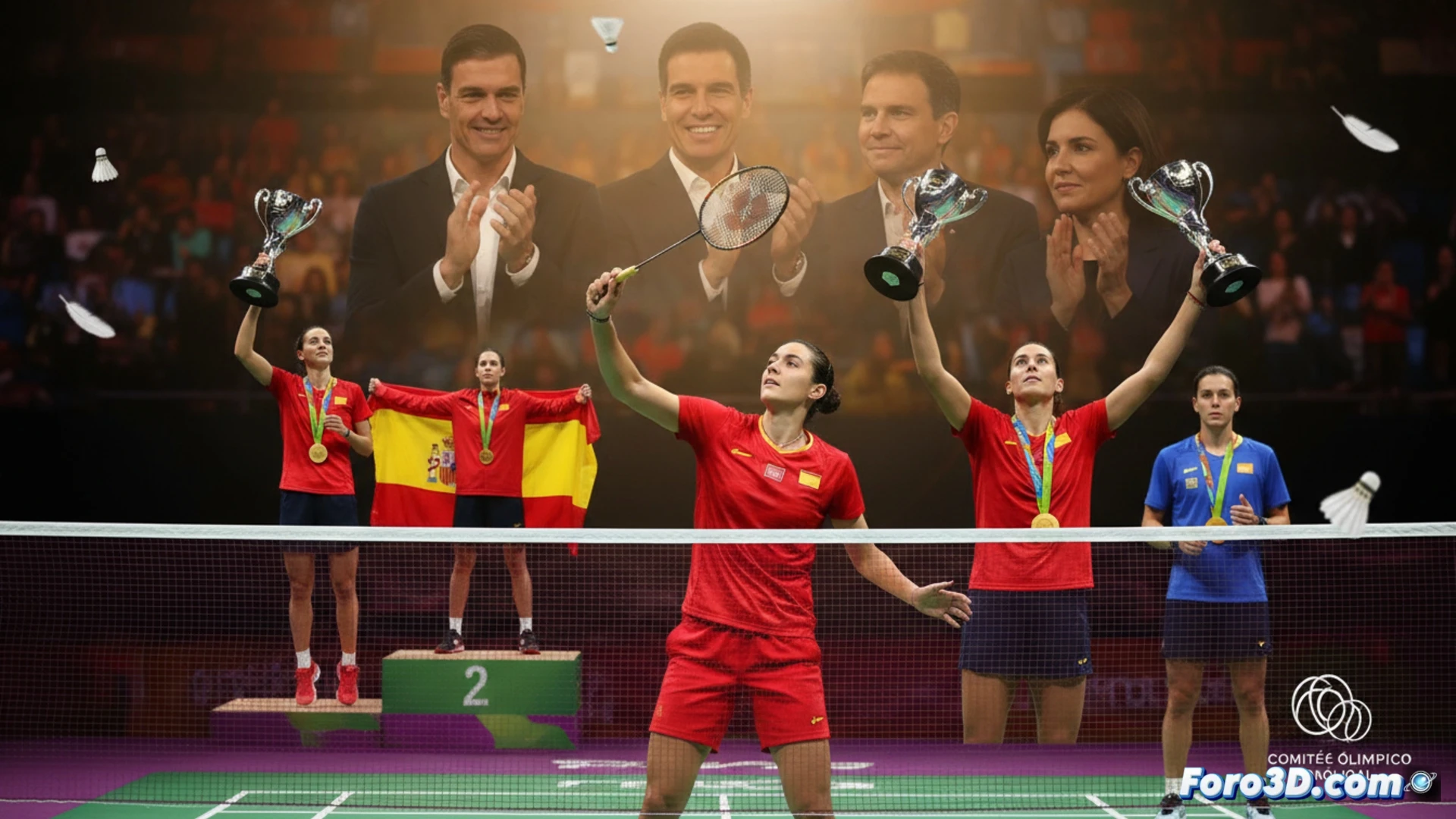
Carolina Marín's retirement announcement closes one of the brightest careers in Spanish sports. Her record, with an Olympic gold and three world titles, is historic. Beyond the titles, her aggressive style and power revolutionized badminton. In a forum like Foro3D, her career invites reflection on how 3D visualization and analysis technologies have transformed the training and study of elite sports like this one.
3D Biomechanics and Simulation: Breaking Down a Champion's Technique 🏸
Carolina Marín's technique, especially her powerful smash and quick court movement, is ideal for analysis using 3D technologies. Motion capture systems would allow a detailed biomechanical study of her stroke, identifying optimal joint angles and force transfer. Additionally, 3D reconstruction of key plays from multi-axis video enables analysis of her tactical positioning and the opponent's response. These tools not only served for her improvement but are now key to creating reference technical libraries to train future players.
Preserving the Legacy: 3D Visualization for Sports History 🥇
Marín's legacy transcends video archives. 3D technology offers innovative ways to preserve it. Interactive models of her most iconic plays could be created or immersive experiences that allow living a decisive point from her perspective. This turns her feat into an accessible educational and inspirational resource, ensuring that her contribution to badminton is studied and admired with 21st-century tools.
How has 3D biomechanical analysis influenced the technique and injury prevention of athletes like Carolina Marín, and what specific tools are used in elite badminton?
(P.S.: player tracking is like following your cat around the house: lots of information and little control)