The Israeli police interception of Cardinal Pizzaballa, the highest Catholic authority in Jerusalem, preventing him from reaching the Holy Sepulcher for the Palm Sunday mass, transcends the religious incident. It is a symptom of the geopolitical tension in an enclave of extreme sensitivity. This act, qualified by the Latin Patriarchate as an insult to billions of Christians and a serious precedent, operates at the critical node where state sovereignty, security, and religious freedom intersect, with immediate global repercussions.
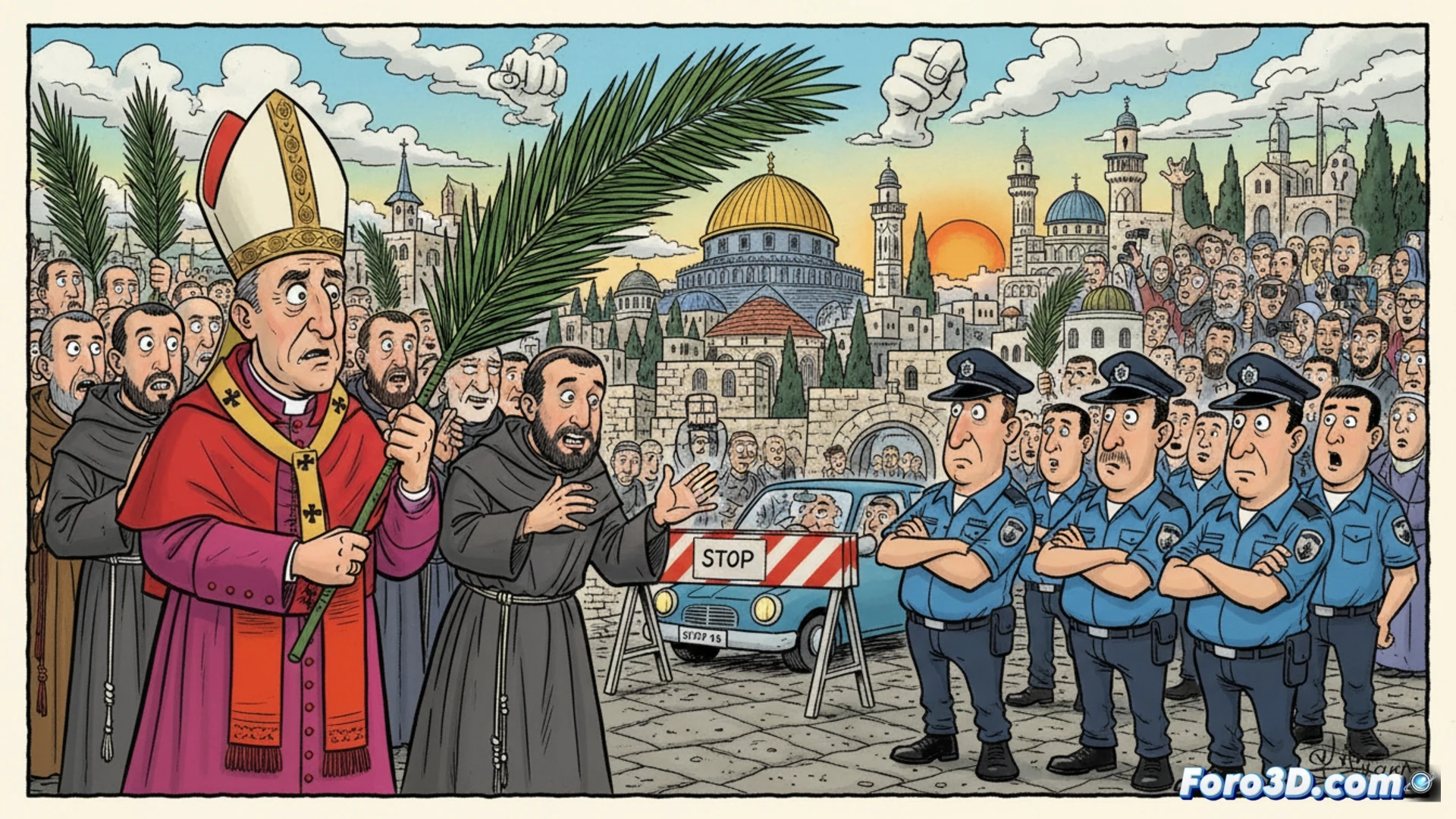
Cartography of the restriction: visualizing the rupture in a sacred corridor 🗺️
Analyzing this event requires visualizing Jerusalem as a 3D map of overlapping layers: urban topography, sovereignty corridors, and ritual routes. The cardinal's entourage represents a predictable flow within the pilgrimage and religious authority supply chain. Its interception is the physical rupture of that flow at an unanticipated checkpoint. The Israeli security narrative clashes with historical and diplomatic protocol, revealing the fragility of the tacit agreements that keep these corridors operational in disputed spaces. The simulation of this rupture shows how a local blockade can generate a systemic failure of perception and trust.
Impact on the regional stability supply chain ⚖️
The incident damages a crucial intangible asset: religious concord as a component of regional stability. This stability is an essential resource for the global supply chain, as Jerusalem is a logistical, diplomatic, and media node. The restriction on the cardinal is not an isolated failure, but a stress test on the system. It demonstrates how the absolute prioritization of a security paradigm can disrupt other critical flows, such as diplomatic or soft power ones, generating non-military escalation risks that affect global actors and the perception of the node's reliability.
How would you model in 3D the global supply routes for electronic components?