The study behind Bus Simulator announces Bus Bound, a bus driving simulator that will arrive on April 30 for PC, PS5, and Xbox Series at $29.99. Beyond the announcement, its launch raises interesting technical questions for video game development. We analyze how a specialized studio transfers its experience to a new project, the construction of a dynamic open world, and the implementation of online co-op for four players, key elements that define its simulation proposal.
Technology and Design in the Construction of Emberville 🏙️
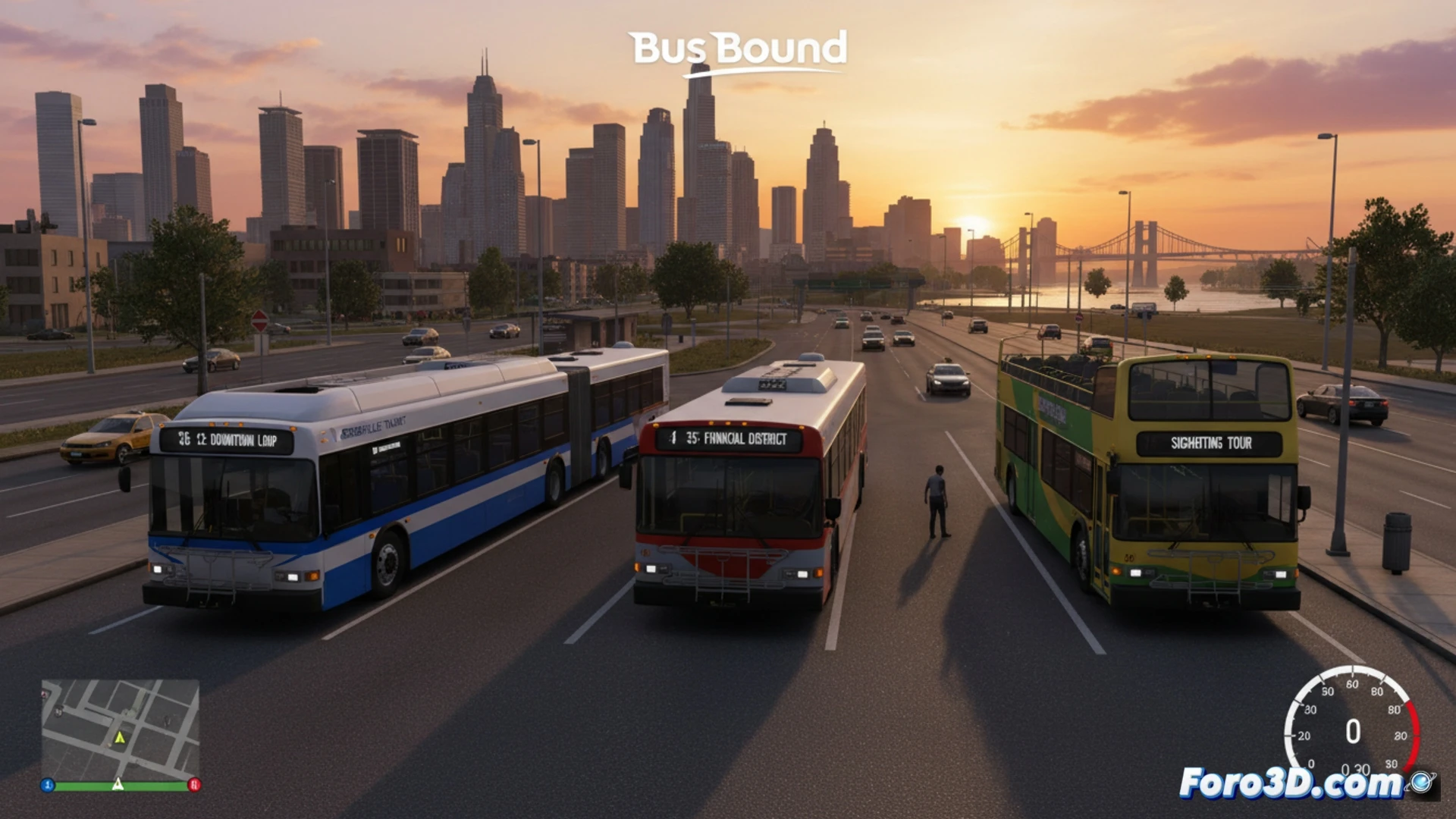
The technical core of Bus Bound lies in the city of Emberville, an open environment that requires a balance between scale, detail, and performance. Development must manage dense traffic, day and night cycles, and systemic interaction where player actions, such as improving routes, alter the environment. The inclusion of 17 licensed American buses involves meticulous work on modeling, driving physics, and sound. Additionally, the four-player co-op mode demands a stable network architecture to synchronize positions, vehicle states, and the game's economy in the same session, a non-trivial technical challenge for a simulation of this type.
Development Strategy and Monetization of a Niche 💰
Bus Bound exemplifies the strategy of a studio that dominates a specific niche. The experience accumulated with Bus Simulator translates into a more polished and ambitious product, optimizing development resources. Its business model, with a Deluxe Edition that includes extra content and an expansion pass, reflects a common trend in simulators to ensure long-term funding. Its technical success will depend on solid optimization on next-generation consoles and PC, demonstrating that specialized genres demand deep knowledge of both code and the expectations of their community.
What physics simulation and AI techniques does Bus Bound implement to achieve realistic bus handling and believable traffic and passenger behavior?
(P.S.: optimizing for mobile is like trying to fit an elephant into a Mini Cooper)